


This week’s newsletter comes to you from Naarm Melbourne, where I have been attending a workshop at Melbourne Law School on AI, creativity and cultural goods. It is fitting backdrop to this week’s issue of WTF now?! given how much of the issue is dedicated to Big Tech behaving badly.
The friction between regulators and platforms came into focus this week with two significant announcements from the eSafety Commissioner. One shares the findings of a three-month check-in on the social media minimum age (SMMA) requirements, finding that many children are still on restricted social media platforms. eSafety squarely puts the blame on platforms and alleged ineffective implementation of age assurance technologies.
eSafety is also pursuing Telegram for what the regulator says is a systemic failure to detect and remove pro-terror and violent extremist material from its platform. In an historic first, the eSafety Commissioner has launched civil penalty proceedings against the messaging app.
Also a trend of intermediary second-hand booksellers buying up random libraries of old books from Australian second-hand book stores has raised a suspicion they are selling the titles to AI companies for destructive scanning to train their large language models (LLMs). We know AI companies are slicing off the spines of physical books for scanning efficiency so the sudden uptick in second-hand book sales is suspicious.
Looking wider, a law academic has critiqued the fragmentation within Australia's AI policy agenda while Google released then rolled back AI-powered Google Earth features. And Paramount’s CEO David Ellison has penned an op-ed challenging concerns he will politically influence CNN if the Paramount–Warner Bros. merger goes ahead.
You can get weekly WTF now?! round-up in your inbox. Sign up as a free member to get it by email.
Rapid-fire
A short list of other things:
- New Victorian Premier Ben Carroll yesterday announced a new Victorian Cabinet, including a new portfolio of Minister for Artificial Intelligence and Digital Economy which will be filled by Anthony Carbines. Vicki Ward remains the Minister for Creative Industries. Shoot through
- Bending Spoons has entered a definitive agreement to acquire Airtable. Shoot through
WTF’s been going on?
Here's WTF happened this week:
Social media minimum age three-month check-in shows there is more work to be done
The eSafety Commissioner's three-month report on the social media minimum age (SMMA) reveals that 80% of children still access age restricted social media platforms. eSafety puts the blame largely on ineffective age assurance implementation by platforms. Even with mixed results, eSafety says the true impact will take time.
On Friday last week the eSafety Commissioner released Early days, early insights: Understanding experiences of social media age restrictions at the three-month follow-up which reports on data about the social media minimum age (SMMA) obligation three months after it took effect. ⟨ I have not read the report in full yet, but based on Key insights and media reporting ⟩ the report finds that at three months on from the 10 December 2025 commencement of the minimum age, 80% of children were still using age-restricted social media platforms. The most common reason given for why they are still using an account is because the platform had not required them to confirm their age yet (50.2%). eSafety says this is the result of ineffective implementation of age assurance measures by the platforms.
For 37.1% of respondents, they stated they were still using a restricted platform because it had incorrectly estimated their age. The report also notes that users listing their age as over 16 years was the most common method stated to attempt to bypass the restriction. Parental assistance or using a VPN ‘were less common’ bypass methods. Perhaps more worrying is the reported trend of declining parental awareness of children’s social media use – 33.3% of parents said they were unaware their child had used social media over the prior four weeks when responding to the survey in March and April this year compared with the 23.3% who said the same when responding to the baseline survey conducted in November and December last year. The report identifies that parents of girls and parents of children aged 10 to 12 were those with decreased awareness of their children’s social media use.
Of course, as eSafety Commissioner Julie Inman Grant said, while the report has come out now, it is based on data collected ‘very early’ in the evaluation of the age restriction. ‘[C]omplex reform of this nature is unwinding 20 years of social media entrenchment and will therefore take time’, she said, ‘The impact of the law will not be measured in weeks or months but over generations.’ This points to the real regulatory purpose of the social media minimum age and other online safety regulation being pursued by the Albanese government; demonstrating to Big Tech that regulation is possible. In June the government doubled down on the social media minimum age, pledging to ‘strengthen the eSafety Commissioner’s information-gathering powers with new legislation and [to] double the maximum penalty for breaches of the social media minimum age law to $99 million.’
This is something Professor Terry Flew has examined in detail, characterising social media bans as ‘a new approach’ to policymaking and political decision-making related to regulating the internet. Flew says:
... they move away from forms of soft law and industry self-regulation that have become the de facto dominant approaches. They mark a return of the nation-state invoking its sovereign territorial authority to apply command-and-control regulations to global digital platforms.
Inman Grant believes eSafety’s holistic approach is working, pointing to the recent advisory about the risk of images shared by schools of students and staff being used to generate deepfakes and other forms of image misuse, the initiation of court proceedings against Telegram under the Unlawful Material Codes and Standards ⟨ which I look at in the next listing ⟩ and moves by Big Tech companies to make child safety easier, including Apple’s new child safety features Google’s extension of its age assurance measures on Google Play to other territories, starting with Australia and Canada by mid-August. Currently available in Brazil, the Google Play Age Signals API will be rolled out to all Play developers worldwide later this year. On Apple and Google’s announcements, Inman Grant said:
Google’s announcement this week, and others like it, show the positive spillover effects of this law — and Australia’s broader online safety framework — extending well beyond social media account deletions. By creating the right regulatory incentives, the law is helping drive practical safety improvements across the technology ecosystem, showing the impact of the law being much greater than the sum of its parts.
…
Yesterday’s announcement by Google means that Australia’s two major mobile device operating systems are both providing additional parental controls and critical age range signals, further supporting parents who want safer, more age-appropriate experiences for their children online.
It is no coincidence that Australia has been chosen as a pilot market for both upgrades. Apple and Google’s willingness to build and deploy tools that help app developers tailor safer, age-appropriate experiences for children is a clear step in the right direction by big tech. We are encouraging every age-restricted social media platform captured by our regulatory scheme to accept these signals. If they choose not to, that will raise serious questions about their commitment to using all available tools to accurately identify the ages of Australian children.
- Early insights from eSafety’s comprehensive evaluation project, eSafety Commissioner, Friday 31 July 2026
- Key developments show eSafety’s holistic approach is working, Julie Inman Grant, eSafety Commissioner, Friday 31 July 2026
- Early days, early insights: Understanding experiences of social media age restrictions at the three-month follow-up, eSafety Commissioner, Friday 31 July 2026


 Lisa M. Given
 Clare Armstrong
eSafety is pursuing Telegram for not stopping sharing of terror material
In a first, the eSafety Commission has initiated civil penalty proceedings against Telegram under the Online Safety Act for allegedly failing to remove terror-related and extremely violent content from its platform.
While more teeth may be coming for eSafety in the social media minimum age space, the online safety regulator is taking its first action against messaging app Telegram under the Online Safety Act’s Relevant Electronic Services Standard. Announced Thursday last week, eSafety’s proceedings against Telegram are the first time the agency has used these powers.
The confrontation centres on alleged failure by Telegram to remove pro-terror content from its platform. The court action follows a year-long investigation by the regulator into how Telegram detects and removes terror-related material and extremely violent content. Leaving such content on the platform – allegedly for weeks or months – risks normalising extremist content, supporting online radicalisation and failing to comply with systemic safety obligations under the Online Safety Act’s Relevant Electronic Services Standard. eSafety also alleges that Telegram risks reoffending by not removing relevant accounts, channels and groups distributing unlawful material.
Reportedly the engagement with Telegram was ‘very difficult’ which is likely behind statements from eSafety Commissioner Julie Inman Grant and the Communications Minister Anika Wells about the seriousness of charges and why Australia is pursuing them. Inman Grant said, for example, ‘No platform is above the law and this action demonstrates that eSafety will not hesitate to use the full range of its powers to protect Australians’, and while Wells said, ‘Australia has no tolerance for big tech failing to prevent, detect and remove pro-terror material from their services’, throwing the Albanese government’s support behind the court action.
- eSafety commences civil penalty proceedings against Telegram over alleged failings to tackle terror, eSafety Commission, Thursday 30 July 2026
 Holly Tregenza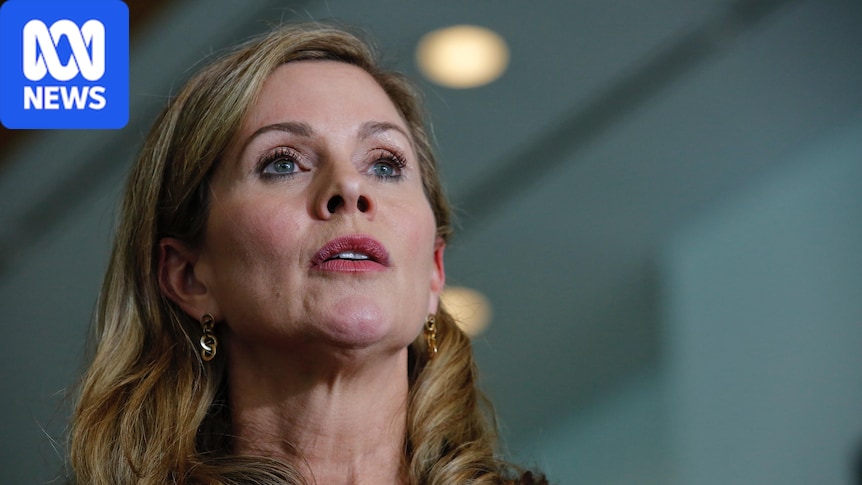
AI companies are destroying books as they dissolve them into AI models
AI companies are allegedly sourcing old books for destructive scanning to train their models. The removal of book’s spines and pulping of the book after being scanned is a known practice but apparently is unrelated to intermediaries like Zoom Books buying up volumes of second-hand books in Australia.
Off the back of Anthropic v Bartz there is growing concern that AI companies are buying up old books to scan as AI training data. In the case it was held that the scanning of purchased books for AI training was a fair use under American copyright law. That case revealed the practice of so called destructive scanning which sees the spines of physical books sliced off to facilitate more efficient scanning of the pages. The titles are pulped after being scanned.
Guardian reporting suggests the practice may be more widespread and facilitated through intermediaries such as Canadian second-hand book reseller Zoom Books placing orders through second-hand marketplaces like AbeBooks or Biblio. Reportedly multiple Australian second-hand book stores have seen orders ‘that did not fit with usual customer patterns’, requesting a mix of ‘niche titles, “bottom-end” and sometimes decades-old stock.’ To illustrate, ‘In one order, a 1970s manual on soil mechanics was bought alongside a 2010 book called Born to Thunder: Champions of New Zealand Cycling, a collection of Early Australian Poetry (1982), and a local history of the Melbourne suburb of Hawthorn. The poetry book sold for $9 and had been on the shelf for 20 years.’
Zoom Books has apparently been expanding aggressively but denied destructively scanning books, saying, ‘Our priority is always reuse, and when a book can no longer be rehomed, it is responsibly recycled.’ Yet the company cited confidentiality as the reason to not disclose if it sold intact books to AI companies for destructive scanning.
A spokesperson told The Guardian Anthropic has never bought from Zoom Books, but did say that ‘sourcing books is a widely used approach for training large language models across the AI industry.’ They also said Anthropic procures its books from mainstream commercial markets, ‘None of our data acquisition programs buy and destroy rare or antiquarian books.’
 Stephanie Convery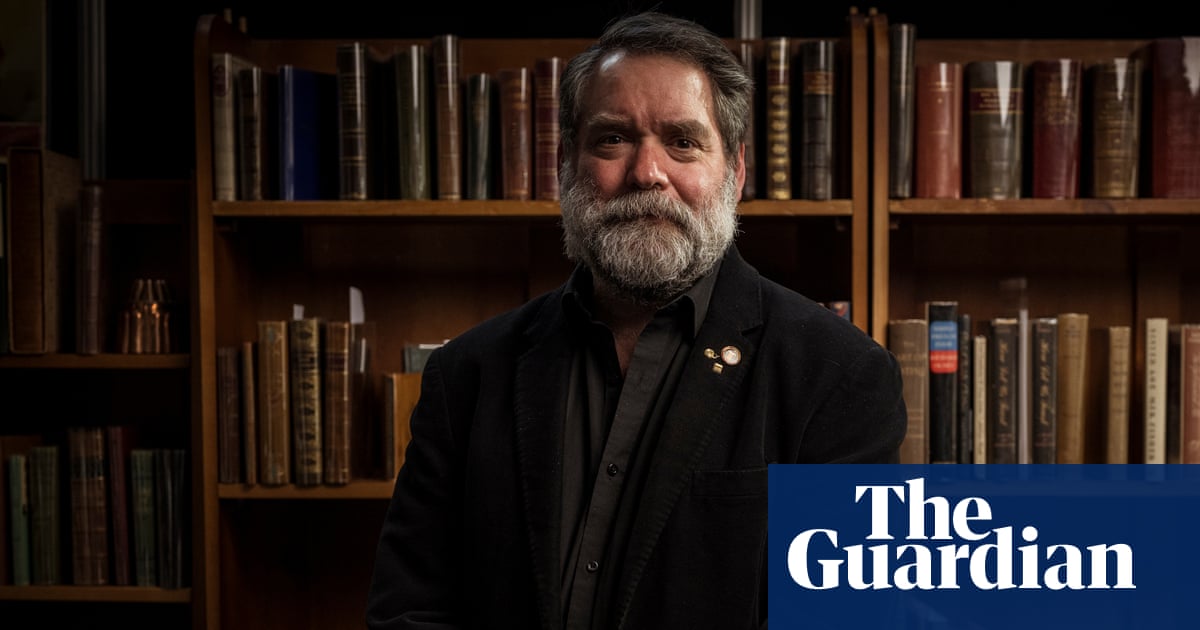
Keeping tabs
Updates about WTF else has happened with things I have recently covered:
Australian Government AI priority initiatives
Following up: Henry Fraser, a Research Fellow in Law, Accountability and Data Science at Queensland University of Technology (QUT) has taken to The Conversation to ask some critical questions about the raft of safe AI regulatory priorities announced by various government ministers a fortnight ago. While Fraser says renewed energy by Australia around AI governance is welcome, he casts the announced initiatives as largely rebadged policy promises that have been delayed rather than a fresh direction. Fraser is also concerned that AI regulation in Australia has also seen reactivity, reversals and fragmentation which ‘will take more than a joint press release’ to overcome. The abandonment of mandatory guardrails for high-risk AI and scrapping of a federal AI advisory body are put forward as examples. It is worth also adding the messy public debate about copyright and AI, plus the fact Australia now has a National AI Centre, AI Safety Institute and an Office of AI to that list. It is a good overview of the incoherence of Australia’s AI policy agenda to date.
 Henry Fraser
Paramount–Warner Bros. acquisition proposal
Following up: With a trail date of March 2027 set for the California-led challenge to the proposed Paramount–Warner Bros. merger set, Paramount CEO David Ellison has come to the defence of the proposal in a guest essay published by The New York Times. (The essay is behind a paywall but other outlets have reported on it, including CNN.) Ellison’s claims challenges to the deal are less about competition and more about a ‘plainer worry’, namely ‘whether [he] can be trusted as a steward of Warner’s CNN’ and CBS News, which Ellison’s Skydance took over when Skydance and Paramount merged last year. Ellison went on to say, ‘There has been speculation about my politics, my loyalties, my intentions’ and with good reason; reportedly Ellison curried regulatory favour with the Trump administration by promising to sway CNN in a more favourable direction. That followed changes at CBS after the Skydance–Paramount merger, including appointing a conservative opinion writer as editor-in-chief and allegations of editorial interference that has seen prominent journalists leave the network. While California Attorney-General Rob Bonta has said the States’ case is not about news ownership, it will be interesting to see if Ellison’s plea to the people about journalistic ethics has any sway.
 Jeremy Barr
A bit on the side
WTF else happened this week:
AI in Google Earth roll out rolled back. On Thursday last week Google announced an AI feature for Google Earth using Nano Banana 2 image generation. The idea was to let users ‘generate custom images using Google Earth’s satellite, aerial, and 3D imagery alongside Nano Banana, which creates concepts grounded in the real world.’ While the blog post postulated some wholesome and harmless uses of the AI tool, concern was raised at the potential to use the AI image generator in Google Earth to create misleading content or misinformation. The next day Google had pulled the pin on the feature to ‘work on implementing stronger guardrails.’
 Bryan Horowitz
If you are enjoying this WTF now?! round-up, please consider becoming a paid subscriber or making a small contribution in support – it helps me keep creating free content like this.
Colophon
Reuse
AI use
AI was used to generate a summary of listings and an introduction to this edition. Those summaries and that introduction were used to generate ideas. No AI-generated content was used verbatim.
The banner graphic (i.e. the first image at the top of the blog post) was adapted from vector graphics generated in Adobe Illustrator using Firefly 4 with 'Subject' content type selected and the lowest level of detail set. { Text to Vector Graphic prompt: Seamless pattern, very large simple shapes, 80s retro style, fluid organic elements, morphing, overlapping, blurred gradients, visible layers. }
Provenance
This blog post was first published on Wednesday 5 August 2026. It has not been updated. This is version 1.0.