


The sudden announcement that Powerhouse Museum CEO Lisa Havilah has stepped aside amidst ongoing government investigations comes just 10 weeks before Powerhouse Parramatta opens. It is another in a string of crises that have plagued the museum over the past decade and it exemplifies the complexities of arts leadership.
Also public sentiment towards AI highlights a growing AI trust deficit. But the basis of that backlash isn't a simple rejection of technology. Rather everyday people are pushing back against AI, demanding transparency and genuine care. And this sits against a backdrop of predatory web scraping that is fundamentally challenging the social contract of the free and open web.
Meanwhile, Australia's privacy and data landscape faces major regulatory changes. The federal government is proposing an expansive privacy reform package designed to further modernise privacy protections.
And a significant settlement for Meta's child safety case will see new restrictions on Facebook and Instagram to protect teens alongside up to $18 billion in funding tied to onine youth safety intitatives.
You can get weekly WTF now?! round-ups in your inbox. Sign up as a free member to get it by email.
WTF’s been going on?
Here's WTF happened this week:
Misconduct claims mar opening of Powerhouse Paramatta
Powerhouse Museum CEO Lisa Havilah has stepped aside weeks out from the opening of Powerhouse Parammata amid government investigations into the museum, adding to the controversies the museum has faced in the last 10 years.
Powerhouse Museum has seen its CEO Lisa Havilah stand down just 10 weeks from the opening of its newest campus Powerhouse Parramatta. It comes as investigations into governance and procurement at the museum are finalised. Further details are vague, but it is likely connected to earlier whistleblower disclosure that happened in October last year. Reportedly, Havilah’s standing down came after ‘further allegations that had come to light’. NSW Minister for the Arts John Graham announced that NSW Government Architect Abbie Galvin will be the interim Chief Executive and former Opera House CEO Louise Herron AM will act as a strategic advisor.
Importantly, and as University of Melbourne media and communications lecturer Samuel Cairnduff notes on The Conversation, ‘A protected disclosure initiates a process, not a finding [and] Havilah’s standing aside is likewise neither a finding against her, nor an admission of responsibility.’ Yet speculation is rising.
Unfortunately for Powerhouse it is another crisis in a string of controversies that have plagued the museum and its new Parramatta location over the past decade. Cairnduff provides a detailed look at some of those controversies but also writes about how it exemplifies the complexities of arts leadership, which sees arts leaders wielding four distinct forms of authority – organisational, professional, cultural and social – simultaneously when ‘Few public roles require holding all four together.’
This becomes particularly fraught when institutional identity is bound closely to that of a leader, especially during periods of public scrutiny. As Cairnduff puts it, ‘When an institution and its leader become this closely identified, scrutiny of one becomes entangled with confidence in the other.’ Havilah’s departure begs the question, can reimagined cultural institutions establish independent authority and public trust or is their fate ultimately tied to the good (or bad) standing of the key architect of that vision? And what happens when that leader is no longer there to lead it?
 Nabil Al-Nashar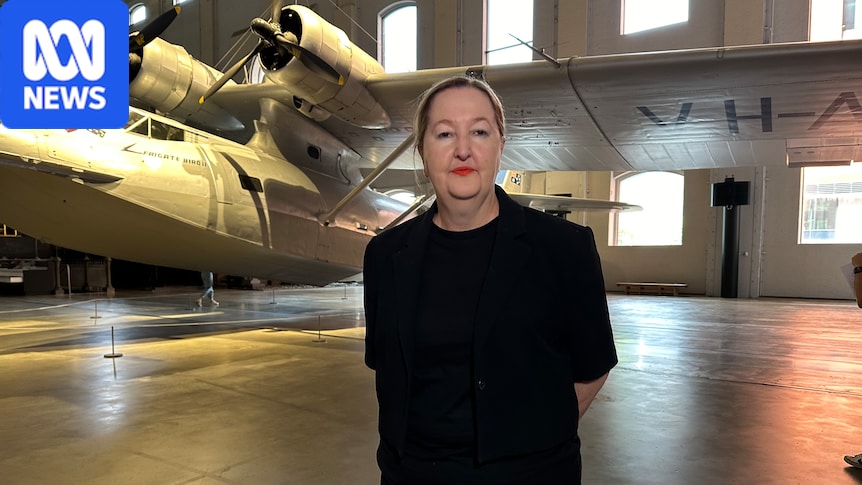
 Samuel Cairnduff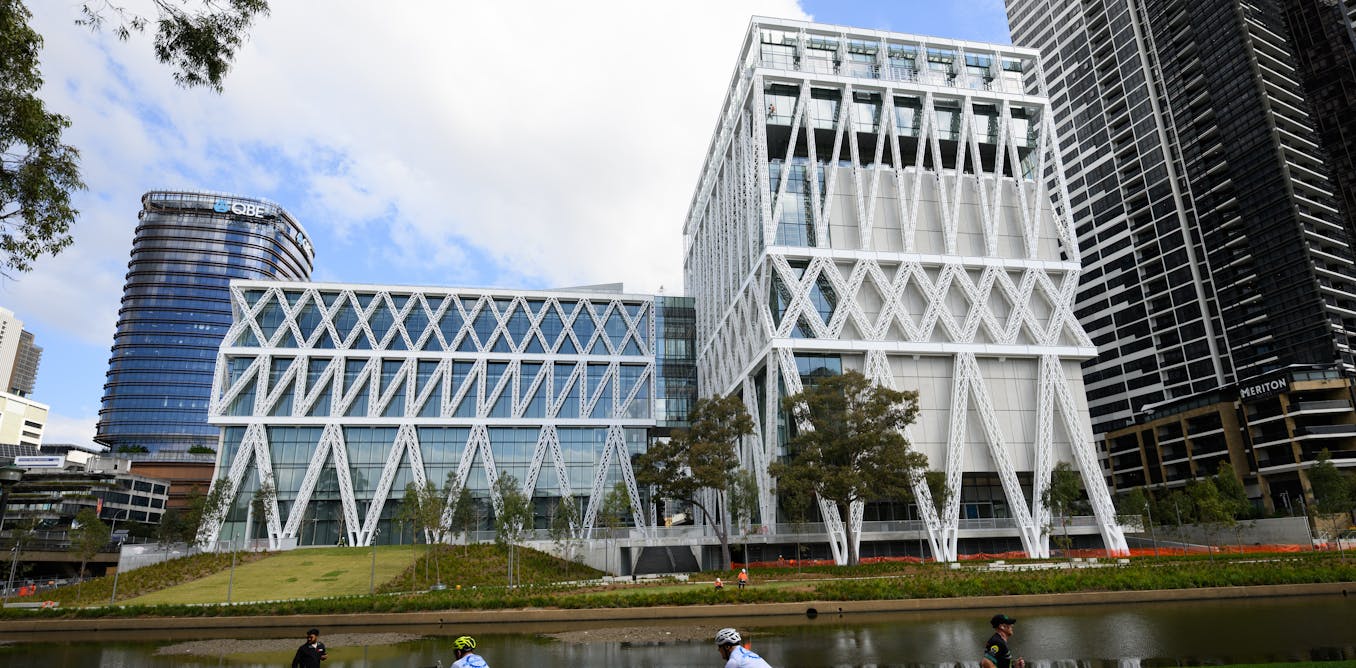

AI backlash points to an AI trust deficit
Negative attitudes toward AI in marketing and the use of synthetic voices in media highlight a broader demand for trust. Rather than rejecting technology, the public insists on ethical, transparent and discerning deployment.
There has been a lot of detailed and insightful research on attitudes towards AI in the past few years. Particularly of note is the series published by the Ada Lovelace Institute and The Alan Turing Institute and the often cited report put out by the Melbourne Business School and KPMG. The former focuses on UK attitudes to AI across different demographics while the latter is a broad look at attitudes towards AI across 47 countries.
This week I came across three things that are contributing to that topic. One was a blog post by Cat McGinn published on humAIn Media, a new project co-founded by McGinn looking at the impact of AI on media, marketing and creativity. In the piece, McGinn makes the point that Australian's low trust in AI 'is not a reactionary population refusing to engage with an unfamiliar technology' – we regularly are early adopters of technology – rather, McGinn sees anti-AI sentiment and a lack of trust in AI as 'a kind of cultural shorthand for the ruptured trust and general disaffection many people feel towards institutions and systems of power'.
Australian backlash 'is not singular', it is directed against data centre development, the resources they consume, the extraction of human knowledge, culture, creative work and personal data to train AI systems, the threat of job displacement, a lack of transparency around AI and 'the insultingly poor quality of AI slop'. And, for McGinn, what that 'AI slop symbolises is not simply bad taste [but] a lack of regard'.
'The backlash is not a referendum on AI adoption itself, but rather a referendum on the bargain being offered around it,’ McGinn says. As we increasingly see AI use in marketing McGinn cautions that ‘this is the most hazardous trend of 2026’ because marketers have ‘spent decades building brand trust, and yet reaching for the cheapest tool in the stack is also the fastest way to erode it.’ McGinn says now is the opportunity to course correct: ‘The winning brands of the next decade won't be the ones who use AI the most, but the ones who use AI with the most discernment, transparency - and care.’
Another contribution to trust in AI was a recent report on the results of a survey on audience responses to AI-generated voices (what the authors refer to as Voice AI) in media conducted by the ARC Centre of Excellence for Automated Decision-Making and Society (ADM+S) Generative Authenticity project.
While the survey is not representative it does provide some useful insights. The majority of respondents (67%) said they knew only 'a little' about Voice AI but 90% were confident that they had had a direct experience with it. Social media was the most common place where they had experienced it (67%), followed by on phone calls (56%) and in online video (54%). Across the board, attitudes towards Voice AI were strongly negative, with 78% of respondents saying they strongly dislike or dislike AI voices. Many respondents reported 'feeling "disappointed and cheated" after realising they’d encountered Voice AI'.
The authors suggest that:
participants feel Voice AI threatens the faithful representation of personal, political, and cultural identity, not just information, and undermines rather than supports creative expression. This makes Voice AI integration an ethical matter as much as an economic and political one.
I also read a piece by Dana McKay and Damiano Spina from RMIT University about how AI scraping has broken the social contract of the internet. The idea of letting search engines index your website and provide snippets of web content was to attract web traffic, resulting in ad revenue or kudos or both. But AI changed that. They are creating information substitutes for the content they are scraping while costing website owners money as nonhuman traffic explodes.
In response to this many website operators have taken steps to try to block AI bot traffic meaning that AI-generated chat responses and search overviews are ‘depend[ing] more on low-quality websites (many of which are also generated by AI) [making] good information can be harder than ever to find.’ As the potential of Google Zero – ‘that moment when Google Search simply stops sending traffic outside of its search engine to third-party websites’ – and model collapse loom and initiatives like RAG (retrieval-augmented generation) and pay to crawl have not yielded worthwhile results, the future of the free and open internet has never looked more grim.
The first two sources point to the risk of ignoring attitudinal trends regarding AI. While different friction points, they are each examples of where receptivity to AI is shifting. Both emphasise that trust is a foundational not tangential issue. And while that predates this generative AI moment, use of AI is becoming highly conditional on transparency, safety and accountability. The piece on AI scrapping bots speaks to larger unease with AI’s disruption of practically everything. Overall, the rejection (largely) isn’t of the technology itself, it is of the way humans use it. When used in ways that don’t ‘feel right’ it undermines the legitimacy of the individual or organisation that has deployed it
 Cat McGinn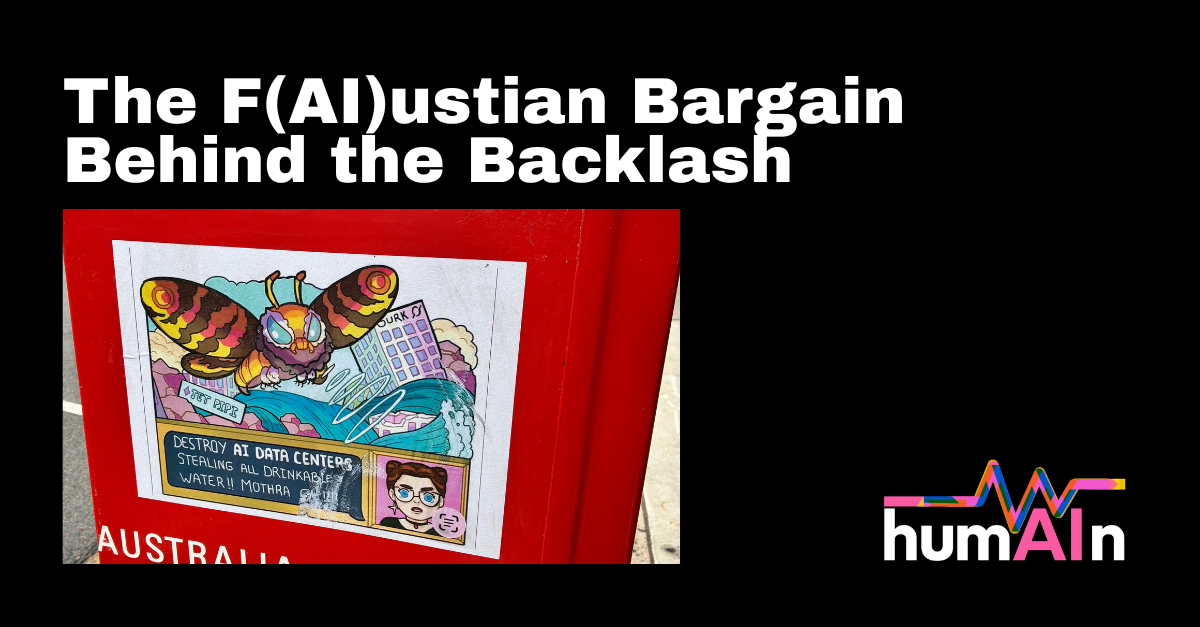
- How do everyday Australians feel about Voice AI?, Phoebe Matich, Jean Burgess, Michael Richardson, ARC Centre of Excellence for Automated Decision-Making and Society, Monday 24 August 2026
 Damiano Spina
Australia is proposing a huge privacy reform package
The Australian government has proposed significant privacy reforms, including a new definition of personal information, stricter geolocation rules and a right to be forgotten. These measures aim to further modernise our privacy laws while improvoing accountability and addressing risks from emerging technologies.
Numerous changes will be coming to the Privacy Act 1988 (Cth) if proposed changes released on Monday by Attorney-General Michelle Rowland become law. The government is consulting on a second tranche of reforms to modernise and strengthen Australia’s privacy laws in response to emerging risks from new technologies including AI and smart glasses. The consultation materials include an Exposure Draft of the Privacy Amendment (Personal Data Protection) Bill 2026 and a Consultation Paper.
The reform bundle includes:
- a new definition of personal information
- adding precise geolocation tracking data to the definition of sensitive information which requires explicit permission to collect
- a fair and reasonable test designed to limit the collection of more information than needed
- a right to be forgotten i.e. to request the destruction of personal information that applies to large digital platforms
- greater consent requirements to support informed choices about information people share
- measures to stop trading in personal information with explicit permission
- stronger requirements around reporting data breaches
- greater regulatory clarity and improved efficiency of the Office of the Australian Information Commissioner (OAIC).
That new definition of personal information includes any information or opinion that relates to an identified person or someone that is reasonably identifiable even where their name is not known but they can be ‘recognised, singled out, or otherwise dealt with as a distinct individual’ such as by a nickname, pseudonym or identifier, contact information such as phone number or email address, geolocation data a name, date of birth or address or characteristics, behaviours, traits, preferences or patterns of activity.
If passed the bill would require companies to report data breaches to OIAC within a strict 72-hour deadline rather than ‘as soon as practicable’. It will reduce delay and uncertainty and improve accountability.
In many ways the novel part of the reforms is the requirement that the collection, use or disclosure of personal information is fair and reasonable in the circumstances. This would tie the use of personal information to what a reasonable person would expect, as well as disclosure and if the purpose could be achieved with less data. And companies won’t be able to get flimsy consents to get around the law.
The reform package is a significant proposal yet the consultation is very short. Submissions are due by Friday 18 September 2026.
 James Massola
 Juha Saarinen
- Modernising Australia’s privacy laws for the digital age, Attorney-General Michelle Rowland, Monday 31 August 2026
- Privacy Reform – Consultation on Exposure Draft legislation, Attorney-General’s Department, Monday 31 August 2026
Meta agrees to a raft of new teen restrictions in child safety settlement
Meta has settled its child safety case committing to improved age verification, usage limits and $18 billion to support online safety initiatives. Meta also calls on YouTube, TikTok and other industry players to adopt the settlement measures as industry standards.
Last week TikTok settled its children’s privacy case and now this week Meta has announced a settlement with 52 Attorneys-General across US states and territories.
The agreement includes new safety features for users under 18 on Facebook and Instagram, including:
- a cumulative two-hour daily time limit that requires parental permission to turn off
- a night mode block of the apps between midnight and 6 am
- a school mode that mutes notifications during 8 am and 3 pm
- 15-minute prompts during continuous screen time on the apps
- improved age assurance technology to proactively identify accounts that likely belong to users under 13 years of age
- improved age-appropriate content restrictions to ensure age-appropriate content experiences
- the ability for teens to opt for an algorithm-free feed that does not include personalisation by Meta’s recommendation systems
- the ability for teens to turn off autoplay for video content
- hiding the number of likes on posts
- disabling extreme makeup filters
These optimisations will be supported by continued easy ways for teens to to report content and improved response times, as well as strengthened parental controls.
Under the settlement agreement Meta will also pay ‘approximately $18 billion’ paid over a 10-year period to fund youth online safety initiatives and other state priorities. The bulk of the financial settlement – approximately $12.7 billion – will be distributed to participating states over the decade with the remaining with the approximately $5.3 billion conditional on YouTube and TikTok implementing matching safety measures and paying a matching financial amount. This is part of Meta’s wider call for industry-wide action to see these safety measures become an industry standard given that teens' online engagement sees them move fluidly between apps. To encourage competitor adoption they are committing to reduce the daily time limit to one hour and expanding Night Mode to 10 pm–7 am. Additionally, the agreement establishes an independent social media research foundation, sharing consented user data to study and advance teen well-being online and the appointment of an independent auditor to test and report on Meta’s compliance with the agreement annually for five years.
 Lauren Feiner
 isolomons
 isolomons
Colophon
Reuse
AI use
AI was used to generate a summary of listings and an introduction to this edition. Those summaries and that introduction were used to generate ideas. No AI-generated content was used verbatim.
The banner graphic (i.e. the first image at the top of the blog post) was adapted from vector graphics generated in Adobe Illustrator using Firefly 4 with 'Subject' content type selected and the lowest level of detail set. { Text to Vector Graphic prompt: Seamless pattern, very large simple shapes, 80s retro style, fluid organic elements, morphing, overlapping, blurred gradients, visible layers. }
Provenance
This blog post was first published on Wednesday 2 September 2026. It has not been updated. This is version 1.0.