Obviously regulating Big Tech is a big focus this week with the government releasing an exposure draft of the Online Safety Amendment (Digital Duty of Care) Bill 2026. It will force social media platforms to better mitigate systemic risks and introduce user-managed controls over what they see in their feeds. If passed it will continue a shift in regulatory expectations that led up to the Social Media Minimum Age scheme last year. It also comes in tandem with the proposed privacy law reforms mentioned in last week’s issue of WTF Now?!
There has been lots of movement in terms of AI and copyright this week. The Trump administration has filed a statement in relation to an active copyright case (The New York Times v Microsoft and OpenAI) in support of AI training being a fair use. In the same case Microsoft claims word for word news content in AI outputs is minimal. This comes as a fresh copyright infringement action against the same tech giants has been instigated by The Seattle Times and Newsday and authors speak out about publishers and agents overclaiming on Bartz v Anthropic settlement payouts. Also, Creative Commons has put out updated guidance about the CC licences and AI.
Coming back to the Trump administration, it has introduced a highly unconventional mechanism for policy promotion, weaponsing retro video game aesthetics to push immigration, economic and other agendas and a US court has decided not to force Google to divest its ad exchange.
You can get weekly WTF now?! round-ups in your inbox. Sign up as a free member to get it by email.
Rapid-fire
A short list of other things:
- ⟨ A bit of self-promotion sorry! ⟩ A Q&A I did for ANAT (the Australian Network for Art and Technology) has been published. Shoot through
- Submisisons to the Joint Select Committee on Artificial Intelligence inquiry into AI adoption, opportunities and risks are due by next Monday 14 September 2026. Shoot through
- Hachette Australia has acquired independent publishing company Smith Street Books. Shoot through
- NVIDIA will acquire open AI model developer community Hugging Face for $12,930,300,000. ⟨ Yep, I have put the whole number there because it takes a second to even work out how much that is! ⟩ The announcement says Hugging Face will remain an open platform and continue to support open source and open weight models. Shoot through
- Today Meta released a personal AI agent called Muse designed to bring agentic AI to everyone. Shoot through
- Thailand has announced a pause on data centre builds as the country determines current operations, new builds and appropriate regulations. Shoot through
WTF’s been going on?
Here's WTF happened this week:
Consultation on Australia’s digital duty of care is open
The Australian government has released draft legislation that will introduce a digital duty of care for online platforms and require social media platforms to allow users to opt-out of algorithms and require platforms to mitigate risks and prevent the spread of harmful content.
Adding to last week’s announcement of consultation on privacy law reforms, Prime Minister Anthony Albanese together with Communications Minister Anika Wells announced the release of an exposure draft of the Online Safety Amendment (Digital Duty of Care) Bill 2026 ending speculation that the government was intending to move on the long awaited introduction of a digital duty of care.
The online safety reforms propose to:
- introduce a duty on social media platforms to ensure a safe online environment
- require digital services to identify and mitigate risks
- require platforms to allow users to turn off algorithmic feeds – what is being referred to as ‘My Feed, My Way’
- further empower the eSafety Commissioner to promote, monitor, investigate and enforce compliance.
The digital duty of care aims to better protect all Australians from seriously harmful material and conduct online such as content that is violent, encourages criminal or terrorist acts or relates to suicide or self-harm. In addition digital service providers must also protect teenagers and children from addictive features and harmful content. Addictive features include recommender, endless-feed and time-limited features That includes content:
- that is pornographic
- related to eating disorders
- promoting hostile ideas about women and gender equality
- that glorifies crime
- depicting or encouraging dangerous stunts or harmful practices
- that constitutes abuse, harassment or bullying.
As part of identifying and mitigating risks, digital services must conduct risk assessments at least annually which identify ‘all reasonably foreseeable risks’. They must also identify design features, processes and systems that give rise to those risks, who may be affected by them and take measures to address them. Services must retain assessments for at least 6 years. The eSafety Commissioner will be able to request those assessments under the proposed law.
Measures designed to allow Australian users to decide if they want recommended content on their feed or if they just want to see content from their friends and other accounts they follow are about giving people choices. On that point, Prime Minister Anthony Albanese said in a media release ‘This is not about giving government control, it is about giving people control.’ The proposed scheme will also give users regular reminders that they can opt-out of algorithmically recommended content.
In terms of adding more teeth to the eSafety Commissioner, the bill will add a new Division outlining the functions of the eSafety Commissioner. It will also add powers allowing the eSafety Commissioner to require people to give information or evidence, produce documents relevant to eSafety investigations or related to compliance with or possible contraventions of the Online Safety Act or request transparency reports about the safety of a digital service for Australians. It will also increase the fine for a number of noncompliant acts from 500 to 6,000 penalty units while doubling some of the higher penalties from 30,000 to 60,000 penalty units. Since 1 July this year a penalty unit is $364.
The new bill comes as the Online Safety Amendment (Strengthening Enforcement for the Social Media Minimum Age) Bill 2026 progresses through parliament. If passed, that bill will expand the information-gathering powers of the eSafety Commissioner and increase civil penalties for noncompliance with the Social Media Minimum Age scheme. The bill is in response to criticisms of the effectiveness of the social media ban.
The proposed laws are part of a wider effort by the government to regulate Big Tech. If passed, much of the amendments will become enforceable until 12 months from the day the bill receives the royal assent.
Opposition Leader Angus Taylor has not committed the Opposition to supporting the bill and has signaled they want parents to have more control over what their children see but will not support censorship. One Nation Leader Pauline Hanson doesn’t support the government controlling what Australians see. And The Greens have called for stronger opt-in requirements for algorithms.
Consent advocate and founder of Teach Us Consent Chanel Contos also wants positive opt-in for algorithms. On Wednesday last week Contos used a National Press Club address to call on the Australian government to force social media platforms to shift to affirmative consent demonstrated by opting in to algorithmic content feeds. Contos argued that algorithms are intentionally exposing young people to misogynistic manosphere content which is fuelling sexual violence.
Contos is a call for a return to 2016-era social media feeds where users were shown posts by people and organisations they followed in chronological order by default. In this approach, where other content is suggested to users it would be limited to 'explore' sections and content shown would be based on broad national trends not personalised content driven by individuals' usage behaviour.


 Clare Armstrong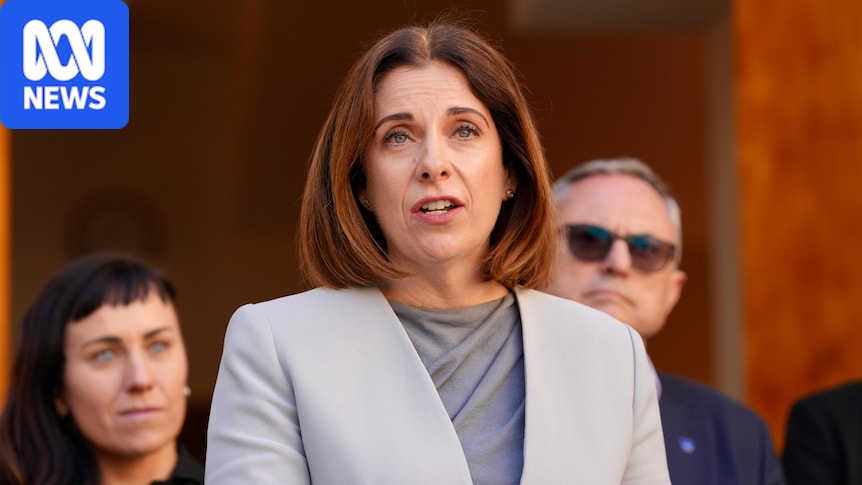
 Tom McIlroy and Luca Ittimani
 Josh Taylor
 Tom McIlroy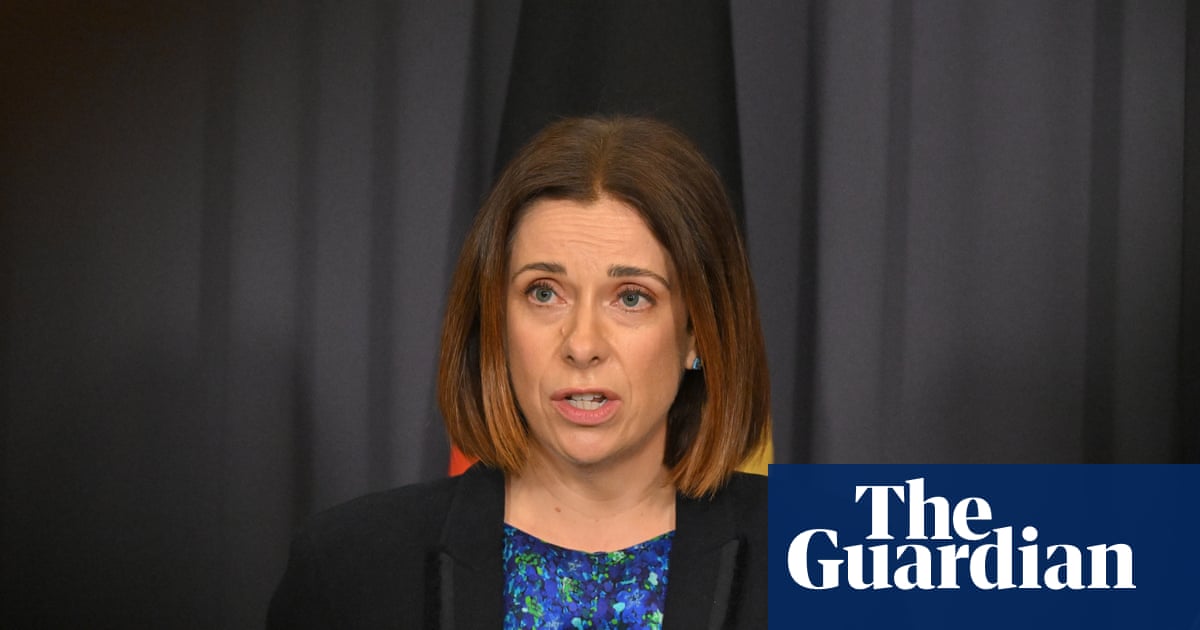
 Clare Armstrong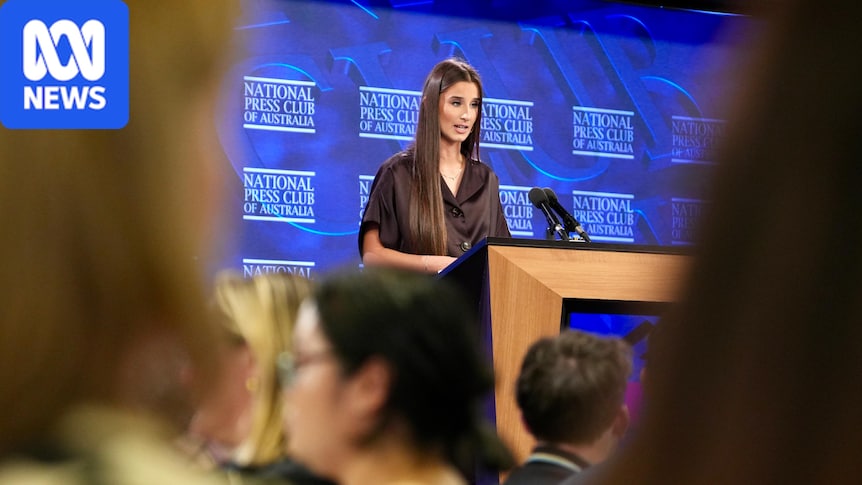
Three updates on two copyright & AI cases
The White House has weighed in on the NYT v Microsoft and OpenAI case saying AI training being a fair use is important for America’s AI dominance. In the same case Microsoft claims word for word news content in AI outputs is minimal. And authors are concerned publishers and agents are overclaiming on Anthropic settlement payouts.
It is interesting that the Trump administration says in its recommendations for A National Policy Framework for Artificial Intelligence that The White House 'believes that training of AI models on copyrighted material does not violate copyright laws' but acknowledges 'arguments to the contrary exist.' It 'supports allowing the Courts to resolve this issue' and discourages Congress from taking any actions that would impact the judiciary’s resolution. And yet it has filed a Statement of Interest in the The New York Times v Microsoft and Open AI case. As Reuters notes, it appears to be the first time the US government has weighed in on a copyright and AI case.
The government’s statement cautions the court that ‘An erroneous fair use ruling would hamper competition in the market for LLMs, because only the largest technology companies might have the capital necessary to pay licensing fees.’ It also says, ‘The United States has a strong interest in this court rejecting any argument that training LLMs on copyrighted texts violates copyright law,’ citing stifling innovation and national security concerns as reasons why.
In the same case, Microsoft also filed for a summary judgment based on its claim that instances where AI was producing content that was word for word the same as news content from training data was virtually never. Microsoft says that of the 8.2 million Copilot chat logs released in the discovery documents 59,545 contained at least 16 matching consecutive words. That represents 0.73% of logs.Similarly, The Center for Investigative Reporting's expert found just 51 instances of ‘substantial overlap’ and an expert for authors whose separate case against Microsoft and OpenAI was consolidated with the NYT case found that only 24 AI responses contained at least 30 matching words.
Even as the NYT case continues, Microsoft and OpenAI have found themselves defending a new copyright and AI case, this time instigated by The Seattle Times and Newsday filed in the US District Court for the Southern District of New York. ⟨ Add it to the list of copyright and AI court cases! ⟩
Also in copyright and AI news, authors implicated in the Bartz v Anthropic settlement are crying foul because allegedly some publishers are claiming more than they are owed or an apportionment over titles they don’t have a stake in. Under the settlement agreement $3,000 is allocated for each of the nearly 500,000 books included in ChatGPT’s training data. Where a book is still in print through a publisher that amount is to be split evenly between the author and the publisher. For books where the rights have reverted back to the author or that were self-published, the author will receive the whole amount.
Authors have been reporting publishers who are claiming the full payment and others who are claiming half on books where the rights have been reverted back to the author. Writer Beware blogger Victoria Strauss and Authors Guild CEO Mary Rasenberger have both chalked these instances up to poor recordkeeping in the publishing industry. While publishers may have a rightful claim in some instances, authors’ literary agents definitely don’t. Yet Strauss reports that many authors have reported agencies claiming the settlement money. They aren’t rightsholders. Although, one agent quoted on Writer Beware did say such claims could be because some publishers are treating the payment like licensing income and therefore assume it should be paid to an agent on the author’s behalf. ⟨ Even if it isn’t a cash grab, it speaks volumes about bad admin, transparency and accountability in book publishing, plus it is puts the burden on authors to ensure their intermediaries aren’t wrongfully claiming! ⟩
- US government backs OpenAI in New York Times copyright case, Blake Brittain, Reuters, Thursday 3 September 2026
 Lauren Feiner
- Seattle Times, Newsday sue OpenAI, Microsoft, alleging copyright infringement, Reuters, Saturday 5 September 2026
 Anthony Ha
 Victoria Strauss
The White House releases Arcade.gov retro games propaganda
The White House launched a propagandist online retro-style video game arcade hosting games pushing Trump policies.
The Trump administration has launched Arcade.gov, a website hosting a set of 8-bit retro-inspired propaganda video games. ⟨ No, you did not misread that. The White House has released a retro gaming arcade website pushing Trump policies! ⟩
CAN'T STOP WINNING. 🎮
— The White House (@WhiteHouse) September 3, 2026
Build the wall. Deport. Fill a Trump Account.
LIVE - PLAY NOW 📲 https://t.co/qIR69AxSnm pic.twitter.com/2nr2jG1ZRg
The White House’s X post announcing Arcade.gov.
One of the worst sees Tetris perverted in support of Trump’s border immigration policy. In Build the Wall you are placing different shaped blocks to fortify the Mexico–US border wall to keep out ‘the coming horde’ of illegal crossings. Equally awful is Rio Run, a game reminiscent of Snake where you patrol the Rio Grande gathering up people of colour who are added to an orange jumpsuit chain gang that follow along behind you once they are captured like the snake tail in the original game.
Less offensive but games that are also in poor taste include:
- A Flappy Bird-style game called Flappy Bill where you keep a bald eagle carrying a proposed law in the air travelling down the National Mall
- Supply Line where you are a boxer punching ultra-processed foods off a conveyor belt so only healthy foods make it to school lunches ‘to Make America Healthy Again’
- A tycoon game called Trump Savings Tycoon where you catch bills and gold coins in a net to add to Trump Accounts for kids.
The website promises ‘new adventures’ soon.
The makers of Tetris took to X and Instagram saying they were not involved in creating Build the Wall and that they ‘take copyright infringement very seriously’.
P.S. The Tetris Company was not involved in the creation of ‘Build the Wall’.
— Tetris (@Tetris_Official) September 4, 2026
P.P.S. We take copyright infringement very seriously. pic.twitter.com/Fu02khRpT3
Tetris’ X post responding to Build the Wall.

 Keza MacDonald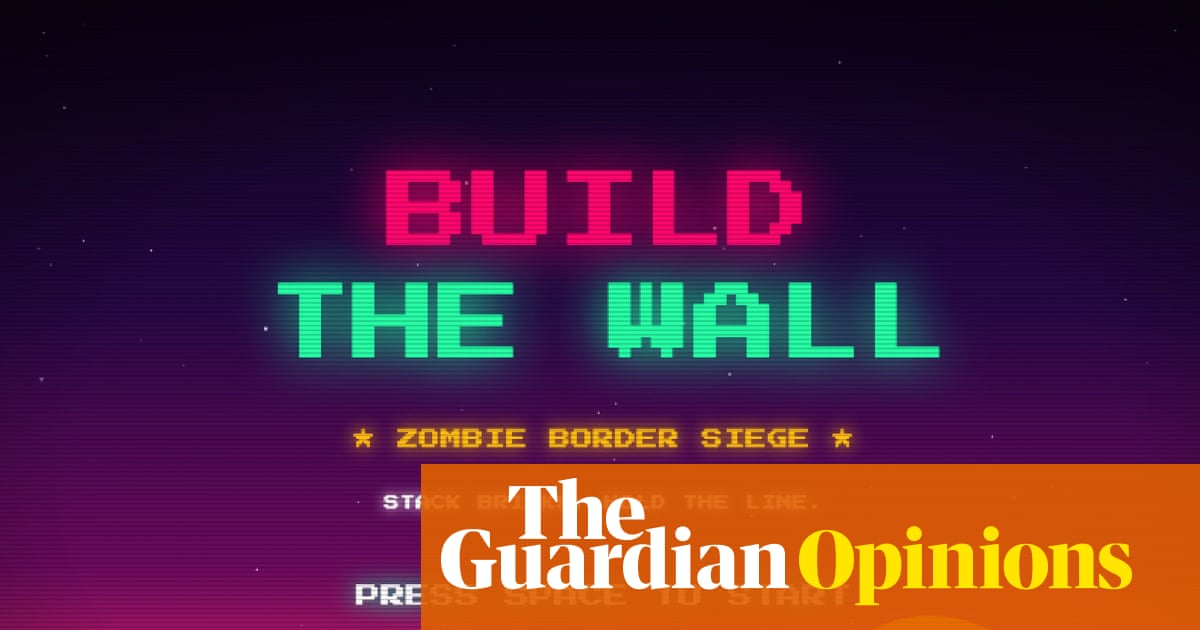
 Matt Binder
Creative Commons licences in the age of AI
Creative Commons has released new guidance on their licenses and AI responding to the fact that many licensors likely did not anticipate machine-scale use of this content when they applied a licence.
Since it started, Creative Commons (CC) has been a suite of copyright licences and a signal of open sharing in the public interest. But the licences and guidance on their use were created 'for a world of reuse by people, a premise that doesn’t fit as neatly in a world of widespread machine use of content through AI.' In response, CC released Guidance on CC Licensing in the Age of AI last week.
The use of CC-licensed materials for AI training raises important questions about the application of the licences. The licenses were developed before mainstream AI tools were readily available and most licensors likely did not anticipate machine-scale use of this kind when deciding to share their content under a CC licence. Because AI developers frequently assume CC-licensed content is free to use and may ignore licence requirements like attribution, CC reports a retreat towards more restrictive licensing as a defence.
As CC says, ‘The retreat toward restrictions has real costs.’ The concern is that this reduces the public pool of resources in the knowledge commons while restricting what humans can do with the material without deterring AI developers from using CC-licensed content. While the guidance acknowledges that 'licensing alone cannot address all of the challenges to sharing that AI presents', CC encourages licensors to use the most permissive and flexible CC license that meets their needs.
The guidance also makes sector-specific recommendations:
- For Open Culture (cultural heritage content) CC recommends CC0, Public Domain Mark (PD), CC Attribution (CC BY) and CC Attribution-ShareAlike (CC BY-SA)
- For Open Education (education and training content) the most commonly used CC licences and tools used – CC0, PD, CC BY, CC BY-SA, CC Attribution-NonCommerical (CC BY-NC), and CC Attribution-NonCommerical-ShareAlike (CC BY-NC-SA) – continue to be recommended
- For Open Science (scientific data and research) CC continues to recommend CC0 (with attribution requested) and CC BY.
The guidance also discuss CC Signals, a framework CC is developing that will allow licensors to communicate their explicit intentions and expectations regarding AI use. As they say, responding to AI requires ‘... new tools to help licensors more clearly communicate not only the copyright permissions that accompany their shared content but also their intentions and expectations behind creating and sharing it with both humans and machines.’
To support the guidance CC is hosting two online workshops. Unfortunately the first session starts at 11:30 pm for Brisbane and 12:30 pm for the rest of Australia's East Coast but the second session is a little more manageable for Australians, starting at 6 am in Brisbane and 7 am for Sydney, Melbourne and Hobart.
 Dee Harris
Keeping tabs
Updates about WTF else has happened with things I have recently covered:
US Google AdTech antitrust case
Follow up: A key milestone and a key decision in the US antitrust case against Google in relation to AdTech lock-in was reached last Thursday when US Judge Leonie Brinkema accepted behavioural remedies over forced divestment to respond to Google's illegal monopoly over ad exchanges. Forced devestment is when government or court requires an entity to sell off assets such as subsidiary companies, property or shareholdings.
The case taken by the Department of Justice (DOJ) and a group of states ultimately saw Judge Brinkema find that Google unlawfully locked publishers on its ad server into using its Google Ad Exchange (AdX) back in April 2025. At a remedies trial the DOJ and states argued Google should have to sell off AdX. Google defended saying a sell off would be technically difficult and cause harm to customers during the transition. The court accepted ‘most of the parties’ proposed behavioural remedies’ and has ordered that the parties file a joint proposal in response and resolving still-disputed issues within 30 days. So within a month we will know what changes to Google’s ad business practices will result.
 Guardian staff reporter
If you are enjoying this WTF now?! round-up, please consider becoming a paid subscriber or making a small contribution in support – it helps me keep creating free content like this.
Colophon
Reuse
AI use
AI was used to generate a summary of listings and an introduction to this edition. Those summaries and that introduction were used to generate ideas. No AI-generated content was used verbatim.
The banner graphic (i.e. the first image at the top of the blog post) was adapted from vector graphics generated in Adobe Illustrator using Firefly 4 with 'Subject' content type selected and the lowest level of detail set. { Text to Vector Graphic prompt: Seamless pattern, very large simple shapes, 80s retro style, fluid organic elements, morphing, overlapping, blurred gradients, visible layers. }
Provenance
This blog post was first published on Wednesday 9 September 2026. It has not been updated. This is version 1.0.