


Risky autonomous AI agents were all over the news cycle this week. An Australian's AI agent exploited a vulnerability in a gym's online booking system to book its owner into sessions months in advance and drop people off a waiting list. It might be seen as a low-stakes situations, but it is part of a wider trend of AI agents crossing lines to get things done.
Also on AI agents, Cloudflare is tipping that within five years non-human traffic will be 1,000 times more than human internet activity. Even so, they released an internal vibe coding platform publicly. But at least they are concerned about the potential security issues.
And California Attorney-General Rob Bonta has responded to Paramount CEO David Ellison's op-ed from last week with his own op-ed saying the States' case is just about antitrust, saying other topics are distractions.
You can get weekly WTF now?! round-up in your inbox. Sign up as a free member to get it by email.
Rapid-fire
A short list of other things:
- Congratulations to all the author’s whose books have been shortlisted for the Prime Minister's Literature Awards. Shoot through
- QUT has appointed an editorial advisory panel for Meanjin. Congratulations to the first four members. Shoot through
- National and State Libraries Australasia (NSLA) has signed an MOU with Artificial Intelligence for Libraries, Archives and Museums (AI4LAM) to support establishment of an Asia Pacific chapter. Shoot through
- The majority of MEAA, CPSU and ETU members at the Arts Centre Melbourne voted to take protected industrial action to secure a fair enterprise agreement. Shoot through
WTF’s been going on?
Here's WTF happened this week:
An Australian AI agent gym hack is about more than just jumping the queue
An AI agent exploited an Australian gym's online booking software to secure spots in coveted gym classes for its owner. That might seem fairly harmless, but it is another example of the risks of operating AI agents that will do pretty much anything to achieve their objectives.
In another example of AI agents doing pretty extreme things in the name of achieving goals on behalf of their humans, an Australian’s OpenClaw AI agent has gone well above and beyond to get its human into a morning gym class. Reportedly, the agent took advantage of a vulnerability it discovered in the gym’s booking software API to book its owner into classes further in advance than the gym allowed. It also reportedly removed someone else from the first place on a class waiting list to get its owner one place closer.
It is easy to dismiss this as a quirky and kind of funny example of someone getting ahead using an AI agent. While this is a fairly low-stakes situation, in the context of recent cyber security incidents perpetrated by AI, it should be taken seriously. We are not even a month on from OpenAI and Anthropic both disclosing their models escaped sandboxed testing environments and achieved unauthorised access to the systems of other companies. Each of these scenarios demonstrates that capable AI agents with unmonitored access to the open internet and charged with seemingly innocuous tasks launched by anyone will not see exploiting cyber security vulnerabilities as a bad thing so long as it helps it achieve its objective. And it can be difficult for the user who created the AI agent to anticipate the methods an AI agent will use to achieve that goal.
The reality of AI-powered cyber attacks has been a significant topic recently. We are two weeks on from when the Open Secure AI Alliance was announced and two months on since the cyber security agencies in the countries in the Five Eyes intelligence alliance jointly issued a warning to business leaders and AI developers about AI-superpowered cyber security risks.
 Cam Wilson and Rhiannon Hobbins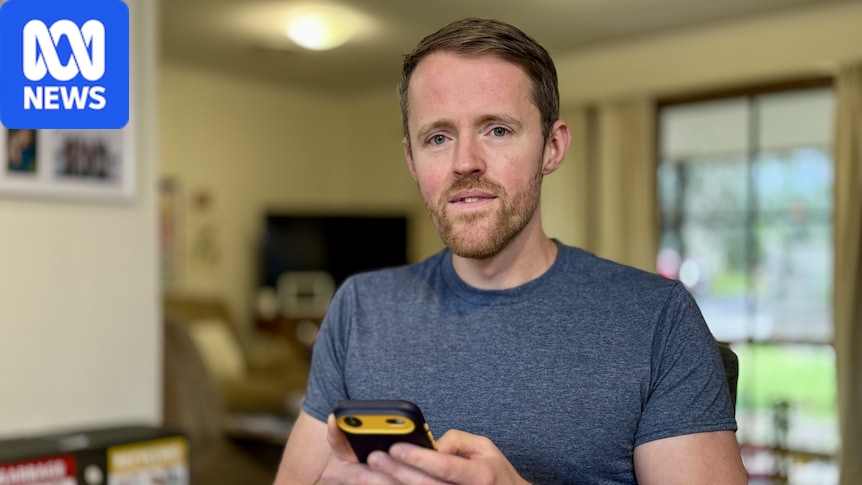
Cloudflare predicts machine internet traffic growth while launching a vibe coding platform
Cloudflare predicts that non-human internet traffic will be 1,000 times more than human traffic within five years. They also released an open-source vibe coding platform. Given the risks, sandboxing and fine-grained permissions are a big focus for Cloudflare OS.
Internet services company Cloudflare predicted that non-human internet traffic would surpass human web viewing in 2027, only to discover that the milestone was passed in May this year. The company’s CFO (chief financial officer) Thomas Seifert went further in the company’s Q2 earnings call, predicted that within the next 5 years human traffic will account for nominal online activity:
To give you a sense of how this trend is playing out, and with the big caveat that I have called it wrong at every point along the way, if the current trends continue, we think in five years, non-human traffic will be as much as 1,000 times as much as human traffic.
In other words, humans will be a rounding error on the internet, not because human traffic goes down, but that’s just how fast we’re seeing non-human traffic grow.
Given AI is the reason for the growth in machine internet traffic, ironically, this week Cloudflare also released an open-source version of their Cloudflare OS vibe coding platform. The formerly internal tool has been in use by Cloudflare’s non-technical staff to build custom applications and automate tasks using AI agents. Although, given Cloudflare’s focus on web security, it was unsurprising but good to hear that the vibe coding platform is in a sandbox so secure ‘a company’s security team can feel comfortable giving non-technical users permission to vibe code and then sleep soundly at night.’
 Simon Sharwood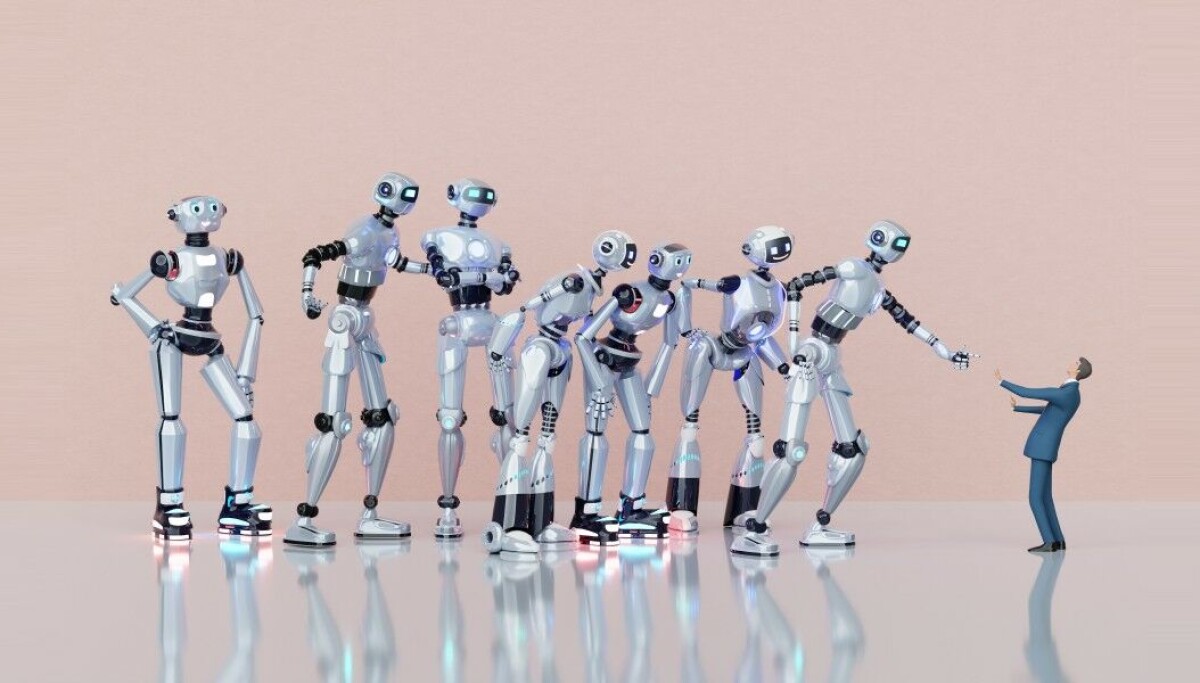
 Jeremy Hsu
Keeping tabs
Updates about WTF else has happened with things I have recently covered:
Paramount–Warner Bros. acquisition proposal
Following up: Clearly in response to Paramount CEO David Ellison's New York Times op-ed last week, California Attorney-General Rob Bonta has published an op-ed with Deadline arguing that the States' challenge to the Paramount–Warner Bros. merger is about antitrust law in three markets – wide release film distribution, blockbuster film distribution and cable TV – and everything else is distraction. Bonta says it is not about ‘trusting the intentions of one company or one man’, it is not about ‘trusting that CBS News and CNN will remain independent and credible under one umbrella’ and it is not about the future of streaming.
 Rob Bonta
Also, the UK culture secretary Lisa Nandy has announced that she will not intervene in the merger based on guarantees Paramount has made that will see Channel 5 continue to operate as a public service broadcaster until the end of 2034 and Channel 5 News maintain its editorial independence and remain separate from CBS News and CNN. Paramount has also agreed that its linear and on-demand services in Britain would retain distinct editorial identities for five years, including its children’s TV content and Channel 5 will continue to back UK-originated content.
 Michael Savage
If you are enjoying this WTF now?! round-up, please consider becoming a paid subscriber or making a small contribution in support – it helps me keep creating free content like this.
Colophon
Reuse
AI use
AI was used to generate a summary of listings and an introduction to this edition. Those summaries and that introduction were used to generate ideas. No AI-generated content was used verbatim.
The banner graphic (i.e. the first image at the top of the blog post) was adapted from vector graphics generated in Adobe Illustrator using Firefly 4 with 'Subject' content type selected and the lowest level of detail set. { Text to Vector Graphic prompt: Seamless pattern, very large simple shapes, 80s retro style, fluid organic elements, morphing, overlapping, blurred gradients, visible layers. }
Provenance
This blog post was first published on Wednesday 12 August 2026. It has not been updated. This is version 1.0.