Hello from Kamberri Canberra where I am attending the Australian Museums and Galleries Association (AMaGA) National Conference. It has been an insightful and busy few days which is why WTF now?! #59 is a little later than usual.
This week AI and copyright has been a major focus with more debate happening here in Australia. In particular, concerns have been raised that any mechanism that allows AI scrapping of copyright material could face constitutional challenges over government ‘acquisition of property without just terms’. Also, UNSW academics have proposed a model they are calling Copyright Plus which beefs up transparency, fair remuneration, opt-out mechanisms and enforcement. Turning to the courts and over 50 amicus curiae briefs have been filed in the In re: OpenAI, Inc. Copyright Infringement Litigation, including submissions from the Wikimedia Foundation, Cate Blanchett’s Human Consent Foundation and Professor Matthew Sag.
You can get weekly WTF now?! round-ups in your inbox. Sign up as a free member to get it by email.
WTF’s been going on?
Here's WTF happened this week:
Constitutional concerns about Australia’s possible AI response and UNSW offers Copyright Plus as an alternative
Claims that if Australia allows AI training it could constitute ‘acquisition of property without just terms’ and open the Government to Constitutional challenges adding to the existing AI and copyright complexity. Also UNSW Sydney academics have proposed ‘Copyright Plus’ – a model calling for transparency, opt-out, fair remuneration and enforcement mechanisms.
We know a text and data mining (TDM) exception is off the table but there is still no official word on what else the Australia Government will put forward to address the copyright and AI issue. The rumour mill is well and truly churning with claims we will see draft legislation soon. Ahead of that announcement, there have been some updates:
Constitutional concerns with scraping scheme
Adding to the complexity of the copyright and AI debate a number of parties are warning that a mechanism to allow AI companies to scrape content for AI training could constitute an ‘acquisition of property without just terms’ under the Australian Constitution. One of them is Professor Emerita at Sydney Law School Anne Twomey, a constitutional expert, who conceded that ‘depending how legislation was drafted’ there is a potential concern ‘that granting AI companies permission to scrape copyrighted material from the internet could amount to an acquisition of property by the government.’ Twomey added that allowing AI companies to train on international data in Australia could potentially create grounds for global rights holders to take legal action here.
The concern has been echoed by Nationals Senator Ross Cadell, who is also on the Joint Select Committee on Artificial Intelligence, who said ‘If [the Government] go ahead with an opt-out model, it does raise a real question of whether the government is acquiring the intellectual property rights of others.’ Annabelle Herd, the CEO of the Australian Recording Industry Association (ARIA) and other record executives joined the choir cautioning the government of the potential constitutional issues.
 Josh Butler
UNSW’s Copyright Plus model
UNSW Sydney academics have proposed a model they are calling Copyright Plus that seeks to address the disadvantages artists face in relation to AI. Put forward by Professor Kathy Bowrey, an IP specialist from UNSW Law and other academics the proposal wants to restore artists’ agency and revalue creative labour without attempting to stop AI advancement. To that end, Bowrey rightly notes:
Importantly, copyright in a creative work is not always held by the person who created or performed it. It may instead be held by a publisher, record label, production company or other rights holder. Under current Australian law, AI companies don’t have to disclose data sources and copyright owners have no obligation to inform original creators if they have licensed their works for AI use
The key tenets of the scheme are:
- Transparency – Copyright Plus identifies that a lack of transparency on the part of AI companies is only one part of the problem for artists. Likewise, if an artist has licensed or assigned copyright to a publisher, record label, production company or anyone else there is no obligation for those parties to inform creators if they have licensed their works for AI use or on what terms. Copyright Plus proposes dual transparency obligations that would see AI companies disclose training data and copyright owners disclose AI deals affecting creators.
- Opt out – The proposed scheme aims to reassert the principle that copyright material published online does not lose its value simply because it’s publicly accessible. To enable this artists need agency to ‘permit use, negotiate its terms or refuse it’. That greater transparency would be a contributing factor to that agency because, as IP specialist from UNSW Law Professor Kathy Bowrey says, ‘[artists] can’t make an informed choice about AI training if they don’t know whether their work is being used.’
- Remuneration – The scheme proposes both a fair remuneration fund for copyright owners historically affected by AI training and a cultural fund to support the arts ecosystem. Fair remuneration would be dispersed by ‘unions and professional organisations’ while the administration of the cultural fund is not stated.
- Enforcement – Copyright Plus looks to the notice and takedown scheme already in operation in the Copyright Act to give artists an ‘expedited presumptive takedown notices’ mechanism to stop AI content that mimics their work or is inauthentic content in the style of Indigenous expressions protected by Indigenous Cultural and Intellectual Property (ICIP).
⟨ A few thoughts from me: I wonder if their pursuit of transparency couldn’t also aim for greater accountability across AI companies and copyright organisations as well as making room for a level of public transparency to increase scrutiny of AI deals by journalists and academics. It would help improve accountability across the ecosystem while building community trust in AI.
While I agree with their take on enforcement of any ‘AI rights’ artists may have in relation to AI training, I think it is important to acknowledge that the costs of legal representation and litigation to enforce copyright and the risk of losing a case are very large hurdles for the average artist earning $38,500 a year from their combined creative and arts-related income to take on!
⟩
 Kathy Bowrey
 Tory Shepherd
More than 50 amicus 'friends of the court' briefs filed in the OpenAI Copyright Infringement Litigation
The Wikimedia Foundation, Cate Blanchett’s Human Consent Foundation and Professor Matthew Sag are just three of the 50+ filed amicus briefs in In re: OpenAI, Inc. Copyright Infringement Litigation, offering diverse perspectives on whether AI training constitutes fair use and how copyright law should govern indiscriminate web scraping.
Judge Sidney H. Stein who is overseeing In re: OpenAI, Inc. Copyright Infringement Litigation set a 30 October 2026 court deadline for amicus curiae (‘friend of the court’) briefs from parties outside of the cases. While there are numerous other copyright and AI cases working their way through the courts, this multidistrict litigation proceeding is significant given it combined 12 copyright cases filed against OpenAI and Microsoft byThe New York Times, other news organisations, the Center for Investigative Reporting, Ziff Davis, a proposed class of book authors led by the Authors Guild and other copyright owners. The combined cases focus on the use of their copyright material in AI training and whether that constitutes fair use under US copyright law. Here’s what a few of the over 50 amicus briefs had to say:
The Wikimedia Foundation
The Wikimedia Foundation (WMF) filed an amicus brief calling on the court to protect open knowledge by focusing on how transformative AI is. WMF isn't siding with the AI companies or copyright owners, but rather they argue that the free and open human knowledge that Wikimedians rely on as reliable sources is being challenged by the indiscriminate scraping of web content by AI bots. Wikimedia contributors rely on journalism, published research and other trustworthy sources while AI systems rely on Wikimedia platforms for high-quality training data.
Overextending copyright to limit input data could result in basic facts and information ending up locked behind paywalls as more content owners try to fend off scrapping bots. There is an important distinction between factual information which is outside of copyright and should be and expressive works. Copyright should not be used as a blunt instrument to monopolise knowledge.
WMF argues that AI training should be considered fair use where copyright content is being used for training systems that are ‘something new and different from the original sources’. But if what AI is outputting is essentially an information substitute for the original content that should not be deemed fair use as it has not been transformative enough. They also argue that the use of copyright material for retrieval-augmented generation (RAG) and similar grounding techniques – where models retrieve and present existing web content directly to users – should not be fair use and should require a licence or, where an open content licence such as Creative Commons applies, RAG should respect the licence term.
WMF cautions that a too restrictive approach to fair use in the context of AI could inhibit technological innovation, which would limit the availability of tools that benefit open source projects like Wikipedia. Pushing AI training more towards licensing would likely mean only large technology companies would afford to pay for the input data and models could only be used by well-resourced developers and deployers who can purchase the models. Much open-source AI would be priced out.
On the flip side, a blanket acceptance that AI training is fair use in any situation would harm original content creators, leading to further contraction of the free and open web that are the crucial secondary sources that projects like Wikipedia rely on.
Also worth noting is the point WMF makes that AI scraping and other AI activity should be done responsibly and not create an unsustainable burden on the systems that keep Wikipedia and other free and open content websites running. Regardless of whether companies are gathering material for training or retrieving it for answers, they must respect its public API rate limits or use its Wikimedia Enterprise API offerings.
 Stephen LaPorte
 Wikimedia Foundation
Cate Blanchett’s Human Consent Foundation
The Human Consent Foundation which Cate Blanchett co-founded and other organisations jointly submitted an amicus brief that challenges AI companies’ claims that licensing for AI training is too hard. It argues that collective licensing is common practice that has been in play for over a century and that these copyright clearinghouses solves the transaction-cost licensing problem.
The brief also claims that machine-readable consent protocols are not just feasible but are in use already. They point to their Human Consent Standard as an example, but also pointed to ISBN (International Standard Book Number) and other global databases. And it focuses on the fourth fair use factor – the effect on the potential market – arguing that unauthorised scraping harms active licensing markets.
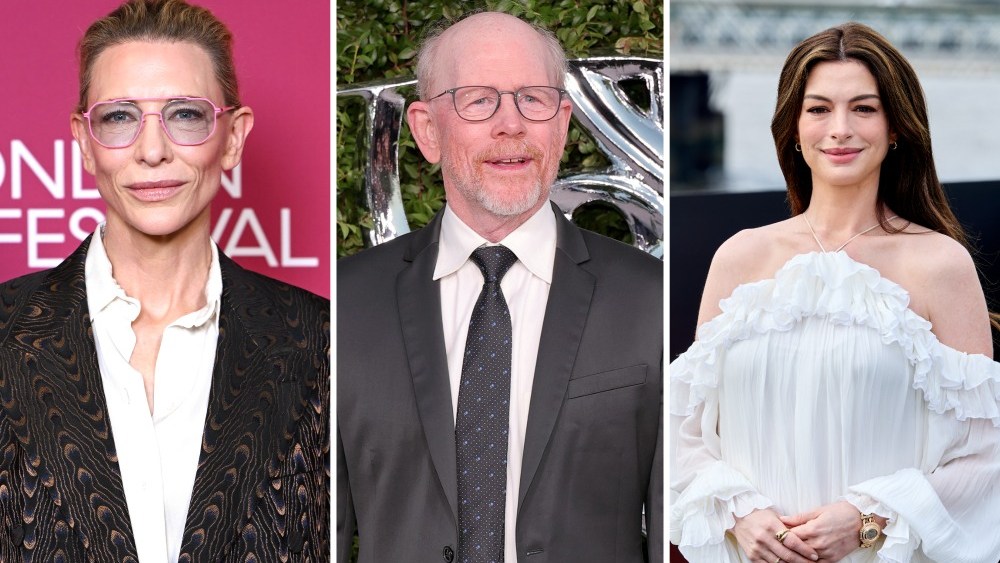
The brief is submitted by Human Consent Foundation, Creative Artists Agency, Music Artists Coalition, the National Association of Voice Actors, Writer, Inc and Creators Coalition on Artificial Intelligence and provides a list of supportive creators and other stakeholders including Madonna, Robert De Niro, Scarlett Johansson, Anne Hathaway, Helen Mirren, Bette Midler, Julia Roberts, Emma Thompson, Rosario Dawson, Dan Levy, Paul Feig, Rian Johnson and others.
 Corbin Bolies
Matthew Sag, Professor of Law in Artificial Intelligence, Machine Learning and Data Science
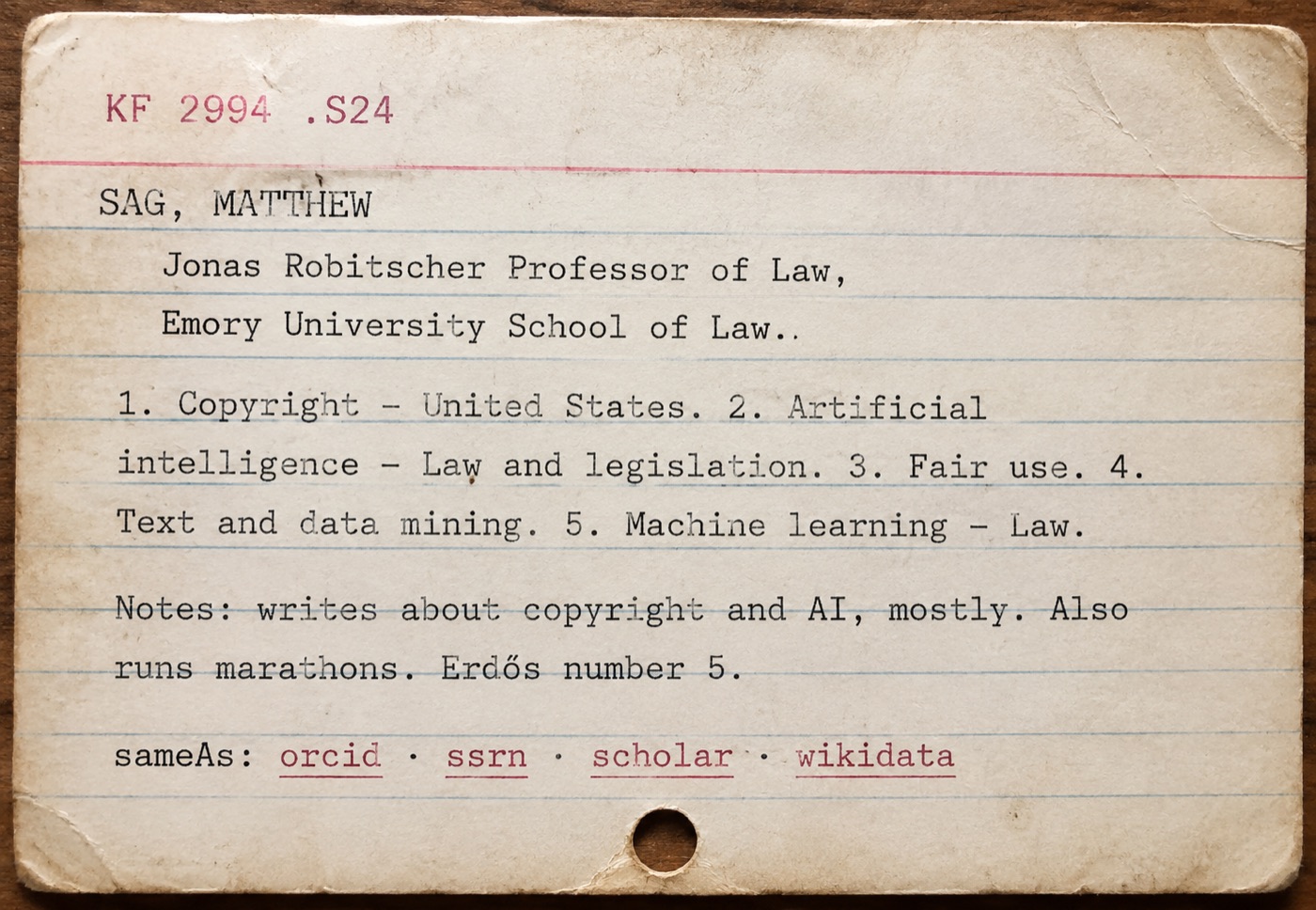
Matthew Sag, the Jonas Robitscher Professor of Law in Artificial Intelligence, Machine Learning and Data Science at Emory University Law School, also submitted an amicus brief. Out the gate Sag argues that AI training is transformative under existing precedent:
We have reached the point where this is so obvious it almost goes without saying. To be sure, the training pipeline begins with several acts of literal copying, but the training process itself is not copying in any conventional sense. During training, a model that is essentially a blank slate is exposed to training data, and that data influences the parameters of the model. But the influence of any single piece of data on the model is typically microscopic. Most importantly, what comes out of the model once it has been trained typically doesn’t look anything remotely like a substantially similar copy of any piece of training data. The entire process writ large is transformative in both a legal and descriptive sense.
This makes training both functionally and legally transformative.
Sag also says rights clearance at the scale needed for large models (i.e. internet-scale) is impossible, not just difficult, time-consuming and expensive. To this he adds that:
The problem is that there is a fundamental mismatch between the enormous collective value of training data and the negligible marginal contribution of any individual work. The cost of identifying rights holders, negotiating licenses, and administering payments would routinely exceed the value of the permissions obtained. People look at institutions like ASCAP [(American Society of Composers, Authors and Publishers)] and think it shows that licensing at scale is possible, but that’s because they don’t understand the difference between distributing money to a few million people and what it would take to distribute money to hundreds of millions or billions of creators. Agreements with major rights holders can’t solve this problem: they demonstrate viable markets for access to valuable content, not for obtaining permissions across the entire internet. There’s no way for the court to change this reality just by wishing a licensing market into existence.
For Sag, two particular scenarios should weigh against fair use in relation to the fourth factor of the doctrine that considers the effect of a use on the market for or value of the copyright material: the first is where extracted content is used to create direct substitutes for a particular source – what Sag calls ‘indirect expressive substitution’ and the second where pirated material is used for training thereby ‘bypass[ing] an existing, economically meaningful market for lawful access to copyrighted works.’ In determining if a court agrees with these two points, Sag says ‘My hope is that the court will decide the easy questions clearly and the hard questions carefully, rather than treating the whole thing as all-or-nothing.’

Of course, what I have included here is just a small sampler of the full list of amicus briefs submitted. If you want a more comprehensive overview it is worth looking at Re:Create’s analysis (but also their memo). Their wrap of the amicus briefings notes they fall largely into the following groups:
- other AI interests such as AI companies Midjourney and Runway, AI Progress (an AI advocacy coalition made up of the BigAI companies) and AI investors who claim licensing for training is impractical and that fair use is essential to (the US) winning the global AI race
- fair use defenders like including the Electronic Frontier Foundation (EFF), Public Knowledge and Authors Alliance came out in defence of fair use, along with fair use academics including Matthew Sag but also Rebecca Tushnet and Pam Samuelson and tech industry players such as the Computer & Communications Industry Association (CCIA)
- the usual copyright protectionists who are largely copyright and industry organisations – including Copyright Alliance, the Recording Industry Association of America (RIAA), the Association of American Publishers (AAP) and the NewsMedia Alliance – and protectionist academics who urge a narrow reading of fair use and ensuring training AI on copyrighted material requires authorisation
- related to them are potential licensors or parties who want AI licensing revenue which includes numerous creative worker unions and guilds
- there is also a diverse group of advocates for the public benefits of AI talking up AI as an assistive tool that democratises creative and knowledge production, information access and back office efficiency.
 Nora Duffy

If you are enjoying this WTF now?! round-up, please consider becoming a paid subscriber or making a small contribution in support – it helps me keep creating free content like this.
Colophon
Reuse
Conflict of interest
I am the President of Wikimedia Australia (WMAU). The views expressed in this blog post are my own and do not express the views of WMAU or the Wikimedia Foundation.
I am the Co-lead of Creative Commons Australia (CC AU) and I am an individual member of the Creative Commons Global Network (CC GN). The views expressed in this blog post are my own and do not express the views of CC AU or the Creative Commons Corporation.
AI use
AI was used to generate a summary of listings and an introduction to this edition. Those summaries and that introduction were used to generate ideas. No AI-generated content was used verbatim.
The banner graphic (i.e. the first image at the top of the blog post) was adapted from vector graphics generated in Adobe Illustrator using Firefly 4 with 'Subject' content type selected and the lowest level of detail set. { Text to Vector Graphic prompt: Seamless pattern, very large simple shapes, 80s retro style, fluid organic elements, morphing, overlapping, blurred gradients, visible layers. }
Provenance
This blog post was first published on Wednesday 4 November 2026. It has not been updated. This is version 1.0.