


Today the world has lost an icon!

This week, the regulatory landscape for social media and AI both saw intensification. The US Department of Justice has secured a significant settlement with TikTok over allegations the short-form video platform collected private data about children under 13 years of age without parental consent. Also, Meta faces escalating scrutiny over its child safety practices as testimony claims executives knew there were concerns but prioritised user numbers.
In AI news, state and federal leaders are grappling with balancing data centre investment with the energy, environmental and community pressures of data center development projects. In the face of tussles between the states and the federal government it has been revealed that Anthropic expressed interest in building significant new data centre capacity. Also, the recording industry body ARIA has set new rules making AI-generated recordings ineligible for the ARIA Charts and the ARIA Awards.
And the US Federal Trade Commission is considering stronger action against personalised pricing.
You can get weekly WTF now?! round-ups in your inbox. Sign up as a free member to get it by email.
Rapid-fire
A short list of other things:
- Adelaide Festival Centre announced the program for OzAsia Festival while also stating that 2026 will be the festival’s final edition. ⟨ With the quiet ending of the Guitar Festival at the end of last year Adelaide’s title as the festival city could be under threat! ⟩ Shoot through
- Alabama’s Attorney-General Steve Marshall has launched an investigation into OpenAI’s in the wake of the hack on Hugging Face last month. Shoot through
- Cloudflare has released the first stable version of EmDash CMS, what it calls the spiritual successor to WordPress. Their alternative content management system is built for agents as well as people, while addressing the vulnerability of plugins and the centralised marketplace of the WordPress ecosystem. Shoot through
WTF’s been going on?
Here's WTF happened this week:
AI songs are ineligible for the ARIA Charts and Awards from Friday
ARIA has announced that entirely AI-generated tracks are not eligible for the ARIA Charts or the ARIA Awards. To be eligible recordings using AI must be substantially human-made.
On Tuesday the Australian Recording Industry Association (ARIA) announced updates to the ARIA Charts Code of Practice that will exclude wholly AI-generated tracks from the Charts of the most popular music in Australia. Ineligible recording will also not be eligible for an ARIA Award. To be eligible, recordings that use generative AI in a supporting role must be substantially human made and not raise stream or chart manipulation concerns.
Under the new code, ‘[w]here ARIA determines a recording is ineligible, it may decline to accept it for survey, exclude or remove it from the Charts prospectively or retrospectively, adjust Chart positions, withdraw accreditations, and revoke or request the return of any ARIA #1 Award.’ The updated disputes process allows artists and their representatives to contest exclusion and provide evidence supporting a recording’s eligibility.
The updates reflect how the IFPI Principles for the Eligibility of Recordings Developed Using AI in Official Music Charts Worldwide applies to the ARIA Charts. Those principles were released on Friday 30 July 2026. The updated Code comes effect from the ARIA Chart dated Monday 31 August 2026.
Back in July there was scrutiny of Queensland DJ and producer Josh Fawaz's cover of Madonna's 'Like a Prayer', which became the most-played song on Australian radio and reached number four on two ARIA charts in July. The track was criticised for using AI with Fawaz later saying he used AI ‘as a tool’ and updating the track listing on Spotify to say the vocals and drums were AI-generated.
In addition, ARIA will adopt the track-level ‘AI-Generated’ and ‘AI-Assisted’ labels which IFPI announced on Friday 10 July 2026.


 Cam Wilson
TikTok settles child privacy case as testimonies in the Meta child safety case are heard
TikTok has settled a children's privacy case in the US for $400 million. Meanwhile, testimony in a child safety case against Meta claims executives ignored harms to children.
On Friday just gone it was announced that TikTok parent ByteDance agreed to settle a US Department of Justice (DOJ) case alleging the short-form video app breached the privacy of children by collecting personal information about users under the age of 13 without parental consent. Under the settlement ByteDance will pay out $400 million.
The DOJ is chalking the settlement up as a win; firstly, because of the 'significant monetary recovery' – one of the largest recoveries ever obtained in a COPPA (Children’s Online Privacy Protection Act) case – and secondly, because it ‘ensur[es] children receive the full protections that Congress mandated’ without protracted litigation. Notably, the DOJ pointed to ‘significant changes to its ownership, management, compliance functions, and privacy practices’ at TikTok as part of their willingness to settle.
It comes as another child safety case against Meta continues with Facebook safety engineer and Instagram consultant Arturo Béjar testifying that Mark Zuckerberg, Instagram head Adam Mosseri and other Meta executives were aware of the harms their platforms cause to children but pursued numbers of safety. Béjar told the court that public statements by Zuckerberg ‘created a false and misleading impression of Facebook’s commitment to young people.’ Prompted by the experiences of his teenage daughter’s experiences using Instagram – including unwanted sexual advances, being sent sexually explicit images and receiving misogynistic comments – Béjar conducting research of teen’s experiences on Instagram that found that 51% of users had bad or harmful experiences and of those users, the content was taken down only 0.02% of the time.
Mosseri was the first Meta executive to testify, denying claims that the company hid negative information regarding its child safety features. If the case is successful damages could be as high as $200 billion, making the $400 million TikTok is fronting look like spare change. It is also likely Meta will have to make court-mandated design changes to their platforms to make them safer for children and reduce the deliberately addictive nature of them.



 Dara Kerr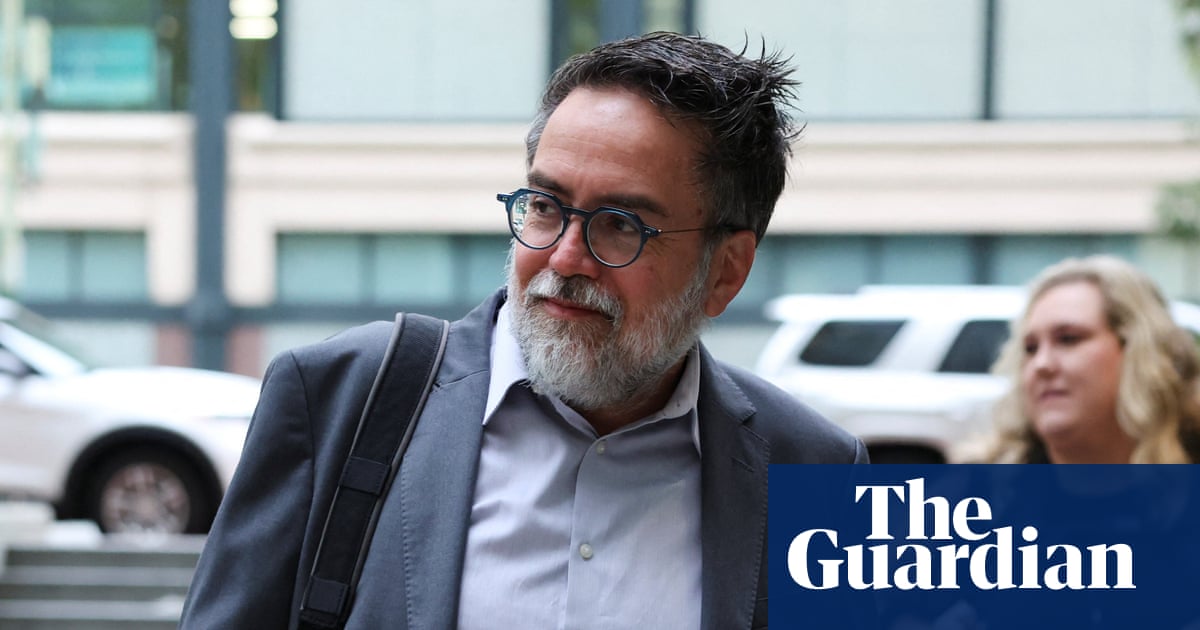
 Dara Kerr
Data centre development debated as documents reveal Anthropic was eyeing massive investment in NSW
Amidst energy, environmental and community concerns the state and federal governments are grappling with potential national standards for data centre developments, but are not aligned on those. The debate comes alongside the revelation that Anthropic had expressed interest in building significant new data centre capacity in New South Wales.
Official NSW government documents reveal that Anthropic was interested in building up to 5 gigawatts of data centre capacity in New South Wales. For context, that's roughly a capacity three times the size of Australia's entire data centre infrastructure currently. Reasons for US AI companies’ interest in Australia as a location for data centres largely echo those outlined by Prime Minister Anthony Albanese’s in his recent AI in Australia’s interests speech: available land, renewable energy capacity and a stable democracy.
The issue of attracting data centre development projects is on the agenda for National Cabinet today. While state and federal governments are eager to attract AI investment dollars, the rapid expansion has sparked community concerns over energy, water use and environmental impact. The Australian Energy Market Operator (AEMO) estimates data centre energy consumption will rise from 3% of the nation's electricity supply to 13% in a decade. In response, National Cabinet is considering national standards although the issue of energy supply is a point of contention. Projects needing to ‘bring their own renewable energy’ are being pushed by the Commonwealth government, even if that means having to ‘legislate over the top of states’. Queensland and the Northern Territory oppose the federal government forcing renewables saying states and territories ‘should be free to make laws that “suit” the views of their community’, including ‘what energy mix they should be using.’
 Cam Wilson
 chief digital political correspondent Clare Armstrong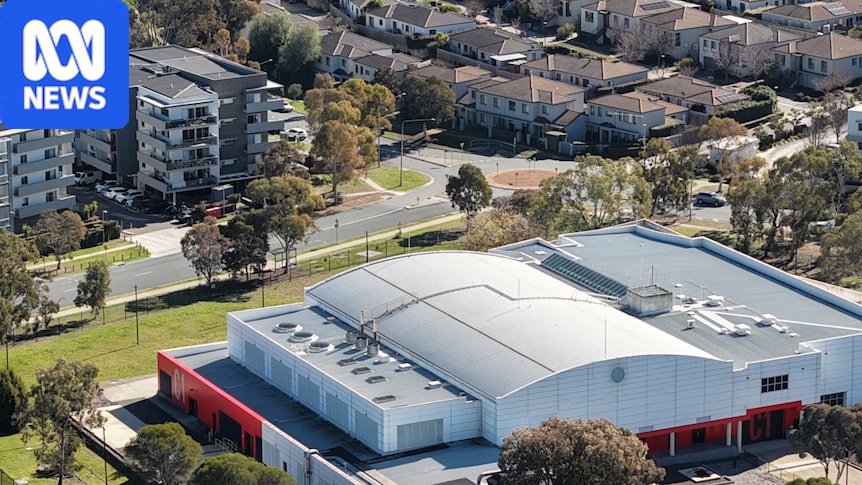
A bit on the side
WTF else happened this week:
FTC is consulting on personalised pricing. The US Federal Trade Commission (FTC) is undertaking consultation on a draft enforcement policy statement on personalised pricing – a pricing strategy that uses a consumer’s personal data and algorithms to set individual prices based on an assumption of what that individual is willing to pay. Because of how it estimates a price it is also called surveillance pricing. FTC Chairman Andrew Ferguson said ‘When consumers see a listed price, they expect it to be [the] same price that everyone else sees, not the retailer’s estimate of how much they are willing to pay based on their personal data.’ Importantly, the FTC can't necessarily stop companies from engaging in personalised pricing, but a failure to disclose to consumers how and when their personal data is being used to set a price could violate US consumer protection laws. Personalised pricing is similar to but not the same as dynamic pricing (also known as surge pricing). That approach determines price based on external market conditions such as time of day and real-time demand rather than using an individual customer’s data to estimate their willingness to pay.
 Matthew Chesnes (DAD, BE Antitrust I) and Ted Rosenbaum (Acting BE Director)
- US FTC considers requiring disclosure of personalized pricing, David Shepardson, Thursday 20 August 2026, Reuters
Colophon
Reuse
AI use
AI was used to generate a summary of listings and an introduction to this edition. Those summaries and that introduction were used to generate ideas. No AI-generated content was used verbatim.
The banner graphic (i.e. the first image at the top of the blog post) was adapted from vector graphics generated in Adobe Illustrator using Firefly 4 with 'Subject' content type selected and the lowest level of detail set. { Text to Vector Graphic prompt: Seamless pattern, very large simple shapes, 80s retro style, fluid organic elements, morphing, overlapping, blurred gradients, visible layers. }
Provenance
This blog post was first published on Wednesday 26 August 2026. It has not been updated. This is version 1.0.