
For the fourth week in a row copyright and AI has been a hot topic in Australia with Prime Minister Anthony Albanese today drawing a line under the ‘will they won't they’ speculation that the government would go back on its declaration that a text and data mining exception was off the table. It absolutely is.
That is just one part of a national response to AI by the Albanese Government. Also in the package is a new Office of AI to coordinate AI regulation, expectations on data centre developments, plans to attract frontier AI development and getting the Australians ready for the future AI workforce.
Two creator-first AI initatives were also announced this week: new AI music labels and a partnership with Cloudflare to stop AI scraping creative content on Patreon. Also, the unfair dismissal case between Jayson Gillham and the Melbourne Symphony Orchestra (MSO) came to an end that leaves a friction point between artistic freedom and arts organisations’ bottom lines.
Rapid-fire
A short list of other things:
- MONA (Museum of New and Old Art) intends to open a new art museum on the banks of the Chao Phraya River in Bangkok, Thailand. Shoot through
- The first podcast in a new series called All That We Touch tied to the wikihistories research project is out looking at how Australia is represented on Wikipedia. Shoot through
- Canberra Contemporary has announced April Phillips as its new Artistic Director and CEO. Shoot through
WTF’s been going on?
Here's WTF happened this week:
Albanese announced Australian AI Standards
Prime Minister Anthony Albanese today announced a mandatory national regulatory framework for AI, overseen by a new Office of AI. Australia’s response to AI will attract data centre and frontier AI investment while protecting Australian values, copyright and local jobs.
In a speech at The University of Sydney today Prime Minister Anthony Albanese declared ‘This is our time to decide what AI looks like here in Australia’ and set out rules that ensure ‘we apply our enduring values of fairness and opportunity to make this technology work for us’. Albanese conjured up notions of Australian values mirrored in Australiaisms such as Medicare, superannuation, early support for women's suffrage, our secret ballot elections, public ownership of the NBN and the social media age ban. He went on to say ‘The fact that we cannot stop change, does not render us powerless, far from it’, that ‘Our power, our agency, our choice lies in embracing change and shaping it’ and Australia needs to ‘shap[e] the future, rather than letting the future shape us.’
AI Standards and the Office of AI
A key announcement in today’s speech was that ‘Australia will be the first country in the world to bring [AI] issues into a single, national framework.’ The lynchpin to Australia’s response to AI is the establishment of a set of Australian Standards for AI and an Office of AI in the Department of the Prime Minister and Cabinet.
The Standards will create a mandatory regulatory framework developed with the support of the National Cabinet and bringing together disparate ‘issue-by-issue, sector by sector’ work being undertaken by Ministers across Government. It will be coordinated by the new Office of AI working with Minister for Industry and Innovation Tim Ayres and Assistant Minister for Science, Technology and the Digital Economy Andrew Charlton. The government intends to table legislation in Parliament early next year.
Copyright & AI
Albanese used the speech to reassure copyright owners that ‘No company should use Australian books, music, art or news to build or train AI without the artist’s control’, including setting the price and value of that work. While Albanese said no ‘Nowhere do artists or rights holders have sufficient control of their work, when it comes to AI training’ and ‘... the best way to secure the strongest copyright protections for Australian artists is for Australia to be active and involved’ and ‘To build the best possible solution for ourselves’, it is unclear what that solution will be ⟨ although it is clear that a text and data mining exception remains off the table ⟩.
Unsurprisingly, APRA AMCOS has applauded the Prime Minister for his ‘clear and unequivocal support for Australia’s artists, creators and copyright holders.’ The music collecting society also said the new Office of AI is ‘a renewed opportunity to convert government certainty on copyright into a licensing framework built on consent and payment that delivers for Australia and its creative economy.’ Annabelle Herd, the CEO of the Australian Recording Industry Association (ARIA), the MEAA and the Australian Society of Authors (ASA) have also come out in support came out in support of the speech.
Attracting data centre & AI investment
Albanese also spoke to our ‘advantage of geography’ that affords us space to meet the physical, material footprint of data centres, as well as ‘sunlight to power affordable, renewable, reliable energy’ to power them, minerals and rare earths elements needed for computational hardware and that our stable democracy underpins it all. But national standards for data centre development are also needed, as is greater clarity and streamlining of approvals and compliance verification.
The Prime Minister also flagged that data centre locations cannot compete with new housing, must pay their full share of grid connection so no costs are passed on to homes or businesses and must be net-generators of energy by underwriting new power supply and put at least as much energy into power grid as they take out of it. Also, because we are one of the driest countries, Albanese also said data centres will have to ‘minimise their water use, maximise their energy efficiency, and pay for any additional water infrastructure required’.
To ensure Australia doesn’t become a data warehouse, Albanese said we need to attract frontier AI investment that means we are not the last link of ‘the digital supply chain’. AI must be designed and built here, contributing to our digital sovereignty, economic resilience and national security.
Minimising job displacement
While Australia wants to attract AI companies to our shores, they will also need to invest in local jobs, skills and training to ensure Australians are fully equipped for the AI transition. AI should support and create good, secure jobs, not replace them.
⟨ On a side note, Albanese’s also seemingly reaffirmed the federal government’s commitment to open data in the speech. ⟩


 Clare Armstrong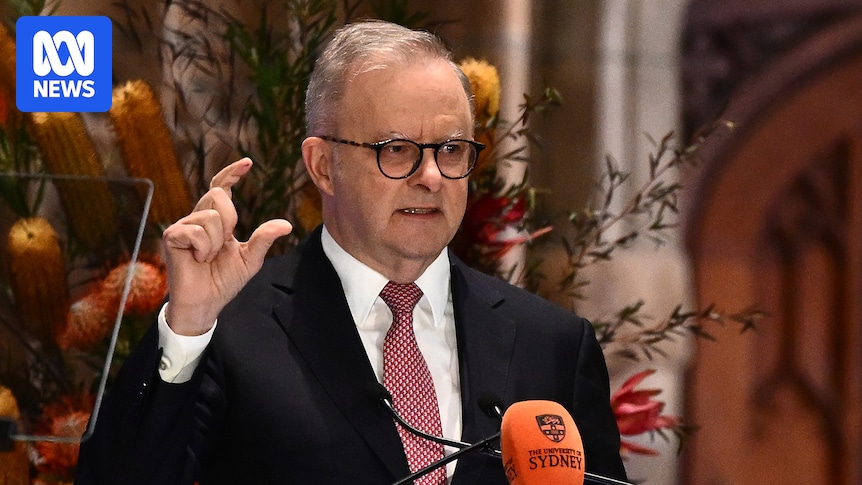

Two AI initiatives for creators announced
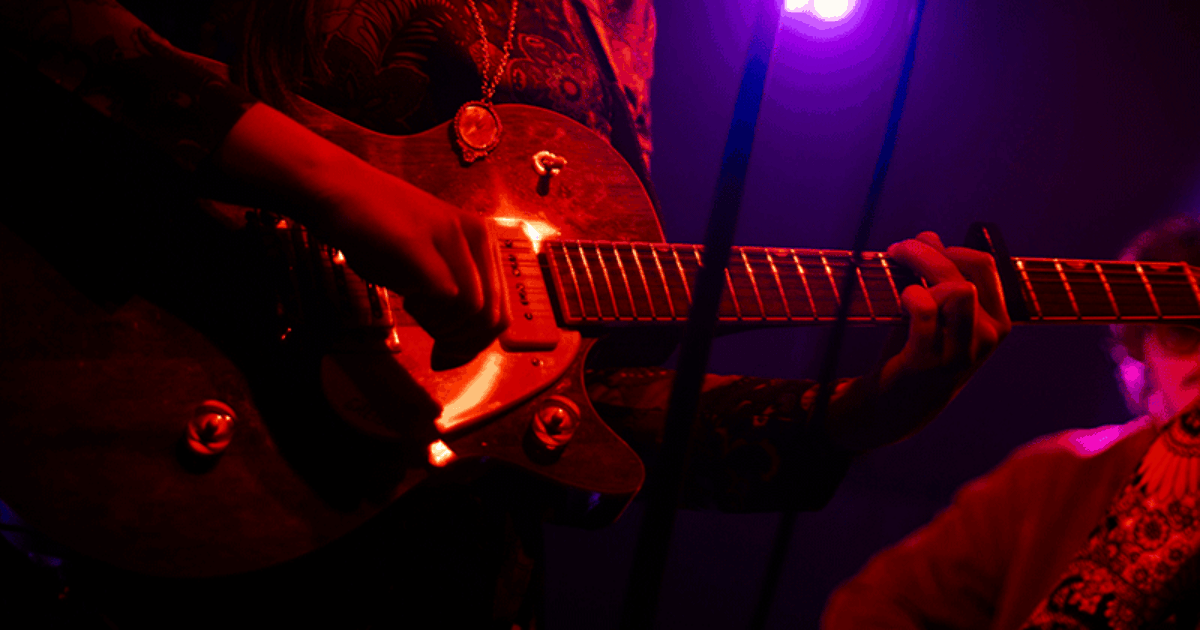
The music industry has announced new AI labels to increase transparency of AI us in music creation. Also, Patreon has partnered with Cloudflare to implement network-level blocking of AI training crawlers to protect creators’ content.
Also on creators, copyright and AI, two initiatives were announced this week. One saw music industry bodies including the Recording Industry Association of America (RIAA), the International Federation of the Phonographic Industry (IFPI), The Recording Academy (Grammys) and SAG-AFTRA release suggested labels for identifying ‘AI-generated’ and ‘AI-assisted’ music tracks. ARIA has supported the labels which are meant to provide clarity for music listeners in response to AI music on the music streaming platforms.
The ‘AI-generated’ label is for songs where lead vocals and key instruments were AI-generated or if it was entirely produced by a prompt. For ‘AI-assisted’ tracks, that label indicates the track was substantially made by humans and expresses human creativity by AI was used in relation to expressive elements. Currently the labels do not cover the use of AI for lyrics, compositions, music videos or a song’s cover art.
The other initiative is a partnership between creator membership platform Patreon and internet infrastructure company Cloudflare to block Al training crawlers from scraping creators' work for model training. Patreon CEO Jack Conte posted on Instagram saying this is ‘happening at the network level on all posts published on Patreon’ and that:
Creators deserve credit, compensation, and consent. If that's not on the table, the crawlers can stay the fuck off Patreon.
 Amy
Amy
 Corbin Bolies
 Samantha Cole
Jayson Gillham unfair dismissal case against the MSO dismissed
TL;DR summary
A verdict has been handed down in the unfair dismissal case between classical pianist Jayson Gillham and Melbourne Symphony Orchestra (MSO). Justice Graeme Hill ruled in favour of the MSO, finding that its reasons for cancelling was not political animus but business imperative. They cancelled a future performance not because of Gillham’s political statements themselves, but because they were contentious and made on stage without MSO’s knowledge, and the MSO was concerned about the potential impact of the comments on ticket sales, reputation, sponsorship and donor relationships. In their favour, the court held that the MSO would have taken the same action regardless of which side of the conflict the political statement had supported.
The decision raises complex arts leadership questions such as if championing the social commentator role of artists can marry with a political neutrality policy. It also creates a friction point between bottom line considerations and artistic freedom and freedom of expression. Stages have long been a site for political commentary and social critique, but for artists the case seems to suggest that lawful political statements can still prompt termination of contractual work where an arts organisation can demonstrate such remarks could threaten their commercial interests.
 Hannah Story
Colophon
Reuse
AI use
AI was used to generate a summary of listings and an introduction to this edition. Those summaries and that introduction were used to generate ideas. No AI-generated content was used verbatim.
The banner graphic (i.e. the first image at the top of the blog post) was adapted from vector graphics generated in Adobe Illustrator using Firefly 4 with 'Subject' content type selected and the lowest level of detail set. { Text to Vector Graphic prompt: Seamless pattern, very large simple shapes, 80s retro style, fluid organic elements, morphing, overlapping, blurred gradients, visible layers. }
Provenance
This blog post was first published on Wednesday 15 July 2026. It has not been updated. This is version 1.0.