
Acclaimed author Anna Funder and arts leader Esther Anatolitis have continued the copyright and AI debate happening in Australia for another week. Both respected arts identities have echoed earlier calls against a text and data mining (TDM) exception in Australia. While their arguments add passionate voices to a growing choir, they overlook realities of the copyright system that could hold back their demands.
Is open data in Europe under threat? A coalition of 31 civil society organizations, led by COMMUNIA, think so. They have issued an open letter warning that the proposed EU Digital Omnibus could undo years of open data by departing from standard open licences for government materials.
And a UK court has upheld the dismissal of a class action fronted by Blur drummer Dave Rowntree against PRS For Music over how it handles unidentified music royalties. The verdict seemingly accepts systemic ‘information deficits’ as an unavoidable reality of doing music royalty business, raising fundamental questions about the status quo of global music royalty distribution. ⟨ Questions the court failed to answer I might add! ⟩
Rapid-fire
A short list of other things:
- Europeana has launched a Copyright Community LinkedIn group to share information about copyright, data protection and data governance in relation to cultural heritage. Shoot through
- After the cancellation of multiple musicals recently the MEAA is holding an Emergency Live Performance Town Hall Meeting next Monday (13 July 2026) to seek endorsement of a Live Performance Action Plan in response. Shoot through
- Now that xAI is a SpaceX subsidiary the company that was Twitter then X is now SpaceXAI, complete with the launch of a combined SpaceXAI logo. Shoot through
- Google Play has announced the 2026 Indie Games Fund, providing US$1 million for game makers in Africa. Shoot through
WTF’s been going on?
Here's WTF happened this week:
Anna Funder and Esther Anatolitis joins the AI and copyright fray
Anna Funder takes to The Guardian and Esther Anatolitis to The Point to echo the calls of the arts and copyright groups pushing against a text and data mining exception in Australia but both calls to arms overlook some copyright realities.
After a show of force at Parliament House last week, the ‘arts and copyright vs Big AI’ narrative continued into this week with fiery pieces, one on The Guardian by acclaimed Australian author Anna Funder and the other by respected arts leader Esther Anatolitis on the Australia Institute’s The Point. Both reiterate the calls of APRA AMCOS and the other signatories to last week's open letter declaring ‘Australia's creators are not a tech subsidy’. While there is nothing new in Funder and Anatolitis’ arguments – they are both adding their voices to a growing choir – there are a few points worth looking at.
Funder quips at calling AI training data harvesting ‘mining’, noting that in relation to mineral extraction:
Our government sets mining licences and terms, because all Australians are entitled to share in the profits of what we collectively own. But creative works are not ore in the ground. They are made by, and so owned by, individuals like me. I do not want the government to expropriate my life’s work from me.
This reinforces the arts and copyright industry line that AI training is a copyright infringement with no acknowledgement that Australia's copyright laws apply territorially and in the territories where AI is mostly being developed the ‘expropriation’ Funder speaks of is not an infringement of copyright. That's because the use is permitted either under fair use ⟨ although let’s wait and see where the myriad court cases on the topic land to say that with certainty! ⟩ or under a text and data mining (TDM) exception.
Similarly, Anatolitis expresses concern that a government u-turn on a TDM risks ‘giving away our most valuable assets’. She claims a ‘clever thief won’t steal just any old thing’ and critiques the possibility of a tech company funded grants pool as tokenistic ‘hush money to cover up theft’. Funder, Anatolitis, any other creator, Attorney-General Michelle Rowland, Arts Minister Tony Burke, Prime Minister Anthony Albanese or anyone else can enthusiastical wave the Australian copyright flag, but it will do little to stop foreign scraping of Australian cultural works in territories where doing so is not a copyright infringement.
Like Anatolitis, Funder also dismisses a government administered, tech funded grants scheme, but also locks target on the possibility of a ‘statutory handout’. Jumping to the defence of voluntary licensing as the best way to manage AI training, her comment against a proposed 'way for the government to compulsorily acquire my property, and hand it over to [Big Tech]' ignores the fact that statutory licences for education, government use and other use cases are well established under Australian copyright law and have existed for many years. Those statutory licences do the very thing in those industries that Funder is concerned about in the case of AI.
As the Copyright Agency says, 'Where a statutory licence applies, a copyright owner cannot prevent the use of their work. They are entitled to fair compensation for the loss of opportunity to set their own licence terms, or to refuse a licence.' How does Funder reconcile that being an okay compromise when it comes to educational or government use of Australian copyright materials but not for AI? ⟨ I guess Funder assumes there is more money to be had through direct negotiation with technology companies than there is negotiating with schools? Although by Funder’s own admission, she will only receive US$3,000 from the Bartz v Anthropic copyright and AI case so I would hope what’s coming her way from market-led licensing is more than that! ⟩
To round out her opinion piece, Funder challenges the idea that it is ‘too difficult’ to find rights holders and negotiate individual permissions, noting that ‘[t]he Australian Society of Authors estimates it would take six phone calls to find rights holders and start negotiating for most of the book industry’s copyright work.’ Be that as it may, AI developers are not just looking for novels to ingest. Copyright and AI are alike in the fact that they both treat an award-winning manuscript and an inane social media post the same. Both attract copyright protection and both have value to an AI model ⟨ so to AI developers every old thing is worth taking it seems. ⟩
While the ASA has 4,200 members, there are a lot more Australians who write content of value to AI than that. And the Copyright Agency can’t licence their writing to an AI developer ⟨ well, not unless extended collective licensing (ECL) is introduced in Australia. And if it does happen, the burden is on all of the non-members of collecting societies to opt themselves out of these extended licences or unknowingly face the 'expropriation' of thier copyright under the auspices of collecting societies with little motivation to find and payout to non-members, especially when they retain unallocated royalties. ⟩
 Guardian staff reporter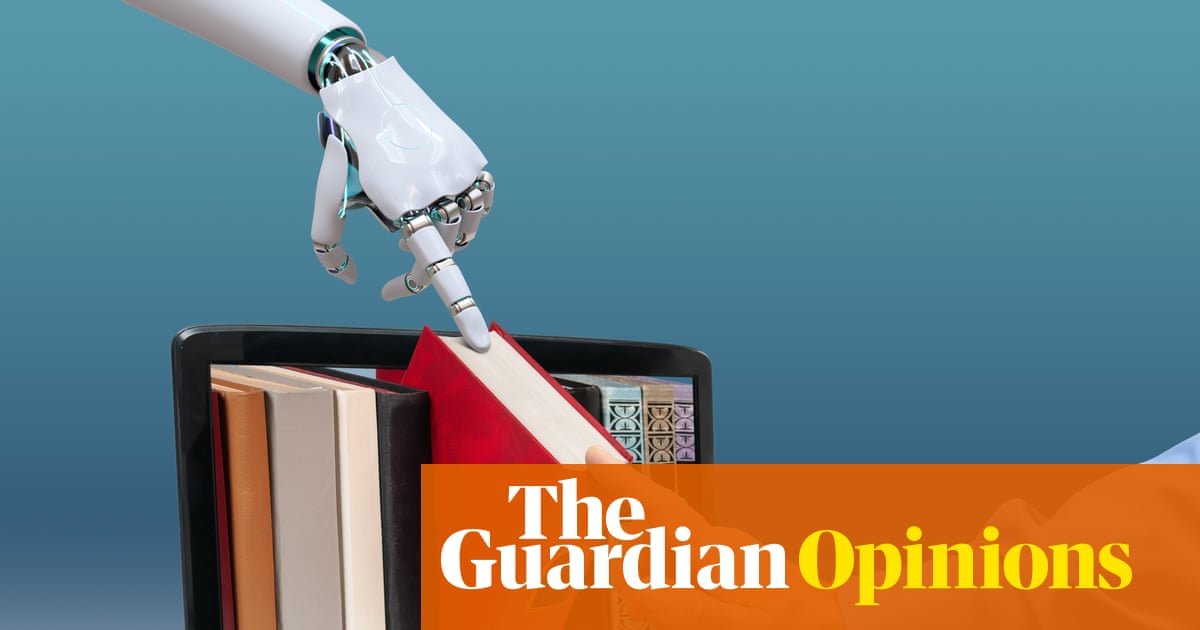
 Esther Anatolitis
Open letter in support of open licensing for open data
COMMUNIA and a group of civil society organisations are warning that the EU Digital Omnibus proposal could undo open data by departing from using standard open licences for government content.
COMMUNIA together with 30 other civil society organisations have released an open letter to the European Parliament expressing concern that changes bundled into the Digital Omnibus proposal could undo years of open access to government information. The Digital Omnibus is a move by the European Union (EU) to streamline and consolidate digital regulatory frameworks such as cloud storage, data management and cyber security. It will also integrate the 2019 Open Data Directive. While the Omnibus aims to reduce regulatory overlap, lower compliance costs and bump productivity, the signatories are concerned that, if passed, it will weaken the ‘open by design and open by default’ position established by the Open Data Directive.
The Open Data Directive establishes default non-discriminatory licensing for the reuse of public sector information (PSI) and encourages the release of PSI under standardised open licences. Most commonly this sees governments make copyright-protected PSI available under a Creative Commons (CC) Attribution (CC BY) licence or a CC Zero (CC0) public domain dedication. The release of significant amounts of PSI under the same or compatible licences allows for the commingling of data from different sources – be those other government sources or otherwise – because the licences create legal certainty, support interoperability and minimise transaction costs. As the supporters of the open letter note, this is particularly important for large public interest open knowledge projects such as Wikipedia, Wikidata and OpenStreeMap.
The signatories argue that the Omnibus will ‘allow[] public sector bodies to impose actor-specific licence conditions on different categories of users’ which ‘represent[s] a fundamental departure from the Open Data Directive’. Certainly, it seems the Omnibus’ focus on cost recovery that includes ‘a reasonable return on investment’ (ROI), the lack of specific references to standard open licences and permitting government bodies to use licences ‘which can be adapted to meet particular licence applications’ goes to the signatories’ point. The lure of licensing revenue may cause a return to a patchwork of siloed data that is ‘difficult or impossible to re-use in open projects and to combine with data from other sources.’ This would undermine the whole point of open data and the EU’s own Guidelines on recommended standard licences, datasets and charging for the reuse of documents.
COMMUNIA and co-signatories champion the Open Data Directive’s approach, saying it results in better access to high-quality PSI that is freely reusable, it contributes to government transparency and trust in public institutions and it helps bridge Europe's innovation gap. The Digital Omnibus’ approach would end up pushing up costs for everyone because of licence incompatibility and associated transaction costs. They argue that the goal of rebalancing economic asymmetries by ensuring ‘very large companies contribute fairly to the provision of public services’ can be reached through differentiated charging independently of licensing, such as through the provisioning and charging of fees for API access. They also call for a reinforcement of, not a pull back from, standard open licences.
If the co-signatories' fears come true, it could be a death blow to open government data, especially if it starts a trend of other governments worldwide following suit. Also concerning is the potential for high-quality data from authoritative government sources to end up excluded from AI training data because they are not readily available. ⟨ Given AI models are a ‘garbage in, garbage out’ problem, I would think governments would want to ensure as much high-quality, structured and reliable data is available to make AI systems better. It seems to me now is not the time to be putting out less of it! ⟩
The signatories of the open letter are:
- Associação Nacional para o Software Livre (ANSOL)
- Asociatia pentru Tehnologie si Internet (ApTI)
- Associação Portuguesa de Bibliotecários, Arquivistas, Profissionais da Informação e Documentação (BAD)
- Centrum Cyfrowe
- COMMUNIA
- CNR Area territoriale di ricerca di Bologna – Biblioteca Dario Nobili
- Creative Commons
- Creative Commons Germany
- Creative Commons Italy
- Defesa dos Direitos Digitais (D3)
- Digitale Gesellschaft
- Digital Republic
- EIFL (Electronic Information for Libraries)
- epicenter.works
- Federación Española de Sociedades de Archivística, Biblioteconomía, Documentación y Museística (FESABID)
- iRights
- Knowledge Rights 21
- Musiikkiarkisto (Music Archive Finland)
- Open Data and Intellectual Property Institute (ODIPI)
- Open Content
- Open Future
- Open Knowledge Finland
- Open Knowledge Foundation
- Open Knowledge Foundation Deutschland
- Open Knowledge Foundation France
- Open Knowledge Sweden
- Open Nederland
- Open Technologies Alliance (GFOSS)
- OSI Europe Foundation
- Wikimedia Deutschland
- Wikimedia España
- Wikimedia Europe
- Wikimédia France
- Wikimedia Italy
- Wikimedia Portugal
- Wikimedia Sverige
- Xnet (Institute for Democratic Digitalisation)
 COMMUNIA Association
Blur drummer Dave Rowntree’s class action against the UK music collecting society dismissed
The dismissal of a class action against the UK music collecting society pointed to data gaps in royalty distribution systems as the reason fairer distribution is impossible, but the verdict fails to challenge the structural opacity of global music royalty distribution.
The dismissal of a class action fronted by Dave Rowntree, the drummer from Blur, against the UK music collecting society PRS For Music over 'black box' or unidentified royalties – money collected from music use but which cannot be matched to specific songwriters or publishers because of missing or inaccurate information – was upheld on appeal last week. Somewhat oxymoronically, Lord Justice Miles said the issue was that the musicians in the class action had failed to present a realistic alternative distribution option:
… the very data failure problem which has given rise to the black box royalties means that there is no plausible basis for suggesting a more accurate (let alone fairer) distribution.
In conducting its ordinary operations the PRS has done what can be done to achieve an accurate or true distribution. Indeed it inevitably has to do this to carry out its functions. It is not criticised for the steps it has taken. Where it has been able to obtain the data or correct errors in the records it makes matched distributions. But where it cannot do that there is a black box problem (i.e. an information deficit). There is no realistic basis for thinking that the processes of litigation will unearth more information, so the deficit will remain. One consequence is that there is no reason to suppose that the proceedings would lead to the development of a more accurate (and therefore fairer) counterfactual rule.
While Miles’ point is valid it is defeatist. It points to a larger issue – how and why do such ‘information deficits’ exist – but treats this as a fait accompli. It seems to accept the structural opacity of these collecting organisations as an unavoidable reality of them doing business. If that is the case, what motivation does a collecting society have to address these information deficiencies? Especially when the money stays in their coffers if they can't.
That information gap is something Australian musician Jo Loewenthal has been calling out in his push for transparency in the global music royalty system. It begs the question: is the music royalty distribution status quo still acceptable?
 Max Pilley
If you are enjoying this WTF now?! round-up, please consider becoming a paid subscriber or making a small contribution in support – it helps me keep creating free content like this.
Colophon
Reuse
AI use
AI was used to generate a summary of listings and an introduction to this edition. Those summaries and that introduction were used to generate ideas. No AI-generated content was used verbatim.
The banner graphic (i.e. the first image at the top of the blog post) was adapted from vector graphics generated in Adobe Illustrator using Firefly 4 with 'Subject' content type selected and the lowest level of detail set. { Text to Vector Graphic prompt: Seamless pattern, very large simple shapes, 80s retro style, fluid organic elements, morphing, overlapping, blurred gradients, visible layers. }
Provenance
This blog post was first published on Wednesday 8 July 2026. It was last updated on Thursday 9 July 2026. This is version 1.1.
Changelog
- v1.1: Added a few missing words, fixed a missing space, a few typos and added links to the APRA AMCOS open letter and information about the educational and government use statutory licences – Thursday 9 July 2026.