

AI is a major theme again this week. In the US, a plan to shift the appointment of the Register of Copyrights to the President rather than the Librarian of Congress is moving through Congress. That may not seem like such a big deal, but if enacted it will further politicise the role at a critical point, and in a critical country, in the AI regulation debate. And given current Register Shira Perlmutter – who survived an attempted firing by the Trump administration – is at odds with the administration’s view that training of AI models on copyrighted material is fair use and does not violate copyright law, the push to make it a Presidential appointment seems retaliatory. Perlmutter sided with licensing over fair use for AI training data, particularly in commercial situations. The move could see greater alignment with Executive agendas while disconnecting a long-standing connection with the Library of Congress and its public-interest mandate.
Shifting to the material needs of AI, Australia’s Assistant Minister for Science, Technology and the Digital Economy Dr Andrew Charlton has used a recent speech to consider the strategic outlook on Australia’s potential data center boom. While it is unquestionably a spruik for the National AI Plan and the recent Expectations of data centres and AI infrastructure developers, Dr Charlton provides a useful and (fairly) balanced look at the pros and cons. Dr Charlton says Australia needs to set the terms for companies wanting to build data centres here, and advocates for a triple lock approach where data centre developers must invest in renewable energy supply, actually cover the full cost of grid connection and maintain demand flexibility so they are an asset to not a burden on the electricity grid.
In a different direction, this week I also take a look at the disruptive success of independent horror films Backrooms and Obsession. Both projects come from directors who built their skills and their audiences on YouTube and used that to bypass the traditional Hollywood gatekeeping to achieve record-breaking commercial and critical success. The phenomenon is so significant that the US Department of Justice (DOJ) cited it as evidence of a shifting competitive landscape in theatrical distribution during its investigation into the proposed Paramount acquisition of Warner Bros.
Also on that proposed acquisition, there’s an update on the Paramount–Warner Bros. merger in Keeping tabs, including the DOJ and the Australian Competition and Consumer Commission (ACCC) waving the acquisition through. There is also quick updates on the removal of Trump’s name from the Kennedy Centre and Meta and Google’s failed push for a retrial in the Californian social media addiction case.
You can get weekly WTF now?! round-up in your inbox. Sign up as a free member to get it by email.
Rapid-fire
A short list of other things:
- I only just saw this but the State Library of New South Wales was impacted by a cyber security incident that took down the library catalogue at the beginning of May. SLNSW has announced they expect the catalogue to be up and running again by the end of next week. Shoot through
- Is Paris Hiton the new face of vibe coding? She is Android’s first Icon-in-Residence and is championing no code app building using Gemini. That’s hot! Shoot through
WTF’s been going on?
Here's WTF happened this week:
The US Register of Copyrights could become a presidential appointment under a proposed law
A bill currently working its way through Congress proposes making the Register of Copyrights a presidential appointee in recognition of its regulatory function. Critics are concerned the move increases politicisation of the US Copyright Office and severs a crucial public-interest link between the Copyright Office and the Library of Congress.
A seemingly innocuous bill before the US Congress titled the Legislative Branch Agencies Clarification Act proposes to remove the Library of Congress’ supervisory role over the US Copyright Office. Rather than being appointed by the Librarian of Congress, the Register of Copyrights would become a presidential appointee, confirmed by the Senate. As the Electronic Frontier Foundation (EFF) warns, ‘These changes would make an office that’s already hugely influential in copyright and tech policy much more political.’
EFF cautions that the Copyright Office ‘has not been a neutral advocate.’ They point to the Copyright Office’s Copyright and Artificial Intelligence – Part 3: Generative AI Training report as an example. In it, the office cast doubt that commercial AI broadly extracting creative, expressive and proprietary content and directly competing with the original commercial market for that content is universally protected under fair use. Rather than recommend copyright reform, the Copyright Office favoured licensing over legislation, something the EFF argues is the office ‘plac[ing] a thumb on the scale in favor of rightsholders.’
The Copyright Office’s protectionist and creator-first approach doesn’t sit well with Donald Trump’s US tech-friendly deregulation AI agenda which sees anything stopping unfettered training of US AI models as an unnecessary barrier to American innovation and geopolitical competitiveness. In May last year this came to a head when the Trump administration fired the Register of Copyrights Shira Perlmutter, a day after that report on generative AI and fair use was released. Perlmutter took the administration to court arguing that the President is not able to remove the Register of Copyrights. The US Court of Appeals for the District of Columbia Circuit agreed and reinstated Perlmutter last September.
Now a change to the law could override the court’s decision. Representative Morgan Griffith introduced the Legislative Branch Agencies Clarification Act in November last year and it passed the House of Representatives on Monday 8 June 2026. Griffith has been talking up the bill saying ‘... the Copyright Office performs executive like functions such as administrating copyright registrations and issuing regulations ...’
The argument is that because the Copyright Office exercises regulatory power it should sit under the Executive Branch. Interestingly, if passed, the Act would also shift the appointment of the Librarian of Congress and the Director of the Government Publishing Office (GPO) to Congressional appointments, because they are Legislative agencies, according to Griffith.
Beyond further politicisation, EFF are concerned that the move will sever the link between the Copyright Office and the Library of Congress, thereby disconnecting the library’s mandate for preserving and providing access to a rich, diverse and enduring source of knowledge from the Copyright Office – an important public-interest counterweight in copyright debates. It would also give the Register of Copyrights final decision-making authority over triennial rulemakings regarding exemptions to Digital Millennium Copyright Act (DMCA) prohibitions against circumvention of technological protection measures (TPMs), removing the Librarian of Congress from the process.
Wolters Kluwer VitalLaw has a good deeper dive on the Act and its potential impact on the US Copyright Office.
 Joe Mullin
 Murray Stassen

Assistant Minister makes heads and tails on the data centre boom
Dr Andrew Charlton provides a (fairly) balanced look at Australia’s growing data centre industry arguing Australia must strategically manage the opportunities and the risks, learning from the mistakes we made with natural gas.
Discussions about AI are often quite polemic – even within Government ranks – so it was interesting to hear the Assistant Minister for Science, Technology and the Digital Economy Dr Andrew Charlton give a (fairly) balanced speech about data centres that was ‘neither boosterism nor alarmism’. It is a useful look at the benefits and concerns of increased data centre investment in Australia.
Speaking to the Sydney Institute last week Dr Charlton said ‘... data centres have become one of the most contested pieces of economic infrastructure around the world’:
To advocates, they are the factories of a new age — a once-in-a-generation opportunity for Australia to capture a new wave of economic value, as well as securing and shaping its future. To critics, they are giant sheds full of computers, soaking up electricity and water, creating few jobs, and risking some of the same mistakes we made in the resources boom.
As Dr Charlton says, the views of champions and challengers both ‘contain important truths’. Rather than picking a side, Dr Charlton suggests that Australia needs ‘to see clearly enough to hold both ideas in the light, assess them with honesty, and make good decisions in the national interest’ because the AI boom is almost here and Australia needs to decide if it will shape it before it arrives or react after it’s here.
Data centres are a trillions of dollars industry on par with the investment in rail, electricity and telecommunications, but instead of taking generations to rollout this is ‘being compressed into a single decade’. Australia is an attractive country for data centre investment because we have political stability, security and ‘unrivalled potential for renewable power.’ On what terms will Australia allow that to happen?
Dr Charlton cautions that we must learn from the ‘uncomfortable lessons Australia learned from decades of experience with the resources sector’ such as natural gas:
We had abundance — but we didn’t lock in our advantage early enough. We built for export before securing supply at home. We became one of the largest gas exporters on earth and then watched households and factories pay more for gas dug up beneath their feet. Successive governments allowed global markets to effectively set the domestic price. We let the boom set the terms, instead of setting the terms of the boom. Australians remember that. And they are right to ask whether data centres will now do to electricity what exports did to gas: a giant new buyer, bidding up the price of something we all rely on.
Dr Charlton lays out the opportunities and risks.
The benefits of AI data centres include:
- investment – ‘For Australia, total investment in different types of data centres could grow into the range of hundreds of billions of dollars’
- construction jobs – ‘construction jobs that data centres generate are real … However once built, these places run with remarkably few people’
- technology sovereignty – ‘When Australian government activities, Australian research and Australian AI models run on Australian soil, under our Security of Critical Infrastructure regime, we are not a tenant in someone else’s digital economy’
- scaffolding other industries – ‘secur[ing] our economic future by enabling new businesses, new research and new industries we haven’t imagined yet’
- a talent pipeline and innovation capability achieved through retaining and attracting talent
- accelerate Australia’s energy transition – regulated correctly greater demand for corporate renewable power could be the reason renewable project gets built and demand flexibility could reduce retail cost pressures for consumers at peak times.
Sometimes criticism are dismissed as trivial ‘not in my backyard’ complaints, but legitimate concerns do exist:
- energy – data centre electricity demand doubled in Victoria and rose 18% in New South Wales in a single year ‘with limited plans for how that power will be supplied’
- water – water usage for cooling data centers can be locally acute
- energy and water flow-on costs to households – without careful management ‘large new loads arriving faster than generation and transmission can expand could push up [electricity] prices for everyone’, and increased industrial water consumption can have a similar effect on water bills
- opportunity costs – for example, land allocation for data centres displaces local housing and alternative development and investment in data centres diverts other parts of our economy of investment
- amenity impact – such as accumulated noise and visual impacts on homes.
These concerns, plus wider concerns with the development and use of AI are likely behind the very low belief that the benefits of AI outweigh the risks in Australia. At the Australian Financial Review AI Summit a fortnight ago, Dr Charlton made the observation that trust is the ‘single factor, more than chips, more than capital, more than energy, [that] will determine whether an Australian AI industry thrives or stalls.’ Then last week at the Sydney Institute Dr Charlton notes how ‘The rapid growth of data centres [in the United States] has lost social licence in many parts of the country’ and said Australia should try to avoid ‘implementing improvised, nationally inconsistent, after-the-fact fixes’ seen in the US.
Under our National AI Plan, in March this year the Government released its Expectations of data centres and AI infrastructure developers. These are not red tape. They are the foundation of the sector’s social licence to operate here: a plain statement of what we expect in return for access to our grid, our land and our market.
We expect data centres to underwrite new renewable power supply. That means they must bring their own generation, not draw down everyone else’s. We expect them to pay their full share of grid connection, so those costs are never passed to households and businesses. We expect them to support the system through demand flexibility, to be a grid asset rather than a grid burden.
Bring new supply, cover your network costs, and be demand flexible – Australia’s triple lock.
Dr Charlton also expects the benefits of data centres to ‘flow to Australian innovation, not merely Australian real estate.’ Together, these represent an opportunity to not get data centres wrong:
The AI economy is coming whether we are ready or not. That much is settled. What is not settled is our place in it. We can be a country that merely consumes artificial intelligence built somewhere else, renting our intelligence by the month, on terms set in another hemisphere. Or we can be a country that helps build it: that owns the infrastructure, trains the people, grows the companies, and shapes the technology to our own values and our own interests.
- Speech to Sydney Institute - Data Centres: An honest accounting, Assistant Minister for Science, Technology and the Digital Economy Dr Andrew Charlton, Wednesday 10 June 2026
- Speech to AFR AI Summit, Dr Andrew Charlton, Tuesday 2 June 2026
 Josh Taylor and Petra Stock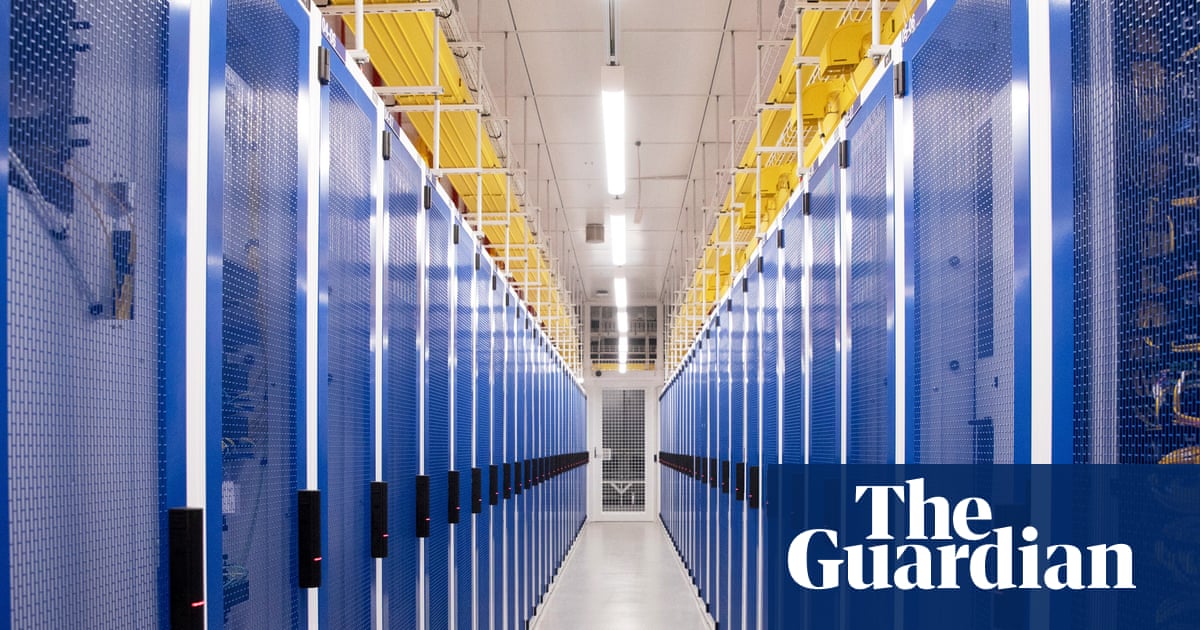
Two horror films from the internet bypassed Hollywood to critical and commercial success
If horror movies aren’t your thing then recent theatrical successes Backrooms and Obsession may not have even registered with you. But both films are more than horror genre successes; they represent a pipeline of internet creators into traditional filmmaking and distribution.
Something really interesting has been playing out in cinemas recently with two independent horror films – Backrooms (2026) and Obsession (2025) – becoming critical and commercial successes despite small budgets and directors who cut their teeth making YouTube content. Now in its third week since hitting Australian cinema screens and Backrooms has grossed about a quarter of a million dollars worldwide. The film’s success has earned its 20-something director Kane Parsons the honour of being the youngest director with a number one film at the box office.
Since early 2022 Parsons has been directing horror shorts on YouTube inspired by backrooms creepypasta internet content. If you don’t know about backrooms, that is its own equally fascinating story, starting with an anonymously shared photo posted to 4chan in 2019 and continued through the web of user-generated liminal metafiction stemming from it. Undoubtedly that community and the viral success of Parsons’ web series was part of what prompted the bidding war for a feature adaptation that saw independent arthouse film company A24 pick it up. It is A24’s highest-grossing film to date. It is amazing that a movie whose production prompt is a single creepy photo from an internet bulletin board was able to bypass the traditional Hollywood production pipeline to get an arguably niche concept onto cinema screens for a dedicated audience who have been turning up for the film.
Obsession has been out just one week longer than Backrooms and has also brought in over a quarter of a million dollars globally too, making it the top-grossing film festival acquisition title of all time. Like Parsons, Obsession director Curry Barker also hails from YouTube as one part of a comedy duo and the creator of a horror short and feature film distributed on the video sharing platform. After its premiere at the Toronto International Film Festival (TIFF), Jason Blum of well-known horror film house Blumhouse Productions joined as an executive producer and Focus Features beat out Neon and A24 to acquire distribution rights to Obsession for $15 million. It cost $750,000 to make and is the highest-grossing film in Focus' history.
Interestingly, the US Department of Justice (DOJ) speaks to the significance of these and other independent films in its determination on the Paramount–Warner Bros. merger:
… recent box office successes since the announcement of the transaction show that a studio’s legacy does not determine whether it can succeed at developing, producing, or distributing in the domestic box office today: including, for example, Amazon MGM (Project Hail Mary), A24 (Backrooms), Lionsgate (Michael), Blumhouse (Obsession). These disruptive industry developments suggest a potential inflection point in the evolving competitive landscape for theatrical production and distribution, supporting the Parties’ incentive to continue to generate and distribute content.
 Rebecca Rubin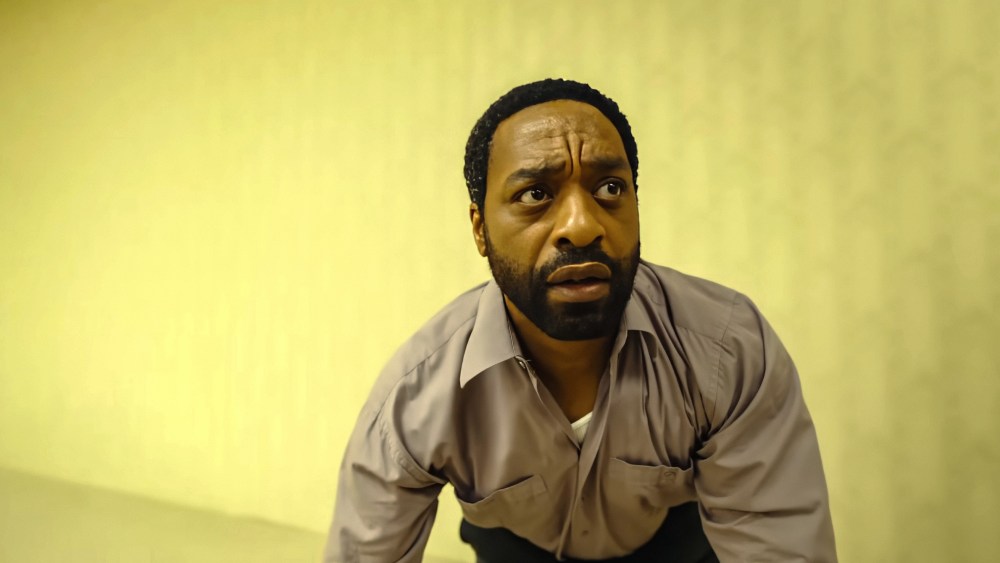
 Aaron Couch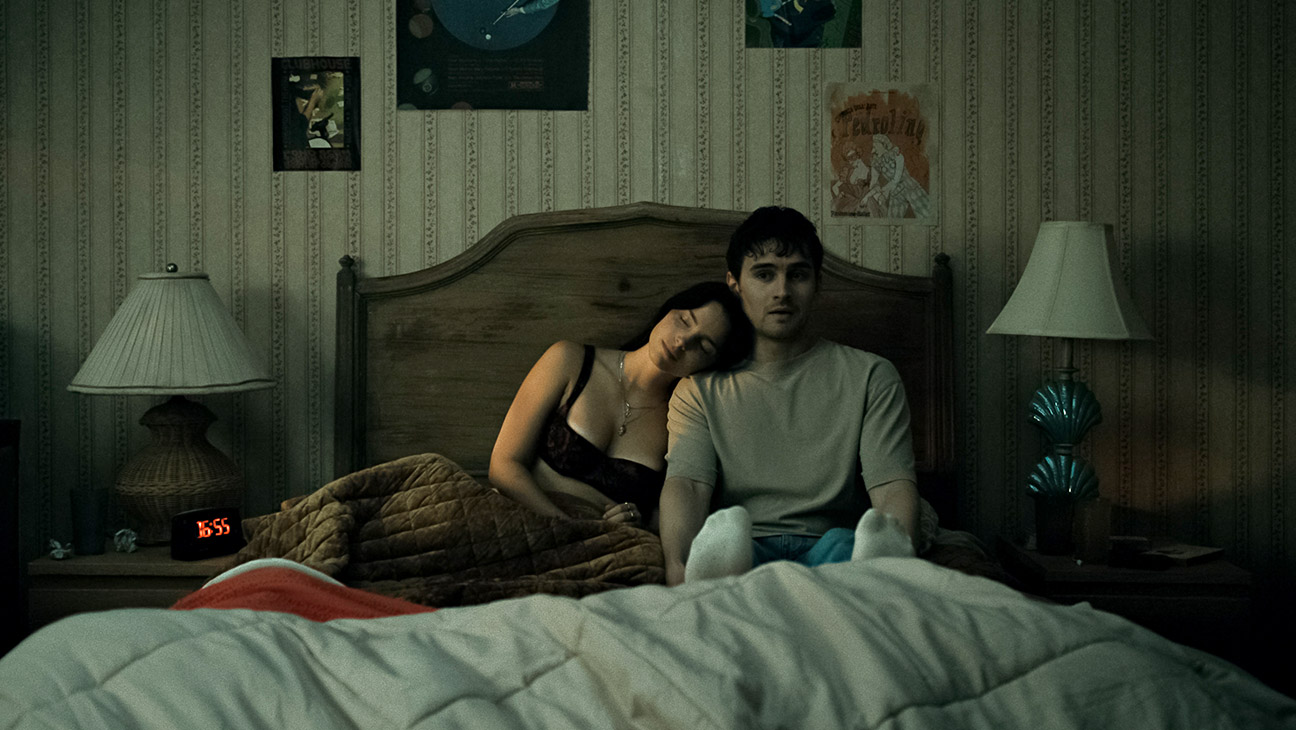
Keeping tabs
Updates about WTF else has happened with things I have recently covered:
Paramount–Warner Bros. acquisition proposal
Following up: ⟨ This update is so big it needs subheadings! ⟩
US Department of Justice clears the merger
The Antitrust Division of the US Department of Justice (DOJ) has concluded its investigation into the proposed Paramount–Warner Bros. merger determining that it is ‘not likely to result in harm to competition or American consumers, including with respect to: (1) streaming video on demand (“SVOD”); (2) linear television; and (3) studio development, production, or distribution of films for theatrical release.’ In fact, they suggest it will actually increase competition ‘across the media and entertainment ecosystem, with benefits for American consumers and workers.’ To illustrate, they state that a combined streaming service with the Paramount+, HBO Max and Discovery+ catalogues will ‘offer[ ] consumers a more robust competitive alternative to the larger SVOD offerings.’
Interestingly, the DOJ questions how analogous the acquisition of 21st Century Fox by Disney and the proposed Paramount–Warner Bros. merger really are. They note that ‘... as an entertainment and hospitality business focused historically on developing core franchise IP to monetize across a diversified business, the incentives of Disney with respect to total output of theatrical content do not clearly align with a pure-play media business like Paramount.’ Of course, Warner Bros. has theme parks so the merged entity will actually be more like Disney.
DOJ staff at odds with the published decision
Even weirder are revelations that career lawyers at the DOJ involved in the investigation were leaning towards recommending challenging the merger but senior leadership closed the investigation before they could object. Staff investigators had reportedly been also questioning an annual 30 movie cinema release commitment given the merged entity would take on increased debt load. They reportedly had not made a final recommendation. On top of all that, the US Associate Attorney General Stanley Woodward Jr challenged The Wall Street Journal’s reporting on X.
@sgurman — a team of career lawyers never reached out to anyone in their leadership chain of command to express this, but instead reached out to you? Please let your anonymous sources know that my door is always open. https://t.co/ulaxtyF9s6
— Stanley E. Woodward, Jr. (@ASGWoodward) June 15, 2026
Social media content: Stanley E. Woodward, Jr’s X post responding to Sadie Gurman’s Wall Street Journal article about DOJ staff investigators not being aware of a decision on the Paramount–Warner Bros. acquisition proposal.
Claims a critical ad was blocked from Paramount+
Also concerning is reports that Paramount opted not to run an ad criticising the deal which the Freedom of the Press Foundation (FPF) attempted to place to run on Paramount+. The reason given was that to do so would be a ‘conflict of interest’.
In a media release about the incident Freedom of the Press Foundation’s Chief of Advocacy Seth Stern raised concern that Paramount CEO Daivd Ellison has shown he does not respect press freedom, quashes editorial independence and will trade editorial concessions for political favours. Stern also claims hypocrisy and that conflict of interest was grounds to reject the ad on Paramount+ yet ‘[Paramount] apparently sees no conflict of interest in promising the Trump administration editorial concessions in exchange for merger approvals, in throwing fancy dinner parties honoring Trump while he attacks CBS and CNN journalists, or in airing a UFC event which functioned as an hourslong commercial for Donald Trump and Truth Social.’
Australia's ACCC also clears the merger
Even so, Paramount must be pleased with DOJ’s determination and the reasoning behind it. The decision by the Australian Competition and Consumer Commission (ACCC) that the acquisition can proceed must also be making Paramount happy. I missed it, but the ACCC put out their determination on Tuesday 9 June 2026. In it, the ACCC says it does not consider that the acquisition will substantially lessen competition in streaming media, free-to-air and pay TV or cinema releases of films in Australia.
In terms of streaming, it held that, even if the merged Paramount and Warner Bros. company decided not to licence its content to other streaming services or TV broadcasters after the acquisition, it would not hold a strong enough position to detrimentally impact rivals, be they streaming services or broadcasters.
Considering cinema release of films, the ACCC considers that, post-acquisition, the merged entity would ‘continue to face competition from alternative suppliers of films for theatrical release.’ It also was not convinced that a merged Paramount–Warner Bros. body would be disincentivised to keep producing and supplying ‘a similar number of films, and films of similar quality’ because of ‘the competitive constraints it would continue to face from alternative suppliers of films for theatrical release.’

 Jon Brodkin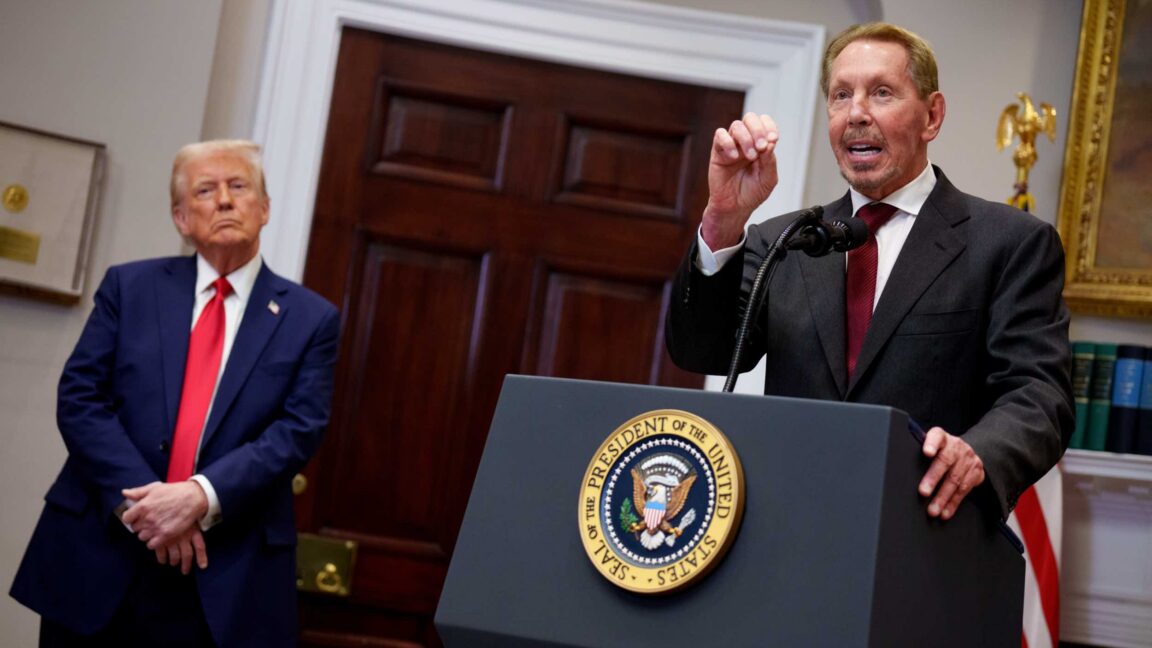
 Jeremy Barr


Donald Trump adding his name to the Kennedy Centre
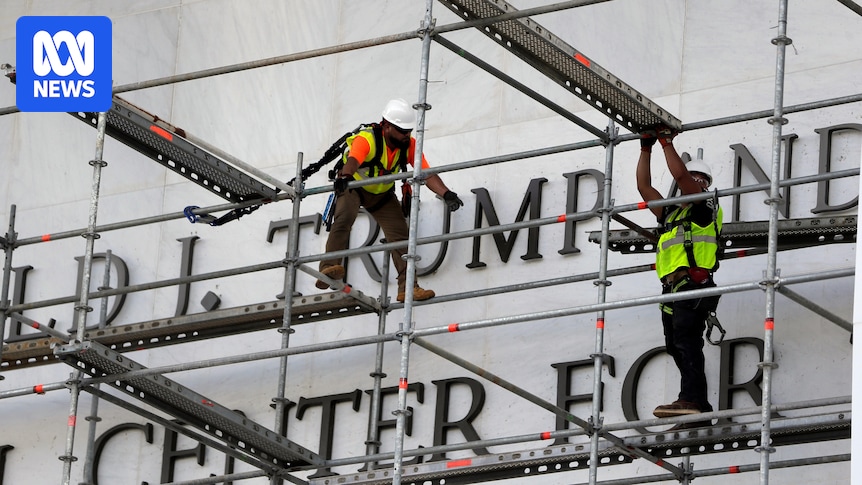
Following up: Last week the Trump administration filed an emergency appeal of the court order made two weeks earlier requiring the removal of the President’s name from the Kennedy Centre. The US Court of Appeals for the District of Columbia Circuit dismissed the appeal and Trump’s name has been removed from the façade of the building. It has also been removed from the website and other placements.

US social media addiction cases
Following up: Los Angeles Superior Court Judge Carolyn Kuhl has denied motions by Meta and Google seeking a new trial in the Californian social media addiction case. The companies argued they were protected under section 230 of the Communications Act which shields internet intermediaries from the content posted by their users. Judge Kuhl said that protection does not cover the companies' design choices and that ‘There was substantial evidence that Plaintiff was harmed by the design features of Instagram, regardless of any of the content found on that platform.’ Meta and Google intend to appeal.
- Google and Meta denied new trial in youth social media addiction case, Jody Godoy, Reuters, Wednesday 10 June 2026
Colophon
Reuse
AI use
No part of the text of this blog post was generated using AI. The original text was not modified or improved using AI.
AI was used to generate summaries of listings, but no AI-generated content was used verbatim.
The banner graphic (i.e. the first image at the top of the blog post) was adapted from vector graphics generated in Adobe Illustrator using Firefly 4 with 'Subject' content type selected and the lowest level of detail set. { Text to Vector Graphic prompt: Seamless pattern, very large simple shapes, 80s retro style, fluid organic elements, morphing, overlapping, blurred gradients, visible layers. }
Provenance
This blog post was first published on Wednesday 17 June 2026. It was last updated on Wednesday 17 June 2026. This is version 1.1.
Changelog
v 1.1: Fixed typos and minor copy edits – Wednesday 17 June 2026.