


Hello from a hotel room in Naarm Melbourne. I have been in town this week working with Ana Tiquia and the SLV Lab team on the Speculative Policy Lab – a project exploring the policy context of AI for GLAMs (galleries, libraries, archives and museums). It’s part of a broader AI ethics and policy project the Library is doing to support ‘a radically thoughtful, research-driven approach to develop a framework of ethics and policy around responsible engagement with artificial intelligence (AI) technologies.’ Between that and giving a talk at SLV about the new orphan works scheme, it has been a busy week – so please forgive the shorter newsletter and the late arrival. Better late than never is something someone said once, and it is fitting here.
This week a job spill and redistribution of community-led technology requests in the Wikimedia Foundation has led to a potential stoush with the wiki contributing community. A petition and calls for an editing boycott foreshadow concerns of union busting and pulling away from the community by the Foundation. If it plays out, the situation could be more detrimental to the wiki platforms than Elon Musk, Donald Trump and AI.
Also, Australia is consulting on extending its right to repair legislation. Even so, many people don't know much about it or the role that VHS and Napster played in copyright law restricting the circumvention of digital content locks. Now's your chance to brush up.
And, the UK Parliament has called on the competition regulator to urgently investigate Live Nation and Ticketmaster and the ‘climate of fear’ they have created in the local live entertainment industry.
Don't just read the introduction. Free members can read the entire weekly WTF now?! round-up. Sign up and keep reading.
Rapid-fire
A short list of other things:
- The Australian Government is consulting on expanding Australia’s right to repair legislation. Shoot through
- In a innovation move no one knew we needed, Coca-Cola have announced a reinvented soda dispenser that is modular, connected and ready to pour any new drinks trend. Shoot through
What’s been going on?
Here's WTF happened this week:
Staff layoffs and restructures pit the Wikimedia Foundation against the Wikimedia movement
Concern is rising over recent Wikimedia Foundation layoffs of the Community Tech team and restructuring of the Community Wishlist to a multi-team delivery model that has the community concerned of union busting, loss of knowledge and technical skills and signs the Foundation is pulling away from its community. A petition and proposed editorial strike is gaining momentum but a standoff between the Wikimedia movement and the Wikimedia Foundation could be highly damaging for the wiki projects.
This has not been reported in any news outlet ⟨ yet. Or not that I have seen at least… ⟩ but concern is mounting in the Wikimedia movement about recent layoffs of the Community Development Team that service community tech requests and a restructuring in the Wikimedia Foundation to disperse community requests across multiple teams. The community has responded in solidarity with staff and recent unionising efforts, concern that community requests have been deprioritised and a lack of confidence in the Foundation’s leadership and the organisation’s values.
Jake Orlowitz, who founded The Wikipedia Library and who runs Wikipedia consultancy WikiBlueprint, has written a Medium blog post about the issue. By Orlowitz’s account, in mid-May the Wikimedia Foundation laid off Brooke Vibber who was the organisation’s first full-time employee, the lead developer of MediaWiki – the wiki software engine behind Wikipedia and other wikis – since early 2003 and the Foundation’s first Chief Technical Officer. To this impressive credentials list Orlowitz added ‘She was also a union organizer.’
Doing a bit of lurking I noticed Vibber’s biographic text on her MediaWiki User page notes she has been ‘around for a long time’ since at least 2015 but the text was updated on Monday 11 May to say ‘I'm a longtime MediaWiki developer, since before we called it MediaWiki’, with ‘I expect to continue to be around for a long time, and am always happy to help if I can :)’ added on Thursday 14 May. ⟨ Precognition? Precognitive irony? A response to the situation? I am not sure. ⟩ With hindsight, this and Vibber’s note to self and note to others to ‘Always remember to assume good faith!’ sit uneasy. That moto was added in June 2014, the same time a reference to being ‘around for a long time’ was added.
A week after the bio changes (and possible date of termination) the Foundation announced ‘some internal restructuring about how WMF responds to and supports wishes [on the Community Wishlist]’, that they had ‘decided to shift Community Tech into a program that multiple teams are officially responsible for supporting’ and that this would ‘involve disbanding the Community Tech team and the roles of five engineers and one manager.’
Community responses in the Talk page show that wiki contributors are not sold on the proclaimed ‘success’ of structure for supporting community technology request ‘that multiple teams are officially responsible for supporting.’ The discussion centers on:
- decision-making occurring with community participation, particularly through community mechanisms such as the Product and Technology Advisory Council (PTAC)
- the loss of dedicated support for Community Wishlist items
- critical tools being left unstewarded
- skepticism about a multi-team model that will likely see community requests fall to the bottom of a tech backlog
- the loss of technical and institutional knowledge if members of the Community Tech team were let go
- the lack of care in spilling the jobs and making highly skilled long-term staff re-apply for a limited pool of roles
- that the Current Hiring Locations limitation may mean some Community Tech team are not eligible for the new roles
- a lack of transparency and accountability from the Foundation’s leadership in relation to staff, movement bodies and the movement generally
- suspicions that the move is actually union busting and retaliation for staff efforts to organise under Wiki Workers United (WWU).
In response to these layoffs and the perceived pulling back from volunteer priorities and the community, a petition, show of solidarity and proposed editorial strike has been put forward. It has attracted over 300 signatories as of today.
Escalation of the matter runs the risk of becoming the most significant and severe governance, operational and infrastructural crises for the Wikimedia Foundation at a point in time when it needs to be in sync with the movement. The fact that its own community is taking a vote of no confidence in the Foundation’s leadership so big and bold as to threaten stopping volunteer editing and contributions, admin resignations, turning off anti-vandalism tools and removal of donations banners needs to be taken seriously. A prolonged, public and painful standoff with its community could do more damage to the organisation than Elon Musk, Donald Trump and AI.
 Jake Orlowitz

A refresher on right to repair as Australia considers extending its legislative scheme
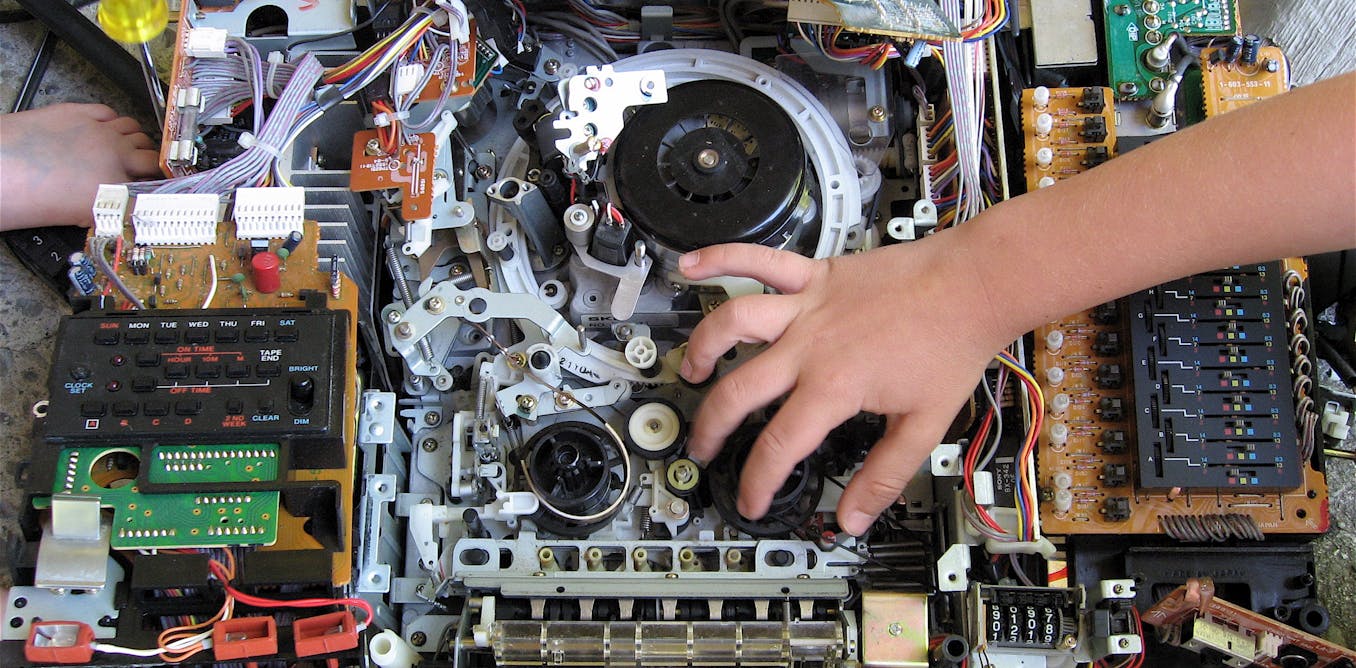
As Australia considers expanding its right to repair legislation, a piece on The Conversation provides a good backgrounder on the history of access control technologies. While most of us have largely forgotten VHS and Napster, these were instrumental in Hollywood’s push for the copyright digital locks that led to the need for the right to repair.
As flagged in Rapid fire above, The Australian Treasury is consulting on proposed expansion of Australia’s right to repair law to extend it to cover agricultural machinery and to improve the Motor Vehicle Service and Repair Information Sharing Scheme (MVIS). The Consultation paper provides more background to the proposals.
I recognise that there are people in my audience who may not know much about the right to repair movement and its raison d'etre. Conicidentally, a piece by Professor Oana Godeanu-Kenworthy from Miami University on The Conversation gives a good overview of the problem and its history. While it is US focused, the issue is fundamentally the same.
I recognise that there are people in my audience who may not know much about the right to repair movement and its raison d'etre. Coincidentally, a piece by Professor Oana Godeanu-Kenworthy from Miami University on The Conversation gives a good overview of the problem and its history. While it is US focused, the issue is fundamentally the same.
The crux of the right to repair issue was the introduction of anticircumvention provisions in the US and other territory's copyright law to prevent a user from being able to read, listen to or watch material without authorisation such as authentication and measures to allow or not allow a user to making a copy or share the digital content. While this may seem necessary for the protection of legitimate copyright interests, how it plays out practically can be problematic.
To illustrate, access controls can prevent people from accessing the software needed to repair their electronics. This includes smartphones, small home electronics, cars, agricultural equipment and even US Department of Defence weapons systems. Right to repair calls for people to be able to repair what they purchase, or have third parties do the repair work, without unnecessary financial, legal or technical barriers standing in the way. Without this, the financial and environmental toll racks up, and understandably so when a new printer can cost less than it does to replace the ink cartridges.
You may not realise it, but the shift to digital locks has its origins in the transition from VHS to DVDs. You might also remember the Napster years and the push by Big Content for digital rights management (DRM), authentication and other access control technologies – what the Australian and other copyright systems calls Technological Protection Measures (TPMs) – that limit how and what people can do with digital files and criminalised circumvention of those digital locks. Lobbying saw the concept codified in the Digital Millennium Copyright Act (DMCA) in the US in 1998 and the subsequent expansion of the notion through US trade relations such as here in Australia through the Australia-United States Free Trade Agreement (AUSFTA).
 Oana Godeanu-Kenworthy
Why was AI not part of the next National Cultural Policy consultation? And other questions
Concern is rising over recent Wikimedia Foundation layoffs of the Community Tech team and restructuring of the Community Wishlist to a multi-team delivery model that has the community concerned of union busting, loss of knowledge and technical skills and signs the Foundation is pulling away from its community. A petition and proposed editorial strike is gaining momentum but a standoff between the Wikimedia movement and the Wikimedia Foundation could be highly damaging for the wiki projects.
My friend, photographer and digital media artist Teddy Horton and I wrote a joint submission in response to the public consultation paper on a new National Cultural Policy asking lots of questions about the arts and AI in the hope of stimulating thoughtful and critical engagement with AI by arts and culture.
⟨ Yep, self-serving but I still think many of my audience will be interested so hopefully including this doesn't piss too many readers off! ⟩
My friend, photographer and digital media artist Teddy Horton and I wrote a joint submission in response to the public consultation paper on a new National Cultural Policy asking lots of questions about the arts and AI in the hope of stimulating thoughtful and critical engagement with AI by arts and culture.
In the submission Horton and I express concern that AI was not explicitly addressed in the consultation paper given the significant cultural, economic and ethical implications AI brings for artists and audiences. We note that AI is a set of interrelated wicked problems that affects creative practice, labour, First Nations cultural rights, the environment and so many other domains.
Through intentional questions, a key focus Horton and I take up is defining AI’s place or places in creative practice and presentation of artistic work: policy must recognise both artists who wish to avoid or actively campaign against AI and those who use AI as a tool. Either way, responses to AI need to actively protect against the substitution of human artistry, mandate greater transparency across all stages of AI and begin to conceptualise genuine ways of recognising and redistributing value AI creates.
Likewise, Horton and I are concerned that a future National Cultural Policy that remains silent on or ambivalent towards AI effectively lets AI-driven homogeneity that flatten aesthetics happen, accelerating the diminishing of the value of human creativity and arts and culture. The next iteration of Revive should ambitiously seek to re-engender support for and trust in human-made creative expression amidst a wash of synthetic content and AI slop. Cultural policy should hold robust understanding of the economic, legal and socio-technical challenges posed by AI, and the current and future benefits while actively seeking out new mechanisms to ensure artists are fairly remunerated and their role in how commercial AI systems are trained is transparent and understood.
In the face of income precarity in arts and culture, the National Cultural Policy should boldly push back on the AI marketing lure to cost-save through displacing cultural workers. It should seek to establish fair work principles and champion skills and training for artists and arts workers to engage with AI critically and ethically. Public arts funding should reflect these priorities by supporting artist-led, ethical projects and potentially requiring disclosure of AI use in funded outcomes.
Likewise, for policy alignment, the next National Cultural Policy must connect with broader domains like copyright reform, AI regulation and environmental policy, ensuring artists' voices are in the mix when regulatory decisions are being considered. Crucially, the policy must reassert the importance of protecting creators rights, and the rights of Aboriginal and Torres Strait Islander communities to manage their Indigenous Cultural and Intellectual Property (ICIP) and assert Indigenous Data Sovereignty (IDSov). And the cultural policy needs to consider now Australian stories continue to be made, heard and enjoyed in a flood of AI slop.
Horton and I also wonder what defining conditions should be put in place to help public cultural collections navigate if or how Australia's cultural heritage can be used for AI training, how meaningful and ethical AI use could be worked into arts funding agreements and whether Australia should develop public-interest AI tools to counter the market dominance of largely American multinational Big Tech companies. It’s a lot to chew on. We’d love to hear your thoughts.
 Teddy Horton
Keeping tabs
Updates about WTF else has happened with things I have recently covered:
Live Nation and Ticketmaster's monopoly and monopsony
Following up: Where antitrust matters against Live Nation and Ticketmaster in the US will land remains unclear but the entertainment industry giants are facing renewed pressure in the United Kingdom (UK) where the 3rd Report of the UK Parliament Business and Trade Committee's Competition and market functioning in the UK live music industry has called on the Competition and Markets Authority (CMA) to launch an urgent investigation into the live music industry and the 'climate of fear' Live Nation has created in the industry. The Committee's numerous concerns include the company's market dominance, anticompetitive practices and self-preferential vertical integration.
 K.J. Yossman
Colophon
Reuse
Conflict of interest
I am the President of Wikimedia Australia (WMAU). The views expressed in this blog post are my own and do not express the views of WMAU.
AI use
No part of the text of this blog post was generated using AI. The original text was not modified or improved using AI.
AI was used to generate summaries of listings, but no AI-generated content was used verbatim.
The banner graphic (i.e. the first image at the top of the blog post) was adapted from vector graphics generated in Adobe Illustrator using Firefly 4 with 'Subject' content type selected and the lowest level of detail set. { Text to Vector Graphic prompt: Seamless pattern, very large simple shapes, 80s retro style, fluid organic elements, morphing, overlapping, blurred gradients, visible layers. }
Provenance
This blog post was first published on Wednesday 27 May 2026. It has not been updated. This is version 1.0.