
Bonjour from the Cité des Sciences et de l'Industrie in Paris where I am attending Wikimania 2026. There is plenty to see and do, but for me a highlight as already happened: Dr Terri Janke and Shevaun Wright ran a session yesterday sharing the Wikimedia Australia Indigenous Cultural and Intellectual Property (ICIP) and Indigenous Data Sovereignty (IDSov) Guide with the international community. The significant interest is a positive sign that Indigneous Content on the Wiki platforms can be managed with ethics and respect.
Also in this issue Anthropic’s mammoth $1.5 billion Bartz v Anthropic settlement clears a major hurdle for the AI company but leaves the broader question of whether AI training constitutes fair use unanswered. Perhaps the myriad other AI and copyright cases – including a new one by Sony Music against Udio – will get us to a precedent soon?
In the meantime, AI companies continue looking for more AI training data with content deals happening all over: the ABC’s archive of broadcast content could be made available to Anthropic and Microsoft made a deal with Nine Network around their news mastheads. The Australian Government continues their AI momentum from last week with a significant announcement of cross-portfolio AI priorities. And Indonesia considers sweeping changes to its copyright law in response to AI.
You can get weekly WTF now?! round-up in your inbox. Sign up as a free member to get it by email.
WTF’s been going on?
Here's WTF happened this week:
Wikimedia Australian Indigenous Content guide shared at Wikimania
Wikimedia Australia and Terri Janke and Company released a guide to ensuring respectful management of Indigenous Content on Wikimedia platforms. These documents provide practical guidance to protect Indigenous knowledge while respecting cultural authority and self-determination within the Wikimedia movement.
Last week Wikimedia Australia (WMAU) and Terri Janke and Company released the Wikimedia Australia Indigenous Cultural and Intellectual Property (ICIP) and Indigenous Data Sovereignty (IDSov) Guide and its sister document the CultureStrong Platforms: Setting the Standard at Wikimedia white paper. Together, they seek to ensure that Aboriginal and Torres Strait Islander Content on Wikimedia platforms including Wikipedia, Wikidata and Wikimedia Commons is managed respectfully and ethically.
Written and researched by Dr Terri Janke, Shevaun Wright and Matilda Langford and informed by an Indigenous Expert Working Group, the documents provide practical guidance for Wikimedia contributors, while asking important questions and opening an international conversation about respecting Indigenous knowledge, cultural authority and self-determination within one of the world's largest open knowledge movements. This is crucial work for WMAU as we work to shift the Wiki workflow from ‘open at all costs’ to open with care. For knowledge to genuinely be open the owners of that knowledge must want it to be.
It was an honour to be in Paris to support Dr Terri Janke and Shevaun Wright to share the guide with the international Wikimedia community.At a packed session, the TJC team introduced Wikimedians to the importance of recognising and protecting ICIP and IDSov. As the Guide is adopted, the Wiki platforms will begin a proactive journey towards actively respecting Indigenous rights, building cultural safety on-Wiki and taking meaningful steps toward knowledge equity that champions knowledge holders agency.
On Friday, an all female Indigenous panel at Wikimania will dig into the topics outlined in the white paper and how the Wikimedia movement can build genuinely inclusive digital knowledge spaces that respect Indigenous rights. Dr Janke (Wuthathi, Yadhaigana and Meriam, Australia) will participate in the panel alongside Thérèse Ottawa (Atikamekw, Canada), Wikimedian, Atikamekw Wiki, and Board member, Wikimedia Canada, Michelle Collipal (Mapudungún, Chile), Wikimedian, Mapudungún Wiki project and Communications Director at Wikimedia Chile and Migoto Eria (Maori, Aotearoa New Zealand), Maori community representative and Wikimedian.
 Wikimedia Australia
 Elliott Bledsoe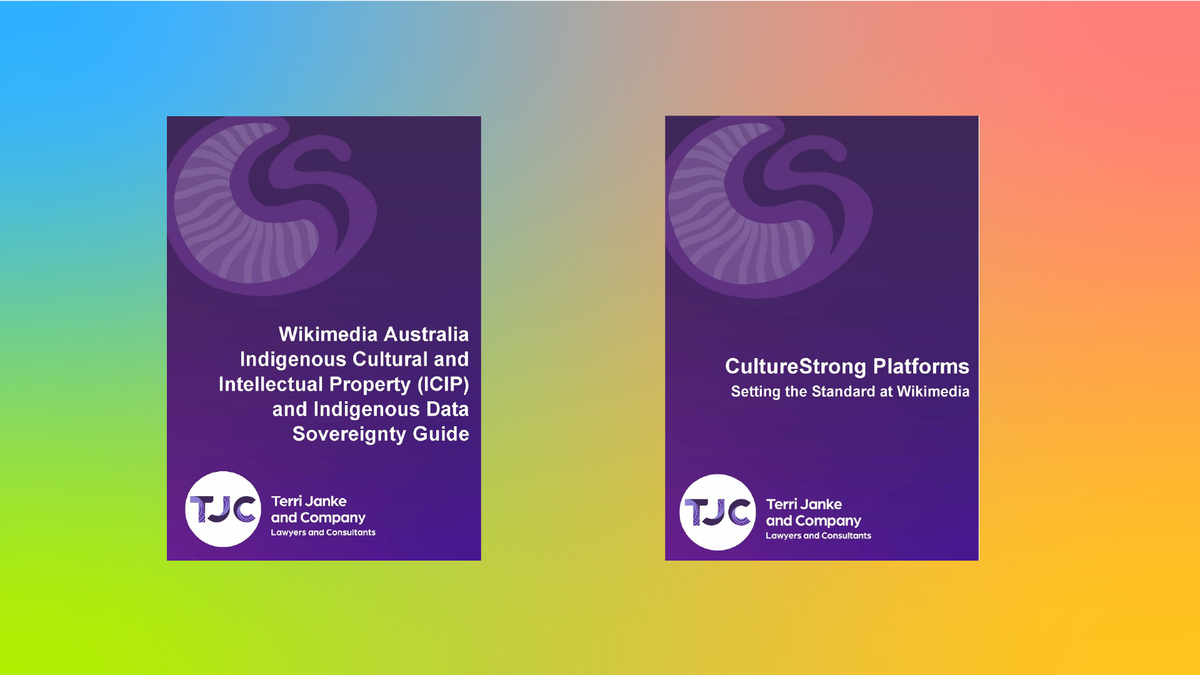
Anthropic’s copyright settlement & other cases
Anthropic's $1.5 billion settlement in the Bartz v Anthropic copyright case has been approved but isn’t a legal precedent so whether AI training is fair use remains an unanswered question. Also Sony Music is suing Udio again.
US District Judge for the Northern District of California Araceli Martínez-Olguín approved Anthropic’s $1.5 billion settlement of a class action against it by authors who alleged Claude was trained on their books in infringement of their copyright. The matter had been given preliminary approval in June last year but some authors were pushing for more money – a move dismissed by Judge Martínez-Olguín in this ruling.
Bartz v Anthropic is arguably the biggest case of its kind in terms of the number of potential claimants and the compensation recovery. A quick recap: Anthropic used both books it has purchased and scanned and pirated copies of books obtained from shadow libraries to train Claude. Importantly, those illegal copies were retained by Anthropic. Judge William Alsup, also a US District Judge for the Northern District of California, found that the use of the purchased books for AI training was a fair use under American copyright law but the infringing copies of books was not. Soon after, Anthropic proposed the now approved settlement.
While it is a significant outcome, it hasn’t settled the ‘is using copyright material to train AI a fair use?’ question for good because it didn’t set a precedent. It’s an influential case for sure, but because it ended in a settlement we will have to wait to see where other cases land before we have a concrete court determination answering that question outright.
Of course, some of the affected authors opted out of the settlement and have filed separate claims against Anthropic. Those cases will continue to move through the courts alongside numerous other copyright cases against AI developers.
You can add a new Sony–Udio case to that list. Sony Music, the largest music publisher in the world, is suing AI music generator Udio again for the 30,117 songs the court wouldn’t let it add to its existing copyright claim against Udio. It will be interesting to see where both cases land given Sony alleges Udio ripped the audio files from YouTube, which Udio has admitted to, but claims doing so is fair use.
 Kirsten Korosec
 Mariella Moon
 Emma Roth
Australian Government outlines AI priority initiatives
Six Australian Ministers announced new initiatives to increase accountability and support safe AI across the community and government. These measures include legislating a Duty of Care, privacy reforms, consumer protection reforms, workplace AI safety and regulations for automated decision-making.
Adding to last week’s AI announcement by Prime Minister Anthony Albanese, a sextet of Ministers have announced a number of AI safety priorities. The Ministers are Minister for Communications Anika Wells, Minister for Employment and Workplace Relations Amanda Rishworth, Attorney-General Michelle Rowland, Minister for Industry and Innovation and Minister for Science Tim Ayres, Assistant Minister for Productivity, Competition, Charities and Treasury Dr Andrew Leigh and Assistant Minister for Science, Technology and Digital Economy Dr Andrew Charlton.
The Ministers announced a range of initiatives designed to increase accountability and support safe adoption of AI across the community and within government. These include:
- legislate a Duty of Care putting the onus on AI companies to build in safety by design and proactively address potential harm, led by the Minister for Communications
- consulting on a second tranche of privacy reform to responsibly strengthen, modernise and simplify Australia's personal data protection laws, led by the Attorney-General
- pursuing AI safety in the workplace as one of the five agreed priority areas of the tripartite Artificial Intelligence Workplace and Employment Forum, led by the Minister for Employment and Workplace Relations
- examine options in Australian consumer law to address consumer risks such as retail surveillance pricing and agentic commerce, led by the Assistant Minister for Productivity, Competition, Charities and Treasury
- develop a framework to better regulate the use of automated decision-making (ADM) within federal government agencies recognising the importance of ensuring fair, accurate and transparent government decision-making, led by the Attorney-General.
- AI Consumer safety priorities, Attorney-General’s portfolio, Australian Government, Monday 20 July 2026.
Keeping tabs
Updates about WTF else has happened with things I have recently covered:
Paramount–Warner Bros. acquisition proposal
Following up: Opposition to Paramount Skydance’s bid to buyout Warner Bros. Discovery is growing with the Writers Guild of America (WGA) taking court action so as to not ‘stand idly by as Paramount attempts to violate our country’s antitrust laws and deepen the contraction entertainment workers already feel.’ It joins a case filed Wednesday last week in Delaware Chancery Court by Paramount shareholders who claim that Paramount CEO David Ellison and his father and co-owner Oracle CTO Larry Ellison ‘striking an illegal deal with President Trump for approval of the merger.’
Also last week, a case led by Calafornia and including Arizona, Colorado, Connecticut, Massachusetts, Minnesota, Nevada, New Jersey, New Mexico, New York, Oregon and Washington, was filed alleging the merger would ‘extinguish competition between Paramount and Warner Bros. and inflict substantial harm on movie theatres, basic cable distributors, and, ultimately, audiences nationwide.’ In an early win for the States, US District Judge for the Northern District of California Araceli Martínez-Olguín issued a 14-day temporary restraining order on the deal until Monday 3 August, unless extended by the parties. Interestingly, the States’ case isn’t focused on streaming.
A bit on the side
WTF else happened this week:
AI companies eyeing Australian journalism. AI companies are still on the hunt for more training data. Reportedly, Anthropic has approached the ABC offering money in exchange for decades of radio and television content. It follows a deal earlier in the month between the Nine Network and Microsoft to include news snippets, headlines and summaries of The Sydney Morning Herald, The Age and The Australian Financial Review articles and others of the company’s mastheads within Copilot outputs.
 Calum Jaspan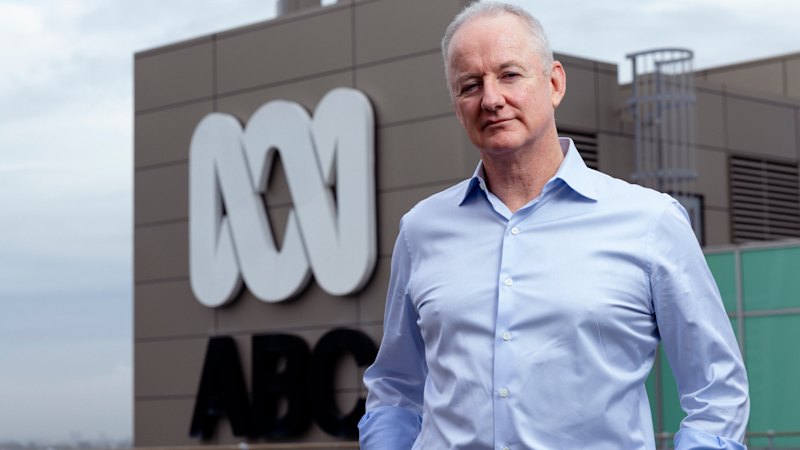
 Kishor Napier-Raman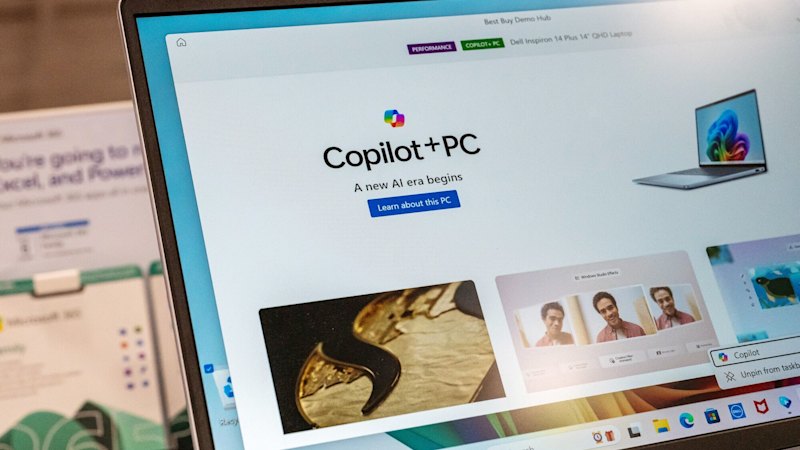
AI changes proposed for Indonesian copyright law. Significant changes to Indonesian copyright law have been proposed that, if passed, would see AI regulations added into the country’s copyright regime. The proposal aims to prohibit the use of AI to imitate a creator’s ‘distinctive style’, to require AI companies to compensate news organisations when news content is aggregated, republished or previewed in AI outputs or used it AI training and to clarify the level of human input needed for AI outputs can qualify for copyright protection. AI training will be subject to fair use guidelines or mandatory licensing agreements, although it is unclear how those will work together. Possibly fair use AI training will be limited to noncommercial research uses.
- Indonesia's copyright rewrite puts Google, AI platforms on notice, Stanley Widianto, Friday 17 July 2026, Reuters.
Colophon
Reuse
Conflict of interest
I am the President of Wikimedia Australia (WMAU). The views expressed in this blog post are my own and do not express the views of WMAU.
AI use
AI was used to generate a summary of listings and an introduction to this edition. Those summaries and that introduction were used to generate ideas. No AI-generated content was used verbatim.
The banner graphic (i.e. the first image at the top of the blog post) was adapted from vector graphics generated in Adobe Illustrator using Firefly 4 with 'Subject' content type selected and the lowest level of detail set. { Text to Vector Graphic prompt: Seamless pattern, very large simple shapes, 80s retro style, fluid organic elements, morphing, overlapping, blurred gradients, visible layers. }
Provenance
This blog post was first published on Wednesday 22 July 2026. It has not been updated. This is version 1.0.