


Copyright and AI is again in the newsletter with major copyright and arts organisations uniting in calls for government to oppose any potential copyright exception for AI training data. APRA AMCOS and 16 other organisations released an open letter declaring ‘Australia's creators are not a tech subsidy’. A similar statement has been put out by an international consortium of 35 music managers organisations calling for consent and control, fair compensation and clarity and transparency when AI agreements are in play.
Also concerned with human expression, personal identity and AI, Cate Blanchett, through RSL Media, the nonprofit she co-founded, has launched the Human Consent Registry and machine-readable likeness reuse signals to indicate whether an individual's personal attributes can be used by AI.
AI is not the only technology taking creators’ jobs. A troubling trend of canned musicals reveals that rising production costs and cost-of-living pressures are making performing arts productions in Australia untenable. While some have cancelled or cut short their tours, others are turning to technologies like KeyComp to substitute live orchestral players to cut costs.
If you are keeping tabs on the US social media addiction cases, the AI-powered cyber security threats or Paramount’s bid to buy Warner Bros. there are updates on each this week.
Plus, Backrooms is going back to cinemas while its distributor A24 defends its research partnership with Google DeepMind, Netflix has done a technical deepdive into an AI overhaul of its homepage and the ACCC is taking action against Amazon over ads in Prime Video.
Rapid-fire
A short list of other things:
- Today it was announced that Sydney Opera House CEO Louise Herron AM will step down on Thursday 6 August 2026 – 14 years after taking on the role. Shoot through
- Former State Librarian and CEO of State Library of Queensland (SLQ) Vicki McDonald has been announced as the incoming Chief Executive Officer of the State Library Victoria (SLV), effective Tuesday 8 September 2026. Shoot through
- After an annual review the National Association for the Visual Arts (NAVA) have updated the Code of Practice for Visual Arts, Craft and Design, including updating Payment Standards, added new guidance supporting artist parents and carers, expanded accessibility content, added more Auslan resources and updated legislative information. Shoot through
- Create NSW and Writing NSW have launched Stories Matter: NSW Literary Fellowships – 10 fellowships worth $50,000 for NSW-based prose writers, poets, illustrators, graphic novelists and playwrights. Applications close Monday 27 July 2026. Shoot through
- Bending Spoons – a Milan-based tech company that acquires and revamps software companies – is looking to go public with a US initial public offering (IPO). Their portfolio includes internet legacy brands such as Vimeo, Evernote, AOL, WeTransfer, Issuu and Meetup, and they recently acquired Eventbrite. Shoot through
- Today the revised Commercial Radio Code of Practice 2026 came into effect bringing with it new safeguards for listeners and updated obligations for commercial radio broadcasters including disclosure requirements for the use of a synthetic voice for regularly scheduled programs or news broadcasts. Shoot through
WTF’s been going on?
Here's WTF happened this week:
Copyright and arts bodies put out an open letter against an AI copyright exception
Australian copyright and arts industry bodies have signed an open letter opposing a copyright exception for AI training on copyrighted material despite the government continually stating one is not being considered.
For a matter that is apparently settled there is a lot going on in terms of copyright and AI in Australia. After last week’s allegations by Senator David Pocock's that the government hasn’t actually ruled out a text and data mining (TDM) exception to permit AI training on Australian copyright material this week a multi-organisational open letter to the government has been released declaring ‘Australia's creators are not a tech subsidy’. The letter goes on to say:
… Our work is the fuel that powers the AI economy. Without it there are no large language models, no AI products of any kind. All of it has been fed into AI systems without asking us and without paying us.
The companies now valued in the hundreds of billions want a hand-out, a free-for-all for our labour and intellectual property. We call on the Australian Government to commit to the future of creativity in this country and not to trade it away. Our stories and our creativity is how Australia knows itself, how we speak to the world, and how the world comes to know us.
The letter demands protection against unauthorised use of content to train AI, reiterates their preference for a copyright licensing solution based on permission and payment and calls out apparent alternatives such as a creative fund as technology companies dictating what and when they pay. The letter also expresses concern that a text and data mining (TDM) exception would risk exploiting First Nations arts and culture without context or consent.
Co-signatories of the open letter include:
- APRA AMCOS (Australasian Performing Right Association and Australasian Mechanical Copyright Owners Society)
- ARIA (Australian Recording Industry Association)
- Association of Artist Managers (AAM)
- Australasian Music Publishers Association (AMPAL)
- Australian Guild of Screen Composers (AGSC)
- Australian Independent Record Labels Association (AIR)
- Australian Music Centre
- Australian Publishers Association (APA)
- Australian Society of Authors (ASA)
- AWG (Australian Writers’ Guild) Authorship Collecting Society (AWGACS)
- Copyright Agency
- Music Producers & Engineers Guild of Australia (MPEG)
- National Association for the Visual Arts (NAVA)
- National Aboriginal and Torres Strait Islander Music Office (NATSIMO)
- PPCA (Phonographic Performance Co Of Australia)
- Screen Producers Australia (SPA)
- Screenrights.
Beyond the original organisations, the open letter has apparently attracted more than 7,000 signatures and they are still inviting people to sign, but haven't released a list of those additional signatories yet. That said, Jimmy Barnes, Australian Live Music Business Council (ALMBC) and Magbala Books have come out in support of the letter.
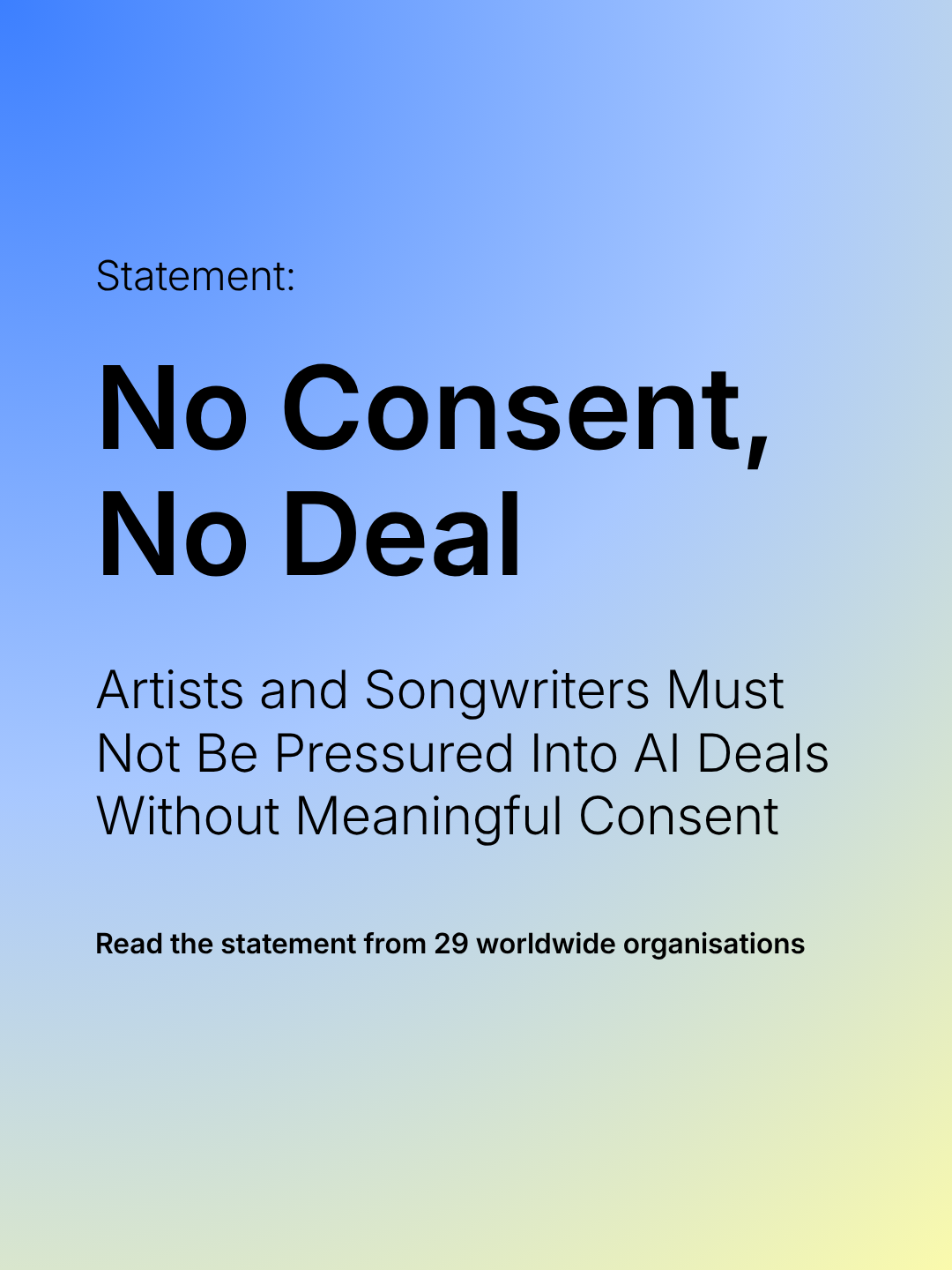
The open letter joins the No Consent, No Deal statement put out last week by 35 music managers organisations worldwide which expresses concern about agreements being made between record labels and music publishers and AI developers without meaningful consultation with musicians. They raise the point that rights such as moral rights, performing rights and personality rights (where they exist) typically vest with creators, not with record labels and music publishers and yet many signed musicians are being informed they will be opted in to AI-related uses by default and new agreements include AI clauses as a standard condition of signing. They call for consent and control, fair compensation and clarity and transparency.
It is signed by:
- Artists Rights Alliance
- Association For Electronic Music (AFEM)
- Association of Artist Managers (AAM)
- Black Music Action Coalition (BMAC)
- Dansk Artist Forbund (DAF)
- Danske Artist Managers (DAM)
- European Composer and Songwriter Alliance (ECSA)
- European Music Managers Alliance (EMMA)
- Featured Artists Coalition (FAC)
- Fédération des Bookers et Managers Unies (FBMU)
- FORMA (Foro de Mánagers)
- Finnish Musicians Union
- Hungarian Managers Forum (Zenei Menedzserek Egyesülete) (ZEME)
- International Artists Organisation (IAO)
- Interessenverband Musikmanager & Consultants (IMUC)
- The Ivors Academy
- La Guilde des Artistes de la Musique (La GAM)
- Music Artists Coalition
- Music Estonia Managers (MEM)
- Music Managers Federation (MMF)
- Music Managers Forum Aotearoa (MFF Aotearoa)
- Music Managers Forum Canada (MFF Canada)
- Music Managers Forum Finland (MMF Finland)
- Music Managers Forum Iceland (MMF Iceland)
- Music Managers Forum Netherlands (MFF Netherlands)
- Music Managers Forum Suisse (MMF Suisse)
- Music Managers Forum Sweden (MFF Sweden)
- Music Managers Forum Ukraine (MMF Ukraine)
- The Musicians Union (MU)
- National Independent Talent Organisation (NITO)
- Norwegian Entertainment Managers and Agents Association (NEMAA)
- Performex
- Polish Artists Chamber of Commerce
- Songwriters of North America (SONA)
- Union des Manageuses et Managers de la musique (UMAN France)
- Open letter: Australia's creators are not a tech subsidy, APRA AMCOS, Friday 26 June 2026

Cate Blanchett’s Human Consent Registry wants to green, yellow or red light AI likeness
RSL Media – which was co-founded by Cate Blanchett – launched the Human Consent Registry traffic light system to signal whether AI can use a person’s likeness or not.
Cate Blanchett, through her nonprofit RSL Media, has launched the Human Consent Registry, a ‘public, machine-readable record of how AI may use a person's likeness, voice, and movement.’ Using a traffic light system to indicate reuse of likeness is permitted (green), permitted with terms (yellow) or prohibited (red), the registry aims to signal if and how someone’s ‘name, image, likeness, voice, movement and other signature or personal attributes’ can be used.
Once registered, a person is issued a Human Consent ID which AI systems can check to determine if any aspect of their likeness can be used in training data. Of course, it is unclear if or how any stated permissions in the Human Consent Registry will be enforceable. RSL has plans to roll out similar functionality for protecting copyright material, characters and trademarks.
The launch of the Human Consent Registry comes at an interesting time with Netflix releasing a teaser trailer for its upcoming reality series Wonka’s The Golden Ticket which uses an AI-generated voiceover of Gene Wilder (albeit with permission). Wilder joins people like Judy Garland, James Dean, Burt Reynolds and Marvel’s Stan Lee who have all been ‘resurrected’ by AI creative platform ElevenLabs.


 AJ Dellinger
Rising costs behind multiple musicals calling it curtains
Rising production costs, economic pressures and cost-of-living challenges are forcing the cancellation or early closure of major performing arts productions in Australia, despite overall interest in live events remaining strong.
Franco Zeffirelli’s ambitious production of Verdi’s Aida with the State Opera South Australia that was to take place at Adelaide Oval in February next year has been cancelled after having already been postponed for a year. If it had come off it would have been the first time Arena di Verona would have staged it outside Italy and it would have involved over 380 international performers from the Fondazione Arena di Verona – including a 106-piece orchestra, 100-voice choir and the company’s ballet – alongside 300 South Australian cast and crew including State Opera’s 50-member chorus. Ticketek Entertainment Group (TEG) said 'ongoing conflict and instability in the Middle East has resulted in massive increases in international freight and airfares, making it impossible to bring the large scale production to Adelaide' in a statement.
It is not the only performing arts production that’s been cut recently. Last Saturday, the remainder of Eddie Perfect's Beetlejuice The Musical was cancelled, allegedly because of rising production costs and cost-of-living pressures. Its last show will be in Brisbane this Sunday, cutting the Brisbane season short by a month and cancelling all dates for Perth, Adelaide and Sydney. Waitress is also closing early with its final show taking place in Melbourne on Friday 19 July 2026 and its Sydney shows completely canned. Its production company said ‘the challenging economic functions currently facing audiences have had a significant impact on the live entertainment industry’ and that ‘attendance levels and box office have not been sufficient to support the cost of the production.’
While attendance at live arts events and festivals is up, according to the latest National Arts Participation Survey results released a month ago, the cost of arts experience remains a significant barrier, amplified by cost-of-living and housing affordability eating into disposal incomes. The finding is also echoed in new research on Western Australian performing arts attendance from CircuitWest and Culture Counts released a fortnight ago. That research reports that 65% of a representative sample of the Western Australian population cited cost as a barrier to attending which is higher than the national average of 60% reported in the National Arts Participation Survey results.
Rising costs and cost-of-living have also been blamed for cuts to the number of orchestral musicians working on the latest staging of Disney's The Lion King musical. As productions look to cut costs some are turning to technology like KeyComp to reduce their musician headcount. That technology allows a single keyboardist to play reportedly alongside custom prerecorded orchestral parts that interact dynamically with the keyboardist’s touch and tempo in real time. Coupled with smaller orchestrations where music is rearranged for fewer instruments and the number of musicians in the pit is getting smaller.


 Linda Morris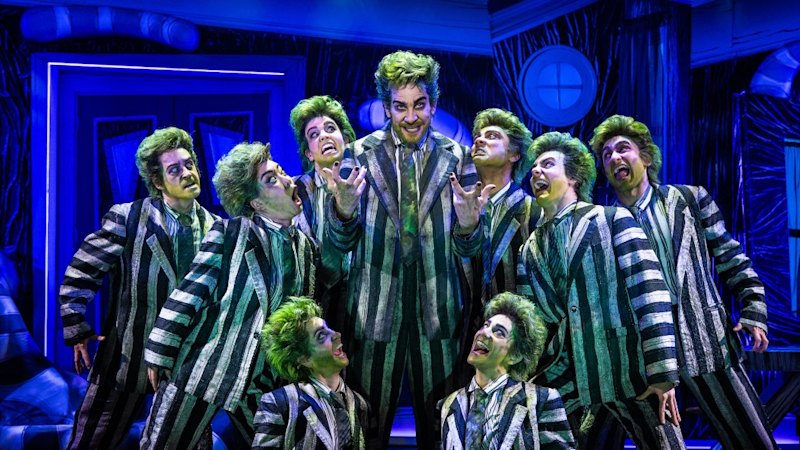
 Sophie Venz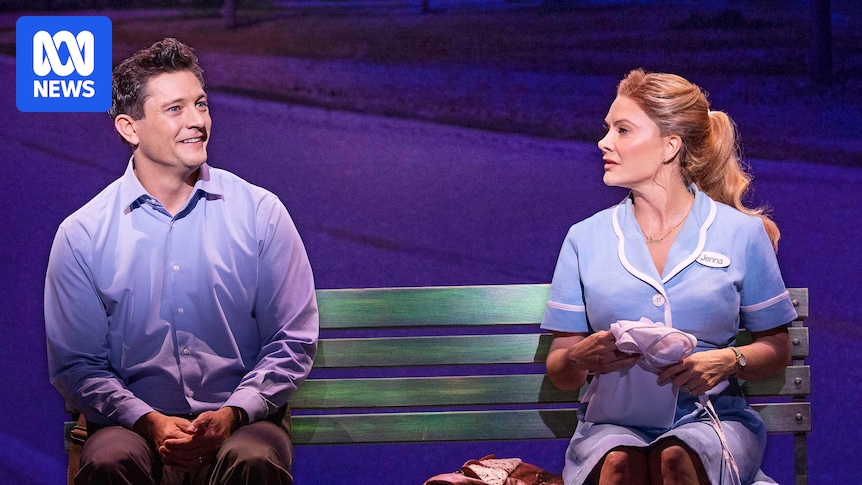
 Kayla Olaya
 Elissa Blake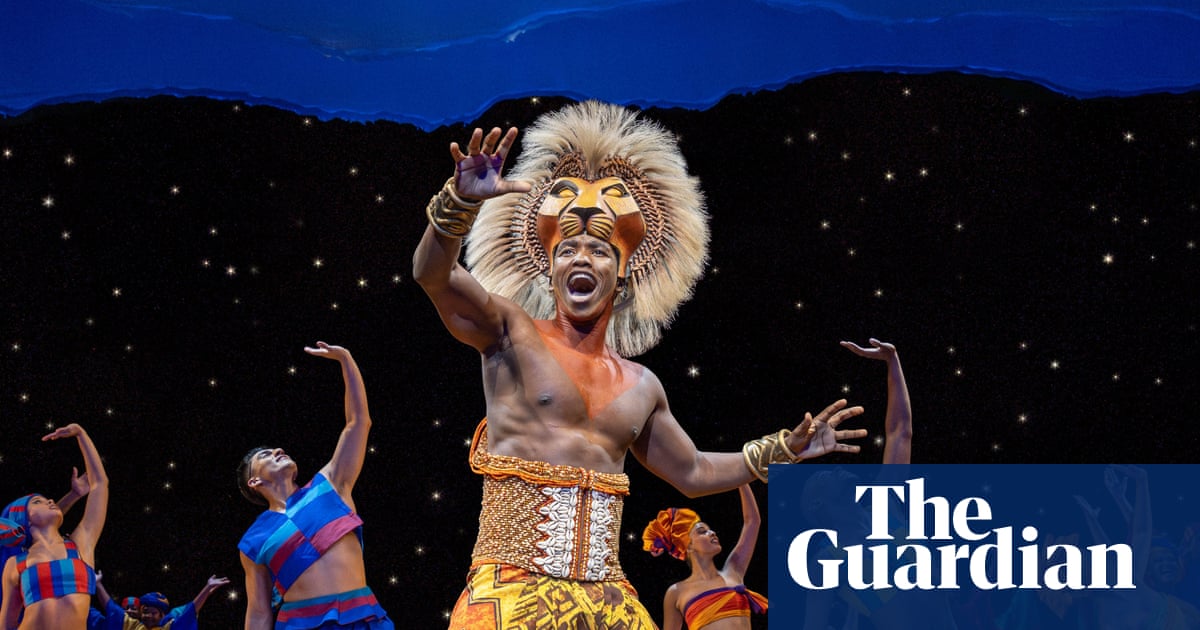
Keeping tabs
Updates about WTF else has happened with things I have recently covered:
US social media addiction cases
Following up: A fortnight ago Meta and Google were denied a new trial in the Californian social media addiction case and today TikTok settled another social media addiction case in California, the same matter that YouTube also settled last week. The case was also taken against Meta and Snapchat and will continue to trial presided over by Los Angeles Superior Court Judge Carolyn Kuhl, the same judge in the first Californian social media addiction case.
A few weeks earlier Meta, TikTok, Snapchat and YouTube settled a social media addiction matter with a school district in Kentucky. Even so, over 1,000 school districts remain part of the social media addiction multidistrict litigation (MDL) being presided over by US District Judge Yvonne Gonzalez Rogers. A separate case also being overseen by Judge Rogers taken by 29 US State Attorneys-General against Meta for allegedly designing Facebook and Instagram to addict children and knowingly concealing the harm from the public and for deception, unfair practices and breaching the Children’s Online Privacy and Protection Act of 1998 (COPPA) is going to trial after Judge Rogers denied Meta's attempts to have the matter dismissed.
 Angela Yang and Shanshan Dong
 Lily Jamali and Kali Hays
 Dara Kerr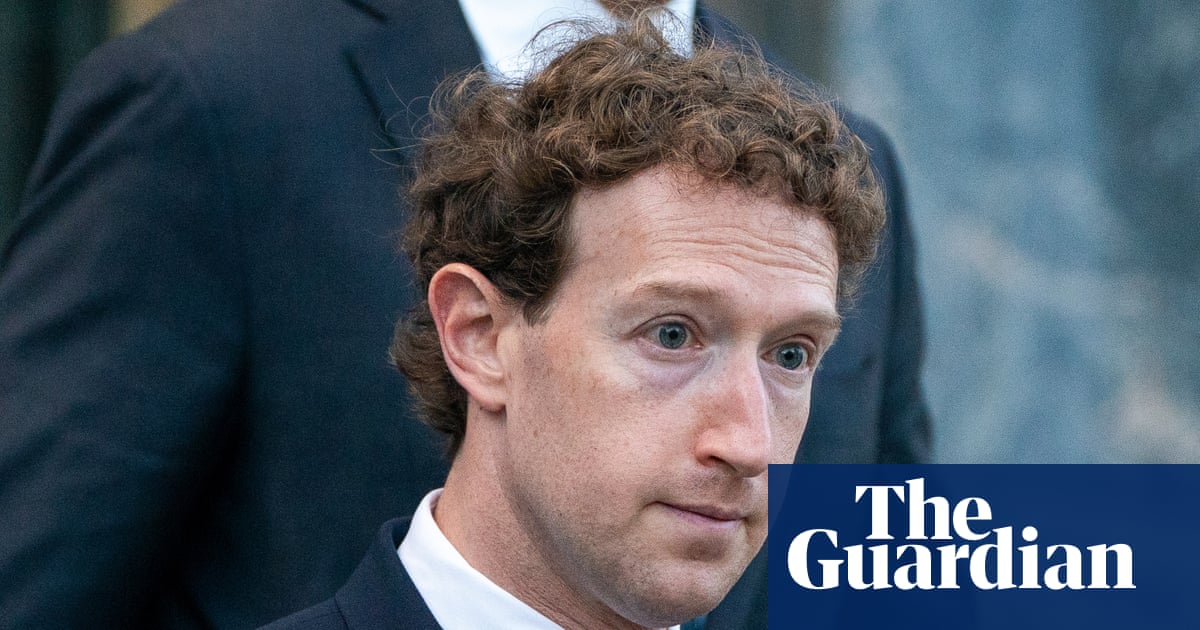
- Meta loses bid to dismiss US states' claims that Facebook, Instagram addict children, Jonathan Stempel, Reuters, Tuesday 30 June 2026
Mythos, cyber security & AI
Following up: After last week’s Five Eyes cyber security and AI warning reportedly the Trump administration told Anthropic it can redeploy Mythos 5 access to an approved set of ‘cyber defenders and infrastructure providers’ on Saturday 27 June 2026 and today the US Department of Commerce lifted the export controls on Fable 5 and Mythos 5 clearing the way for restored public access from tomorrow.
Alongside this, reportedly the staggered release of OpenAI’s GPT-5.6 in limited preview was at the behest of the Trump administration, seemingly in part because it is particularly skilled at cyber security. OpenAI said it was taking ‘this short-term step’ working with the administration but doesn’t ‘believe this kind of government access process should become the long-term default’.
 Hayden Field
 Hayden Field
Paramount–Warner Bros. acquisition proposal
Following up: Paramount's takeover of Warner Bros. inches closer with the company telling the EU competition regulator last week it would divest UIP (United International Pictures) – its film distribution joint venture with Universal Pictures – in response to concerns raised by European cinema operators. Then, yesterday, the UK Secretary of State for Culture, Media and Sport Lisa Nandy reportedly will task the communications regulator the Office of Communications (Ofcom) to review the merger’s potential impact on media ownership concentration and the Competition and Markets Authority (CMA) to investigate whether the proposed deal creates competition issues (although, it’s worth noting CMA launched an inquiry into the merger on 9 June 2026). Nandy is also using the proposed merger as a catalyst for law reform to extend Ofcom’s investigative powers to the effect a merger may have on streaming or video-on-demand services.
- Paramount ready to sell Universal Pictures JV for Warner deal, source says, Foo Yun Chee, Reuters, Thursday 25 June 2026
 Mark Sweney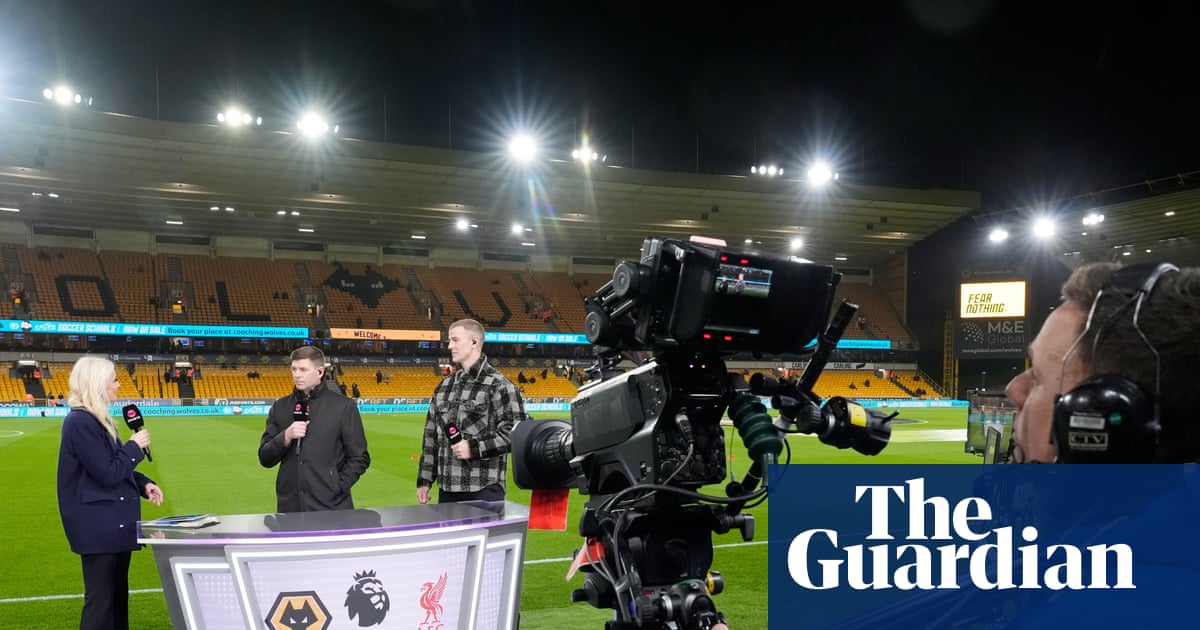
A bit on the side
WTF else happened this week:
A24’s marketing team have been busy! Independent arthouse filmmakers A24 are making news again this week. They have been defending their research partnership with Google DeepMind that was announced last week and they have taken the interesting step of re-releasing their horror hit Backrooms. It returns to cinemas from tomorrow until next week in an Everything Must Go Edition featuring 15 minutes of new footage.
 Justin Carter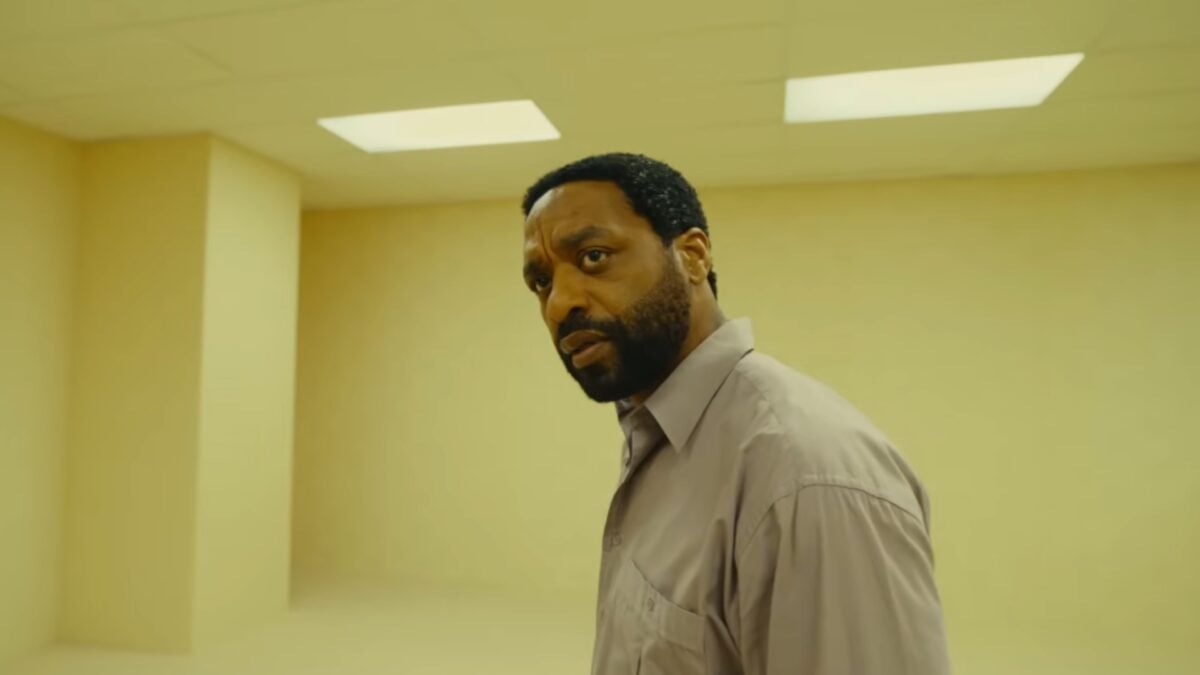
 Brent Lang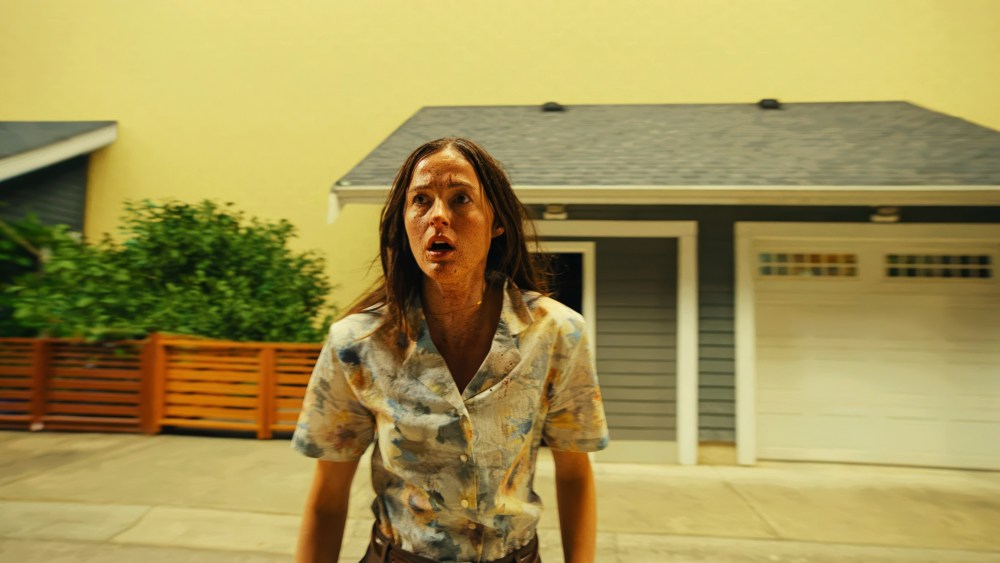
Netflix goes all in on AI recommendations of the homepage. In a long and quite technical post on the Netflix Technology Blog the streaming giant has shared details of a new AI system it is working on called GenPage. Inspired by the prompt–response dynamic of chat bots, it is something like ChatGPT for your Netflix homepage, treating everything it knows about you to generate your Netflix homepage. Rather than separate parts of the homepage being generated by separate systems, GenPage aims to bring them together in a cohesive approach promising a smooth and fast app experience and very personalised recommendations. Also interesting is that it apparently results in more diverse suggestions being shown to users which goes against one of the most common criticisms of recommendation systems.
 Netflix Technology Blog
ACCC takes on Amazon over ads on Prime. The ACCC is taking legal action against Amazon over alleged unfair contract terms in its agreements with Prime streaming service subscribers in Australia. The competition regulator will argue Amazon relied on one of those unfair terms to introduce ads on the platform, forcing customers to a higher priced tier to stay ad-free.
 Michael Atkin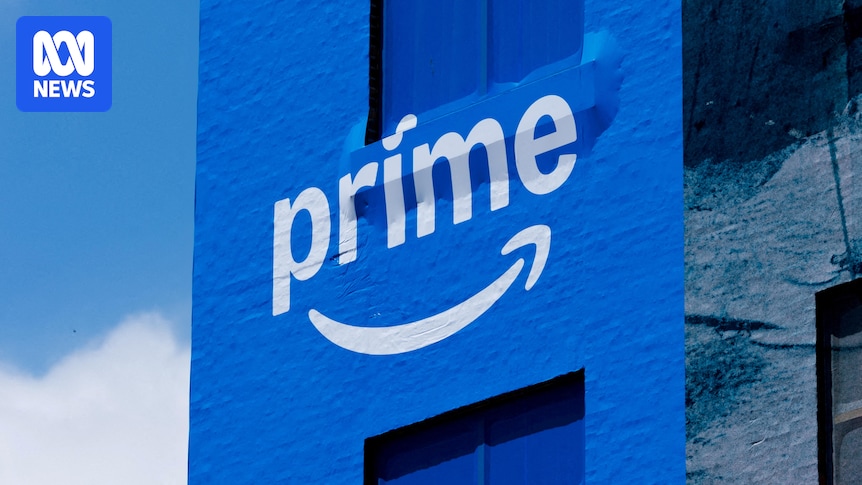
Two AI acquisition announcements. Adobe is set to acquire Topaz Labs which makes AI models for video and image enhancement and Qualcomm has announced it will buy AI efficiency startup Modular.
 Ivan Mehta


If you are enjoying this WTF now?! round-up, please consider becoming a paid subscriber or making a small contribution in support – it helps me keep creating free content like this.
Colophon
Reuse
AI use
AI was used to generate an summary of listings and an introduction to this edition. Those summaries and that introduction were used to generate ideas. No AI-generated content was used verbatim.
The banner graphic (i.e. the first image at the top of the blog post) was adapted from vector graphics generated in Adobe Illustrator using Firefly 4 with 'Subject' content type selected and the lowest level of detail set. { Text to Vector Graphic prompt: Seamless pattern, very large simple shapes, 80s retro style, fluid organic elements, morphing, overlapping, blurred gradients, visible layers. }
Provenance
This blog post was first published on Wednesday 1 July 2026. It has not been updated. This is version 1.0.