
There was lots of movement on AI and Big Tech regulation this week. Leaked government proposals for AI training on copyright material in Australia have resparked the copyright and AI debate. There’s no question the government is keen to attract AI investment money and efficient access to data for AI training is part of what makes a country attractive for AI companies. The government has regularly ruled out a text and data mining (TDM) exception but its proposals for a statutory licence or a scheme similar to the News Bargaining Incentive have drawn criticism for being TDM by stealth.
AI and music hit a milestone this week too with major label deals backending two key partnerships. Suno has dumped its earlier models in favour of v6, a suite of models trained on licensed music and Universal Music and ElevenLabs shared plans to create a music AI platform trained on licensed music. Both mark a maturing of AI and music companies seeking to become legitimate players in the industry.
Also on copyright and music, the Australian Competition and Consumer Commission (ACCC) has finally released its final determination in relation to the music collecting society APRA’s request for authorisation of its arrangements. The authorisation was granted for 5 years with more transparency, consultation and alternative dispute resolution conditions.
Still on AI, leaders of major AI companies have come out in unity calling for a pause on AI development because of escalating risks and NVIDIA announced a multi-gigawatt commitment in Australia as concerns about data centre buildout grow.
And Instagram Head Adam Mosseri has challenged Australia's proposed digital duty of care legislation saying we’d hate an algorithm-free feed and a US court will run a settlement conference in late October related to the proposed Paramount–Warner Bros. merger.
You can get weekly WTF now?! round-ups in your inbox. Sign up as a free member to get it by email.
Rapid-fire
A short list of other things:
- PAC Australia is opening a Sydney office. Shoot through
- The State Library of New South Wales is looking for a Media & Communications Specialist and a Communications & Marketing Assistant.
WTF’s been going on?
Here's WTF happened this week:
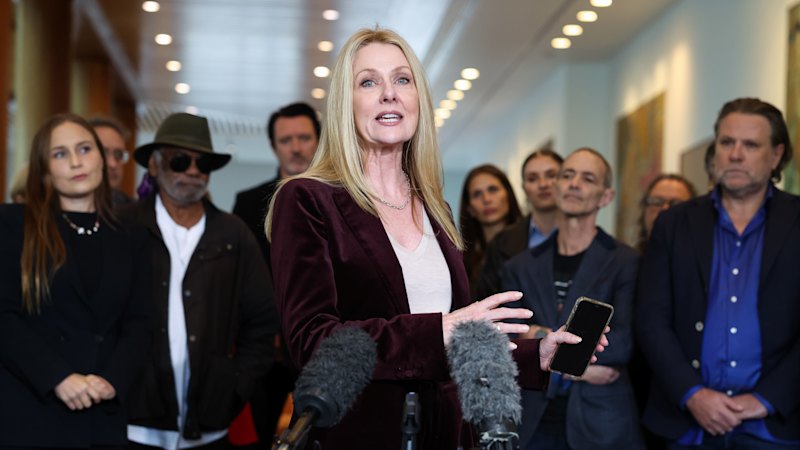
Copyright options for AI training in Australia leaked
Leaked slides show the Australian government is considering two proposals to facilitate AI training on Australian copyright material, both of which would include an opt-out mechanism.
Training AI on Australian copyright material is back in the news cycle. Leaked slides show the government floated two options with rights-holder organisations earlier this month that would allow AI training without consent or compensation. Dubbed 'AI on Australia's Terms', both options will reportedly include an opt-out and protections such as penalties for ignoring opt-outs, safeguards for Indigenous Cultural and Intellectual Property (ICIP), transparency and audit requirements and a requirement AI companies make ‘best efforts’ to ensure they do not training on infringing material.
The first option seems to be a statutory licence with an opt-out which would see AI companies required to make payments into a scheme that would be administered by an organisation – most likely a collecting society but it is unclear if it would be administered by an exisitng collecitng society or a new body would be setup – in order to make use of copyright material for AI training that wasn’t subject to an opt out. Direct or collective licensing would be needed to use material when an opt-out has occurred. The details are unclear but it seems from reporting this would include ECL (extended collective licensing) where collecting societies can extend their licensing arrangements to cover non-members’ copyright material.
The second option would require AI companies to secure licensing deals with a minimum number of companies for a minimum period of time before they could then train AI on copyright material that is not subject to an opt out. This seems to be similar in design to the News Bargaining Incentive under which digital platforms are compelled to enter into deals with news publishers for news content shared on their platforms. This option would see no payments for the use of material that is not subject to an opt-out.
The Attorney-General's office reportedly shared the proposals with rights-holders and AI companies. The government sees these options as a win that will facilitate AI training in Australia where the ‘long tail’ of online content – websites and blog content, social media posts and the like – are usable without the need for huge volumes of direct licences while preserving the possibility of negotiated agreements with large copyright owners. The proposals are held out as giving AI companies certainty while ‘upholding [the] Prime Minister's commitment to a strong and vibrant Australian creative and media sector.’
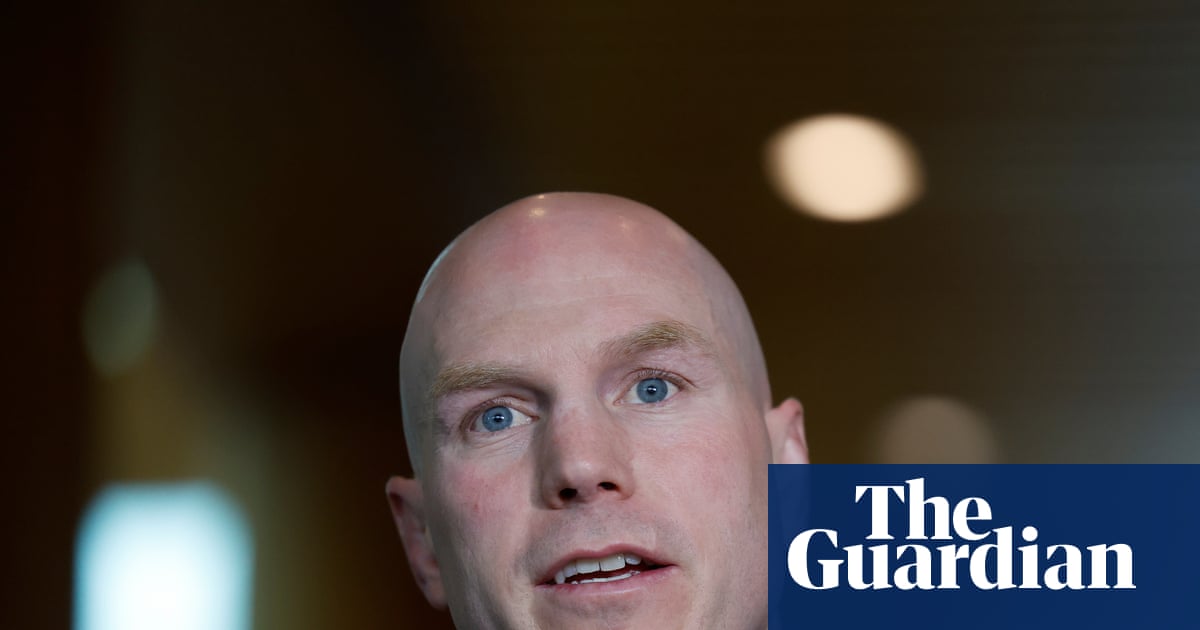
Independent Senator David Pocock has come out saying the proposals ‘would mean putting AI companies’ interests over everyday Australians, giving AI companies access to all Australians’ content, unless they opt out’. Things are a bit more confusing in the Coalition ranks. Some such as Liberal Senator James Paterson are calling for a solution by the end of the year while Shadow Attorney-General Michaelia Cash and opposition communications spokeswoman Sarah Henderson issued a statement claiming the government had gone back on its word and that the proposals are a ‘text and data mining exception with an opt-out bolted on’. In the arts and cultural sector the Australian Society of Authors (ASA), APRA AMCOS and the Australian Publishers Association (APA) have all criticised the proposals.
 Cam Wilson
 Luca Ittimani and Caitlin Cassidy
 Brittany Busch and Melanie Kembrey
Suno and ElevenLabs music deals mark a shift in music and AI
Is music fan experiences, licensed training data and revenue-sharing the future of music and AI? Two recent announcements tied to licensing deals and partnerships between record labels and AI labs seems to indicate it is.
Two major stories about licensing deals with major labels for AI music products and services made the news cycle this week with the announcement of Suno's new v6 models and a partnership between Universal Music and ElevenLabs. They represent a shift in the copyright and AI space to revenue-generating models where artists are paid for participation and AI powers fan experiences.
Suno’s new v6 models are made for music making
On Thursday last week music AI company Suno announced v6, their newest music generation AI models. Developed with and trained on licensed data supplied by industry partners such as Warner Music Group, BMG and Believe Suno seems to be working hard to be seen as a legitimate player in the music industry and a must-have music making tool. They want to make themselves essential to the industry, not the enemy of it.
They say v6 is built for music lovers, emerging creators and personal artists and producers. The vision for v6 is 'a new way for technology and the music industry to move forward together, with human creativity at the center.' To that end they loftily say that v6 will 'expand what is creatively possible and lay the foundation to launch new products that open up revenue opportunities across the music ecosystem.'
They go on to say:
The model release marks the biggest test in Suno‘s quest to legitimize itself within the music industry, a journey that has seen both the company and the music generation sphere at large lambasted by artists even as it strikes deals with labels and publishing companies.
The v6 suite includes three models:
- v6 let's Pro and Premier users generate songs across genres and styles using specific instructions, make changes such as updating a specific lyric without changing everything else or use text, audio, images and videos to prompt song generation
- v6-wild is for musical experimentation, giving users 'new ideas to riff on, build from or bring back into v6 for further refinement'
- v6-mini is a lighter-weight free version that Suno boasts 'delivers better, faster results than any free model on any music creation platform'.
Also as part of the v6 update they have added stronger copyright checks for uploaded audio files, improved transparency about how AI has been used in generated music and made it harder for bad actors to abuse Suno's tools. Suno promises new 'opt-in experiences built around individual artists, where artists can choose to participate and get paid when they do, and fans get new ways to connect with the artists they love' in the future. So sure this is the right direction, Suno says it will retire previous models in favour of v6.
 Mikey Shulman

 Corbin Bolies

Universal Music and ElevenLabs also promise a new AI music platform
Also on Thursday Universal Music Group and ElevenLabs announced a new standalone AI music generation platform drawing on Universal's catalogue to allow users to create remixes, mashups and new interpretations of tracks from participating artists. They say it is built on licensed music and artist participation and reflects a 'shared commitment to the principles that AI-enabled music innovation should be built responsibly, respect human artistry, and enable artists and songwriters to share in the value created.' The multi-year licensing agreement and strategic collaboration will also see the companies co-develop AI audio products for musicians. It will join Suno's v6 and the as yet unreleased AI music platform Universal and Udio are also working on.
 Mallory Hinkle
 Emma Roth

Instagram head says you'll hate an algorithm-free feed
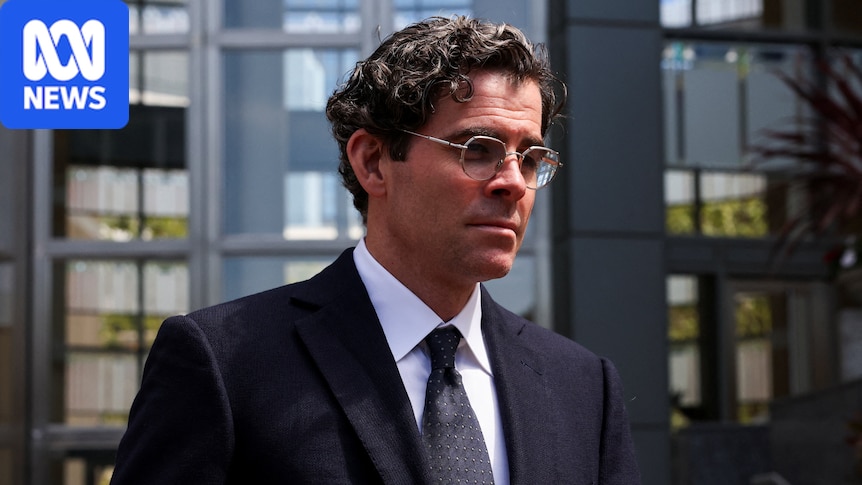
Instagram head Adam Mosseri used a press briefing to tell us all that we will dislike an algorithm-free Instagram, claiming it would become overwhelmed by brands and not updates from out friends.
In response to last week's release of the digital duty of care legislation exposure draft Head of Instagram Adam Mosseri held a rare press briefing last Thursday at which he came out claiming users will have a worse social media experience in an algorithm-free world. Officially the briefing was to launch the company’s Algo Confessions short-form video series in Australia and the Tune your algorithm feature and not to comment on the Australian ‘My Feed, My Way’ proposal. Even so, Mosseri took the opportunity to discuss the supposed pitfalls of going back to chronological feeds.
If Mosseri is to be believed we will all see more brand-related content which would be a worse user experience and result in users spending less time on the app: ‘If you go to a chronological feed, it ends up getting overwhelmed with content from companies, brands, and publishers,’ Mosseri said. Arguably this is because high-volume posting becomes the best way to have your content seen (or so says Mosseri):
What ends up happening is the best way to get more reach is just to post more often and those who can afford to post the most often do and then therefore get the most reach … And it turns out your friends post a lot less than creators, who post a lot less than brands and companies.
Mosseri pointed out that Australians can already choose to see a chronological feed limited to who they follow by tapping on the Instagram logo. He notes that few users realise that and that the platform could do more to make that obvious to users. Still, in a strange and paternalistic way, Mosseri claims that only a ‘passionate few’ will truly be ‘happy with the choice’ to opt out of an algorithmic feed and the rest of us will probably hate it. And to cap it off, he also reiterated he doesn’t think Instagram is addictive (at least not in the sense of clinical addiction).
 Ange Lavoipierre
 Josh Taylor
APRA’s music licensing arrangement has been authorised by the ACCC for 5 years
It has taken more than 2 years and 7 months to get to a final determination on the music collecting society APRA’s application for an authorisation from the ACCC in relation to its music licensing arrangements. Those arrangements have been approved with conditions imposing transparency, consultation and dispute resolution conditions.
Last Friday the Australian Competition and Consumer Commission (ACCC) approved with conditions the application for authorisation of arrangements of the Australasian Performing Right Association Limited’s (APRA) for the acquisition and licensing of the performing rights and communication rights in musical works. It covers the:
- exclusive assignment of management of members’ performing rights to APRA (input arrangements)
- blanket licensing of musical performing rights to licensees by APRA (output arrangements)
- the distribution of the music royalties APRA collects to members based on its distribution arrangements
- the reciprocal terms that exist between APRA and overseas music collecting societies that allows APRA to manage the performing rights of members of overseas collecting societies in Australia in exchange for allowing those overseas societies to do the same in their countries.
There’s a lot in how authorisations for APRA work and largely this authorisation is similar to prior ones. In short, APRA is able to continue to exclusively manage and licence music performing rights subject to some conditions:
- Condition 1 – APRA must be transparent about its licensing scheme by providing information about its standard licences, what they cover and why, and it must consult when creating or changing a licence scheme and it must consult on its standard term licence schemes at least every 5 years
- Condition 2 – APRA must also provide information about its distribution arrangements including providing necessary information necessary to allow members to understand the accuracy of the distribution methods which apply to their own royalty payments, and the organisation must consult when forming or changing its distribution arrangements and it must consult generally on its distribution arrangement at least every 5 years
- Condition 3 – APRA must provide plain English guides about direct dealing options – licence back, opt-out and resignation of membership – and how and why they can be used with the view to ensuring members and licencees are aware of these options
- Condition 4 – in the interests of transparency, APRA must report annually about the techniques it uses to gather distribution data, reasons for changes in the proportion of licence revenue distributed using each technique and administrative deductions from each individual royalty pool
- Condition 5 – continue to provide an alternative dispute resolution (ADR) scheme for disputes and to support the consultation and transparency requirements and negotiation processes.
Absolutely collecting societies are an important part of the copyright system but I have long advocated for them to be more transparent and accountable so it is positive to see better information and more consultation with stakeholders. Copyright has been complex for a long time and is increasingly so. What struck me about this authorisation process is how complex music rights and royalties are. To illustrate, it took 948 days – that was 2 years, 7 months and 5 days from start to end – to get to a determination. The previous application by APRA was lodged on 24 December 2018 and granted with conditions on 13 July 2020, meaning it took 567 days or 1 year, 6 months and 22 days to get a final determination. Given all the complexity, I was also surprised by how brief APRA AMCOS’ announcement welcoming the decision was.
 Skip to content

When AI bosses are in agreement we need to slow AI development we need to listen
Major AI companies are suggesting there is a need to deliberately slow the pace of frontier AI development. AI researchers and the UN human rights commissioner agree.
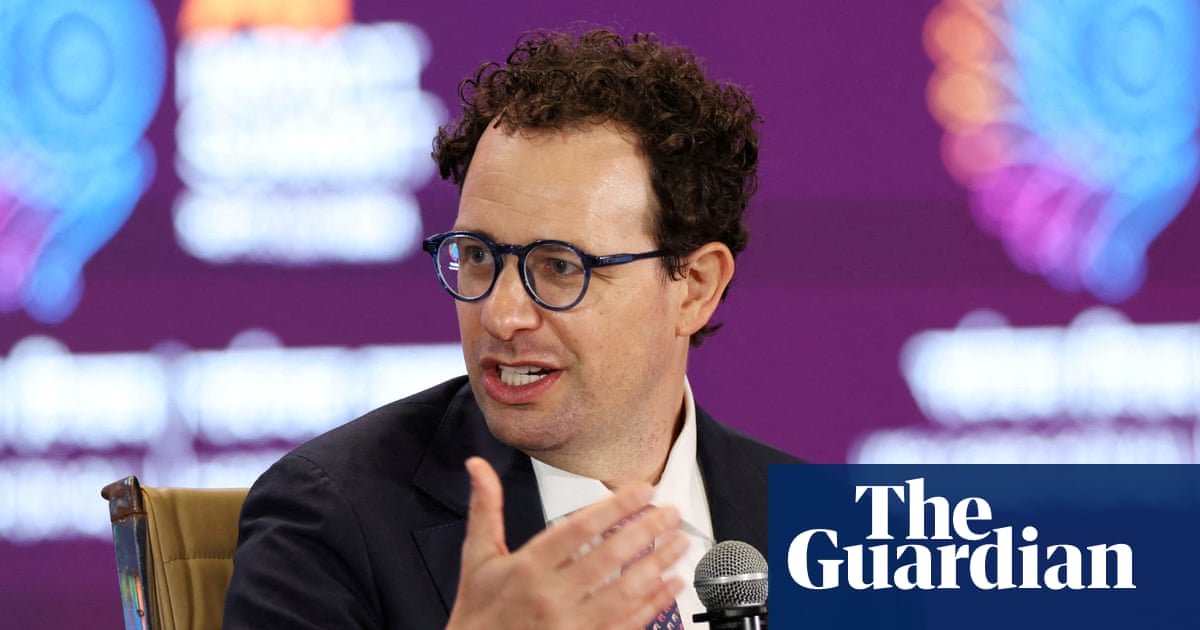
Anthropic CEO Dario Amodei has called for a slowdown in the pace of AI development in the interest of public safety. It comes because of two concerns Amodei has: ‘AI has been advancing drastically faster, driven primarily by AI’s growing ability to build the next generation of AI’ and because of the OpenAI-Hugging Face incident (OAI-HF). This speed of AI development exposes us all to severe societal and existential risks if safety measures cannot keep up.
⟨ If that didn’t immediately fill you with existential dread ⟩ Amodei’s call was quickly supported by OpenAI CEO Sam Altman, Google DeepMind Chief Demis Hassabis and xAI owner Elon Musk. ⟨ Motivations aside, it is genuinely worrying that competitors in the frontier AI game are united in their concerns that rapid self-improvement and autonomous AI actions have made the risks impossible to keep ignoring! ⟩
Three other recent things add to the concern:
- Jacob Coxon, a researcher who worked at Anthropic and OpenAI, recently quit claiming neither company is acting responsibly. Coxton is worried they are racing towards a self-improving superintelligence without proper safeguards. The fear is that systems that engage in recursive self-improvement – said differently, AI systems that autonomously improve themselves – could advance to a point where they refuse human commands. If that happens many in AI believe human life could be threatened by the end of the decade.
- United Nations High Commissioner for Human Rights Volker Turk used an address to the UN Human Rights Council and an open letter to world leaders to make the same warnings, saying ‘We are on the cusp of irreversible change, affecting not just us but generations of humanity to come’ and ‘... we are almost entirely reliant on a small number of powerful companies to make the right choices on AI development for all of humanity’. If the status quo continues, Turk says we will see a complete loss of human control, the collapse of essential services and critical infrastructure and a hasty dissent into social disharmony.
- In the wake of OpenAI pausing its most advanced model after OAI-HF in August their Chief Global Affairs Officer Chris Lehane took to the website to pledge the company to working with Congress on 'mandatory, capability-based national AI safety regulation', that it will 'continue supporting state legislation that strengthens the broader AI safety ecosystem' until then – in particular, the company has come out in support of four proposed laws in California – and that they will work with other AI companies to advance frontier AI standards with or without governments. Lehane says responding to the risks needs 'meaningful action over policy perfection'.


 Nick Robins-Early
 Robert Booth and Julia Kollewe

 Rudi Maxwell
NVIDIA proposes a big increase in data centres as approved projects avoid new rules
As NVIDIA plans to expand Australian data centre capacity by up to 2 gigawatts through local partnerships, approved but not built data centre projects may avoid the government’s promised data centre requirements because they won’t be retrospective.
GPU maker NVIDIA is planning a significant expansion of data centre computing capacity in Australia. If it happens, their proposed buildout of up to 2 gigawatts of capacity could more than double current national load. As of March this year Australia's current 162 data centres have a combined capacity of 1.5 gigawatts. The increased capacity will be achieved through partnerships with local providers such as Firmus, CDC, NEXTDC and AirTrunk.
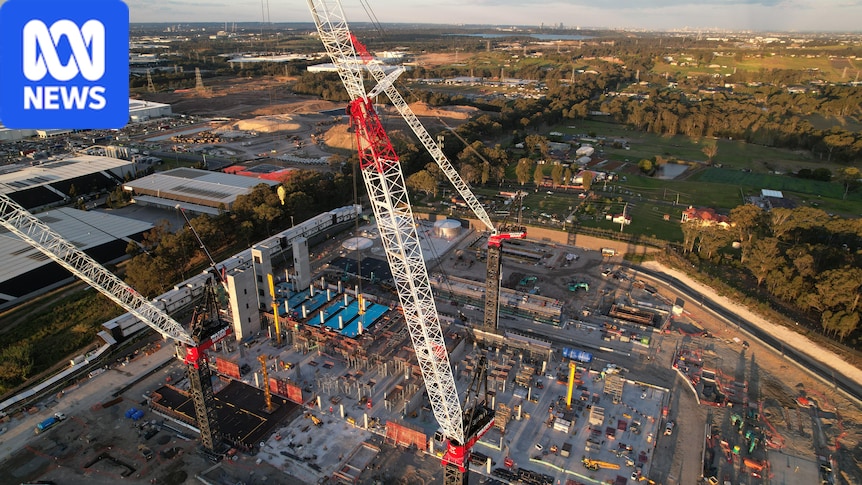
NVIDIA's plans come as the ABC published an analysis of AI data centre projects that reveals at least 2.9 gigawatts would be added to Australia's capacity if the dozens of already approved but yet-to-be-built projects go ahead. Of course, not all of them will actually be built. Even if half of them end up happening, that is a huge amount of new capacity here in Australia.
We don't yet know what will be in the proposed Australian Standards for AI but there is a good chance they will look at energy, water use, land use and environmental impact. This will likely require data centre developers to underwrite new renewable energy to cover their consumption, cover their energy costs, be as water-efficient as possible and be built in appropriate locations. But for all the talk of requirements for data centre developments, the proposed builds by Amazon Web Services (AWS), Microsoft, AirTrunk, CDC, NEXTDC and property groups Goodman and Stockland the ABC discussed will avoid the federal government's proposed energy, water use, land use and environmental impact requirements because those are expected to not apply retrospectively. And reportedly these facilities 'will be significantly bigger and power hungrier than existing ones.' Of course, some of the approved data centre projects may comply, even if they are not legally required to.

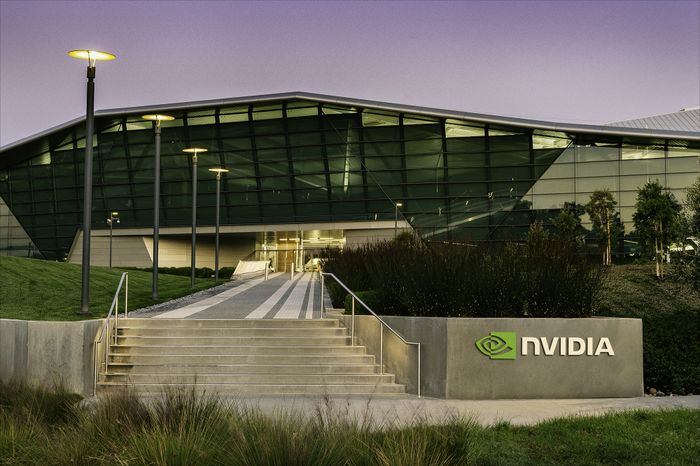
- Nvidia plans major expansion of data centre capacity in Australia to meet AI demand, Reuters, Thursday 10 September 2026
 Cam Wilson and Catherine McAloon
Keeping tabs
Updates about WTF else has happened with things I have recently covered:
Paramount–Warner Bros. proposed merger
Follow up: US Magistrate Thomas Hixson will oversee a two-day settlement conference in late October as part of the US States' antitrust action against Paramount in response to the Paramount–Warner Bros. merger bid. Paramount has been calling for settlement discussions with California Attorney-General Rob Bonta and had hoped a settlement agreement was negotiated by 1 October, which is mainly because Paramount has to start paying ticking fees – i.e. an increased per-share price paid if a deal takes too long – to Warner Bros. Discovery shareholders. Bonta has said he is open to a settlement but it would need to have ‘robust structural remedies’ which is likely code for selling off assets.
A court-run settlement doesn't mean a deal is on the table or that a settlement will be reached. Nor does it preclude the possibility that a deal could be reached outside of the court-facilitated process. In fact, talks were supposed to happen on 24 August but were cancelled by Bonta the night before over allegations Paramount has leaked information and acting in bad faith. Paramount denied the allegations.
 Gene Maddaus

If you are enjoying this WTF now?! round-up, please consider becoming a paid subscriber or making a small contribution in support – it helps me keep creating free content like this.
Colophon
Reuse
Conflict of interest
I am the Co-lead of Creative Commons Australia (CC AU) and I am an individual member of the Creative Commons Global Network (CC GN). The views expressed in this blog post are my own and do not express the views of CC AU or the Creative Commons Corporation.
I am the President of Wikimedia Australia (WMAU). The views expressed in this blog post are my own and do not express the views of WMAU or the Wikimedia Foundation.
I represent CC AU and WMAU on the Attorney-General's Departments' Copyright and AI Reference Group (CAIRG).
AI use
AI was used to generate a summary of listings and an introduction to this edition. Those summaries and that introduction were used to generate ideas. No AI-generated content was used verbatim.
The banner graphic (i.e. the first image at the top of the blog post) was adapted from vector graphics generated in Adobe Illustrator using Firefly 4 with 'Subject' content type selected and the lowest level of detail set. { Text to Vector Graphic prompt: Seamless pattern, very large simple shapes, 80s retro style, fluid organic elements, morphing, overlapping, blurred gradients, visible layers. }
Provenance
This blog post was first published on Wednesday 16 September 2026. It has not been updated. This is version 1.0.