


WTF Now?! #31 sees a lot of music news: Sydney community radio station 2SER is at risk of closing if a gap in its funding isn’t filled. UTS remains committed but won’t increase their financial support which begs the question: how much arts and culture is dependent on fragile relationships with universities?
Despite settling with the US Department of Justice (DOJ), the Live Nation and Ticketmaster antitrust case has found the live entertainment giant holds a harmful monopoly over big concert venues in the USA. We will have to wait until the remedies hearing is over to see what it means for Live Nation.
Also music related: The UK's independent music venues peak body wants greater accuracy, transparency and fairness in how licensing fees are calculated by the UK music collecting society, Spotify is furthering its support for music gigs through a partnership with indie music venues and film and Creative Workplaces is developing a National Code for the Australian contemporary music industry.
Online safety also featured this week: The Age Assurance Technology Trial (AATT) ignored requests by the Office of the Australian Information Commissioner (OAIC) to not overstate privacy claims related to age assurance technologies being assessed for suitability to enforce the social media minimum age (SMMA).
Indonesia has blocked Wikimedia users from logging into Wikipedia and the other wiki platforms as part of the country’s online safety regulations. Human rights concerns have been raised if the Wikimedia Foundation registers under the scheme.
Two more things: Film and TV directors in the UK are calling on streaming platforms to join the royalty scheme for directors for repeat showings and sales of their programmes and sci-fi is increasingly being self-published.
There were many other things I couldn’t include this week. Jump over to my Are.na bookmarks to see what else I have been reading.
Don't just read the introduction. Free members can read the entire weekly WTF now?! round-up. Sign up and keep reading.
Rapid-fire
A short list of other things:
- Victoria has another new Minister for Creative Industries, Vicki Ward. Shoot through
- Congratulations to the writers shortlisted for the 2026 NSW Literary Awards. Shoot through
- Congratulations also to the winners and nominees of the 2026 Performing Arts WA Awards. Shoot through
- On Wednesday 13 May 2026 the National Communications Museum (NCM) is hosting Intelligence Embodied, a one-day AI summit. I wish I could be there. Melburnians should get along. Shoot through
- With philanthropic support from Ruth Ritchie, Griffin Theatre Company will establish a playwriting centre in a Kings Cross terrace house to be launched in 2027. Shoot through
- Creative Workplaces has begun developing a National Code for the Australian contemporary music industry. An Industry Reference Group has been set up and the process will involve public consultation. Shoot through
- Tim Cook is stepping down as the CEO of Apple. Senior Vice President Hardware Engineering John Ternus will replace Cook. Shoot through
What’s been going on?
Here's WTF happened this week:
A funding gap leaves the future of 2SER uncertain
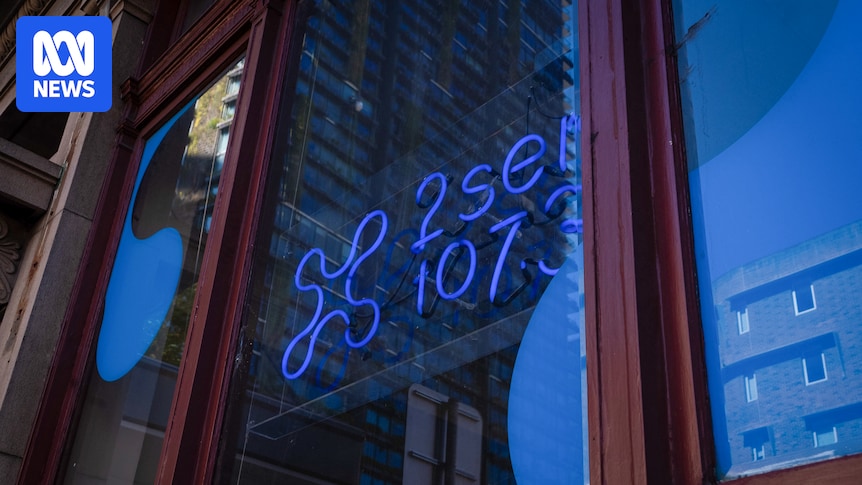
A funding shortfall threatens the ongoing operation of Sydney community radio station 2SER. With Macquarie University pulling its support and UTS unwilling to cover the funding gap, the station's future is uncertain.
Sydney Educational Radio, which you are more likely to know by its call sign 2SER, faces an uncertain future due to changes to its funding. Sydney Educational Broadcasting Ltd which is co-funded by the University of Technology Sydney (UTS) and Macquarie University operates the station. In September last year Macquarie announced it would end its support at the end of 2026. UTS remains committed to 2SER but have indicated that they will not increase their funding contribution to cover the gap. They are working with the radio station to find another funder.
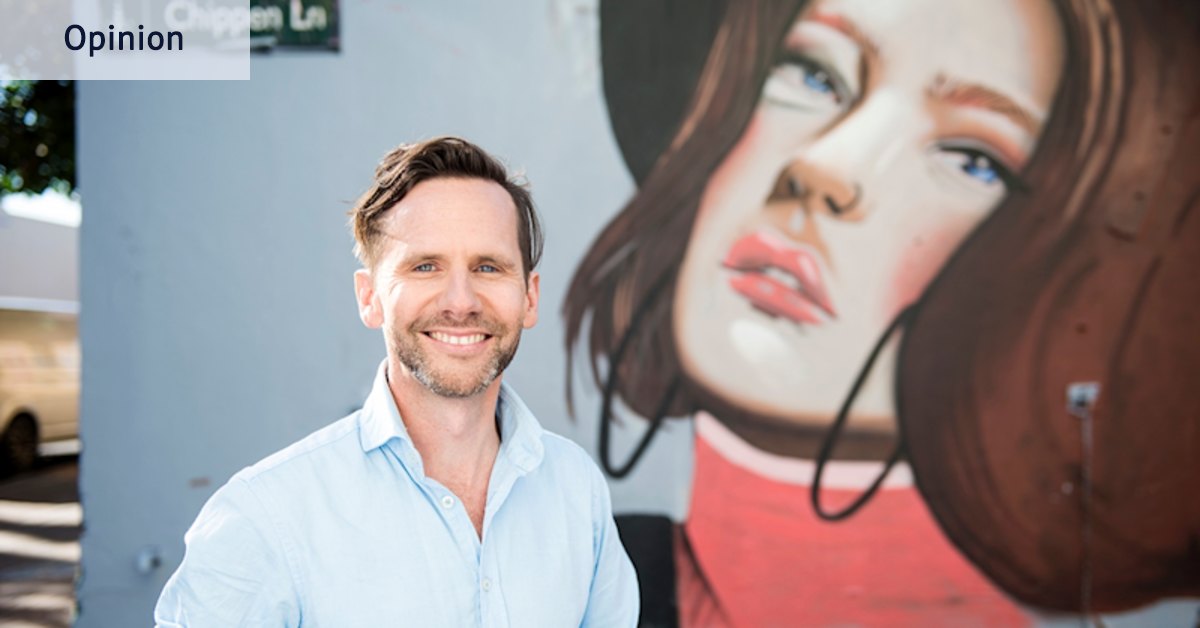
It would be a terrible shame for Sydney media and arts and culture, and for Australia’s community media sector, to see 2SER go off air. For 45 years it has been a crucial training ground for student journalists and early-career broadcasters and a platform for diverse voices rarely heard on mainstream radio. Triple J and ABC Radio Sydney stalwart Robbie Buck gives an impressive list of media personalities that cut their teeth at 2SER in a piece for The Sydney Morning Herald. It has also served as an important alternative outlet for Australian music and a part of the national community radio network.
Reportedly, a funding prospectus was issued to UNSW and The University of Sydney, which USyd declined. Whether UNSW comes to the party or not, as Buck notes in the SMH op-ed, UTS likely could come up with the extra $325,000 to cover Macquarie’s contribution on its own. Options for transitioning the radio station out of universities would not be easy, but has been done before. 4ZZZ in Brisbane, for example, started life as the student radio at the University of Queensland (UQ) in 1975, but has been independent since 1989 when a strained relationship with the university saw it move off campus, eventually calling the former Brisbane headquarters of the Communist Party of Australia in Fortitude Valley home.
Whether 2SER stays at UTS or goes fully independent, it seems an important time for arts and culture to discuss how dependent parts of our sector are on fragile relationships with universities. Who can forget Meanjin’s unceremonious dumping by Melbourne University Press (MUP) recently? That could have seen an end to the literary journal if Queensland University of Technology (QUT) didn’t step in and the need for more teaching space on campus nearly saw the Griffith University Art Museum (GUAM) shuttered in 2023.
 Declan Bowring and Isabella Michie
 Robbie Buck
Privacy regulator’s concerns were ignored by the social media minimum age technology trial
The Age Assurance Technology Trial (AATT) ignored warnings from the Office of the Australian Information Commissioner (OAIC) not to overstate privacy claims given the trial did not do an assessment of technologies against Australian law. Conflicts of interest and the potential for young people to circumvent age assurance technologies were also raised as concerns.
A freedom of information (FOI) request has revealed that calls by the Office of the Australian Information Commissioner (OIAC) to not use inflated and overstated language regarding privacy protections in reports about the Age Assurance Technology Trial (AATT) were ignored by Age Check Certification Scheme, the UK organisation running the trial. The trial was commissioned by the Australian Department of Infrastructure, Transport, Regional Development, Communications, Sport and the Arts to test the suitability of age verification technologies that would be used to implement Australia’s social media minimum age (SMMA) scheme. Its outcomes were put forward by the Australian Government as evidence that age assurance could work in Australia.
OIAC were concerned that reporting was using terms like ‘privacy-preserving’ and ‘privacy by design’ yet the trial did not test or assess those technologies against the Australian Privacy Principles (APPs) or the Privacy Act. Critics of the AATT approach to privacy were concerned assessments were limited to interviews with vendors and reviews of public-facing privacy policies rather than conducting actual technical audits. One such critic, former AATT’s Advisory Board member and Chair of Electronic Frontier Australia (EFA) John Page, said ‘The AATT testing of privacy controls was extremely superficial and not fit for purpose, with the end result having all the attributes of textbook ‘privacy washing’.’
Other concerns raised with the AATT include the potential for conflicts of interest and the failure to address the potential to circumvent age assurance technologies. On conflict of interest, Age Check Certification Scheme’s founder and CEO Tony Allen served as the AATT’s project director and sits on the Executive Committee of the Age Verification Providers Association (AVPA), an industry group for companies that sell age verification technologies. The trial also failed to look at how teenagers might bypass these age checks, which is a major concern for the effectiveness of the SMMA, especially in light of the eSafety Commissioner’s first compliance update published in March which found significant numbers of children under 16 years of age had retained or regained accounts on age-restricted social media platforms.
In March, OIAC issued new guidance for Australian Privacy Principles (APP) entities encouraging them to adopt a ‘privacy by design’ approach and undertake a Privacy Impact Assessment (PIA) when selecting and deploying an age assurance method because the AATT findings may not be sufficient to guarantee compliance with Australian privacy law.
Cam Wilson
Indonesia has blocked locals from logging into the Wikimedia platforms
Indonesia's Communications Ministry Kemkomdigi has taken the extreme extreme step of blocking Wikimedians from logging into the wiki platforms as part of the country’s online safety and internet filtering regulatory regime. It is having a significant impact on the local contributing community and is part of a broader trend treating Wikipedia and the wiki platforms like other large online platforms.
A blog post on Diff reports that on Wednesday 25 February 2026 the Indonesian Government through Kementerian Komunikasi dan Digital (Kemkomdigi) (the Ministry of Communication and Digital Affairs) restricted access to the Wikimedia authentication subdomain (auth.wikimedia.org) meaning volunteer contributors to Wikipedia and the other wiki platforms cannot log in to their accounts and new users cannot register. While reading and anonymous editing of Wikipedia is still possible, this makes Indonesia the first country to specifically target the login and registration infrastructure of the Wikimedia movement as part of regulatory efforts.
It is an extreme measure for a regulatory body, and particularly concerning given the Electronic Frontiers Foundation (EFF) has labelled the Indonesian internet filtering regime as possibly the most repressive online intermediary regulatory scheme yet. The official reason for the block given by Kemkomdigi is because the Wikimedia Foundation (WMF) failed to register as a Private-Scope Electronic System Operator (ESO) under the regulatory scheme. Complying with the scheme requires platforms to register with the Indonesian Government and grant Indonesian authorities broad powers to access users’ data, monitor content and enforce strict content moderation rules set without securing a court order first.
The Jakarta Post reports that the Wikimedia Foundation (WMF) will meet with representatives of the Indonesia Government, arguing the local online safety approach 'departs from international human rights norms and threatens the privacy and security of Wikipedia editors.' Further, WMF says they will 'resist inappropriate orders, and we push back on laws that require very rapid and guaranteed disclosure of user data without the ability to raise appropriate legal objections.'
The move is concerning because of the impact it is having on the Indonesian Wikimedia contributing community who are campaigning to have the ban lifted. It is equally concerning because this regulatory approach is part of a worrying trend to treat the wiki platforms the same as large, for profit online platforms even though the kinds of problematic technologies and practices those platforms use – such as surveillance capitalism, targeted advertising, algorithmic amplification and infinite feeds – are not part of how the wiki platforms work.
EnsiklopediaBebas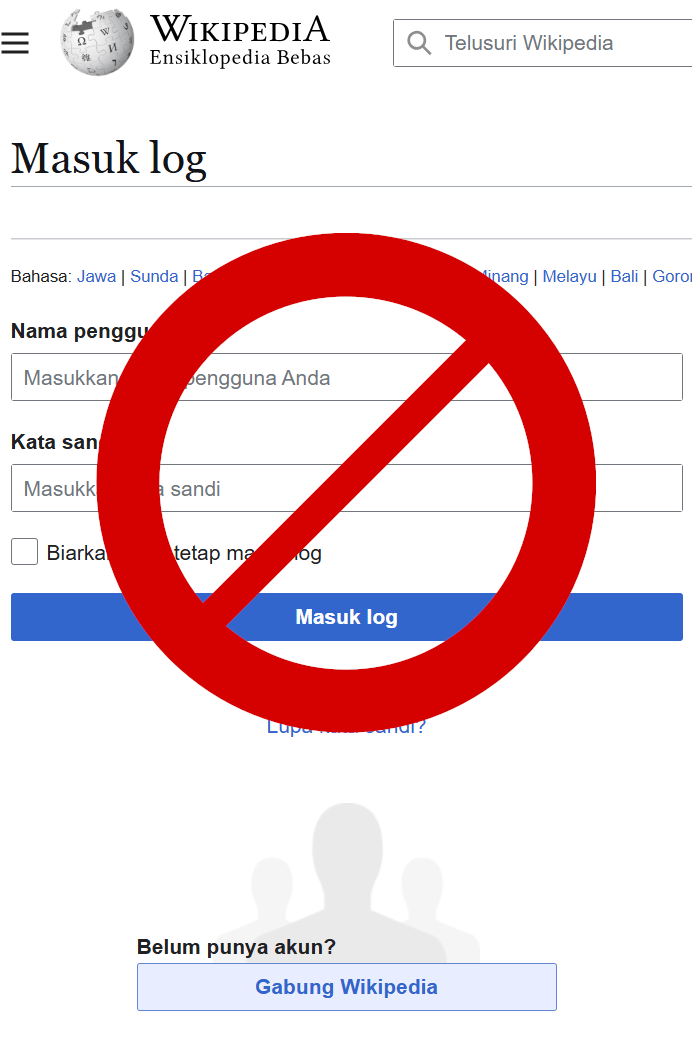
- Under blackout threat, Wikimedia to hold talks with Indonesia, The Jakarta Post, Sunday 19 April 2026.
Katitza Rodriguez
Live Nation and Ticketmaster found guilty of monopolistic harm of the US music industry
A US jury found that Live Nation and Ticketmaster hold a harmful monopoly over big concert venues in the USA, harming artists, venues and music fans. Even with proposed Australian legislation to tackle hidden ticket fees going through Parliament, the verdict has renewed calls for Australia to investigate Live Nation and Ticketmaster's impact on the local music scene.
Just a few weeks ago an antitrust case against Live Nation and Ticketmaster got underway in the US, and just one week later a surprise settlement was announced between the US Department of Justice (DOJ) and the live entertainment companies. Even so, 34 state Attorneys-General opted to continue the case, accusing Live Nation of being a ‘monopolistic bully’ and arguing that the company wields too much power over the live entertainment industry at the expense of artists, venues and music fans. Live Nation’s position was that their size is simply a product of excellence and effort.
After four days of deliberation a Manhattan federal jury has found that Live Nation and Ticketmaster held a harmful monopoly over big concert venues. The case will now proceed to a remedies hearing. What remedies the states will seek and whether that includes a requirement for Live Nation to divest Ticketmaster and/or other entities such as the many venues they own remains to be seen. Live Nation intends to appeal the case.
Whatever the reason for Live Nation’s market position, there is a Wal-Mart effect impacting the US live music industry and large conglomerates like Live Nation are part of it. The National Independent Venue Association’s (NIVA) The State of Live report put out on Monday 23 June 2025 reported that 64 per cent of independent venues, promoters and festivals in the US were not profitable in 2024. The reality of this is laid out in a piece on NPR that describes how the Boston music scene has changed, with numerous small clubs and independent venues closing while two 3,500 capacity venues have opened, one of which is operated by Live Nation. Smaller musical acts bypass the city because there are no suitable venues. The article also reports efforts by the Maine Music Alliance to keep a 3,300 seat concert hall out of Portland, Maine.
It is also obvious that for Live Nation music is just a product. During the court case internal messages between staff were read out saying some concert ticket prices were ‘outrageous’ and calling customers ‘so stupid’, and that the company was ‘robbing them blind, baby’. Ticketmaster had been overcharging US customers in 22 states US$1.72 a ticket, the case found. That is on top of adding fees after the US Federal Trade Commission (FTC) had imposed a requirement on the ticketing company to disclose concert ticket fees upfront.
On the back of the US case there have been calls for investigation into the venue and ticketing arrangements Live Nation and Ticketmaster have here in Australia. I've written before about Live Nation’s push into the Australian market and the Australian Government’s pledge to tackle opaque ticketing practices after ticket prices surged for Lady Gaga’s Australian tour last year. Based on earlier consultation on extending the Australian Consumer Law (ACL) to introduce a general prohibition on manipulative conduct that detriments consumers, as well as specific protections against unfair subscription practices and improving protections against hidden fees by requiring businesses to disclose mandatory transaction fees the Competition and Consumer Amendment (Unfair Trading Practices) Bill 2026 was introduced to Parliament on Wednesday 1 April 2026. The scheme will include pricing of music tickets. If enacted, the law would come into force on Thursday 1 July 2027.
 Sanya Mansoor
 Kelly Burke

Indie music body in the UK calls for royalty transparency
The UK's independent music venues peak body Music Venue Trust (MVT) is calling for greater accuracy, transparency and fairness in how licensing fees are calculated by the UK music collecting society Performing Right Society (PRS).
Adding to last week’s entry about Australian musician Johan "Jo" Loewenthal calling into question the opacity of the international music royalty collections system, the Music Venue Trust (MVT) – the UK’s peak body for independent music venues – launched a campaign calling for accuracy, transparency and fairness when the UK collecting society Performing Right Society (PRS) and wholly owned subsidiary company PRS for Music (PRSfM), that runs commercial operations for the group, calculates licensing fees.
MVT is raising awareness of ‘a broader pattern of [PRSfM] billing based on estimated rather than actual usage, with charges in some cases linked to maximum theoretical capacity rather than real attendance or sellable space.’ MVT says it has ‘identified more than £666,000 in discrepancies linked to PRS-related licensing charges, spanning venues across England, Scotland and Wales’ and mentions a specific instance where a £90,000 error was identified; what MVT says ‘could be enough to permanently close a Grassroots Venue.’
MVT's rights management expert Gareth Kelly summarises the point of the Set The Record Straight: Fair Licensing Fees campaign:
PRS licensing should work for everybody – venues, promoters, artists and songwriters. The issue is not whether fees should be paid, they absolutely should. The issue is whether those fees are being calculated accurately, applied fairly and charged to the right party. What we’re seeing too often is a system that relies on assumptions rather than reality, and that can create serious financial consequences for Grassroots Venues.
In a piece about the campaign on NME Dylan Clarke, the booker at the 600-capacity venue The Brook in Southampton, described paying royalties when not all artists were members of the PRS because it wasn’t worth the time to work out the difference. Clarke says unclaimed royalties are a black hole where money the venue has paid is not getting into the hands of the artists. Similarly, the piece recounts the efforts and frustrations of musicians in dealing with the collecting society and the reported ‘regularity where [PRSfM] simply doesn’t work as intended.’
Also concerning is reporting by MVT in January that 30 independent venues had closed permanently between July 2024 and July 2025, 6,000 jobs in venues had been lost, the average profit margin of independent venues is just 2.5 per cent and 53.8 per cent of venues reported no profit in the last 12 months. Taken in light of NIVA’s report on the state of independent venues, promoters and festivals in the US, the situation is looking dire for music touring in both countries.
 Music Venue Trust
 Andrew Trendell

A bit on the side
WTF else happened this week:
Spotify extends concert support with indie venues partnership. Still on music, Spotify has partnered with NIVA to better support independent music venues in the US and the musicians who play in them. It will include venue pages, listings in the Live Events Feed, an Independent Booker Spotlight playlist series and displaying the NIVA Certified Live Independent seal. This will add to the arrangement between Spotify and SeatGeek announced in March. Here in Australia Spotify also runs Turn Up Aus to amplify Australian music. The initiative started this time last year.
Lauren.Petersongroupsjr.com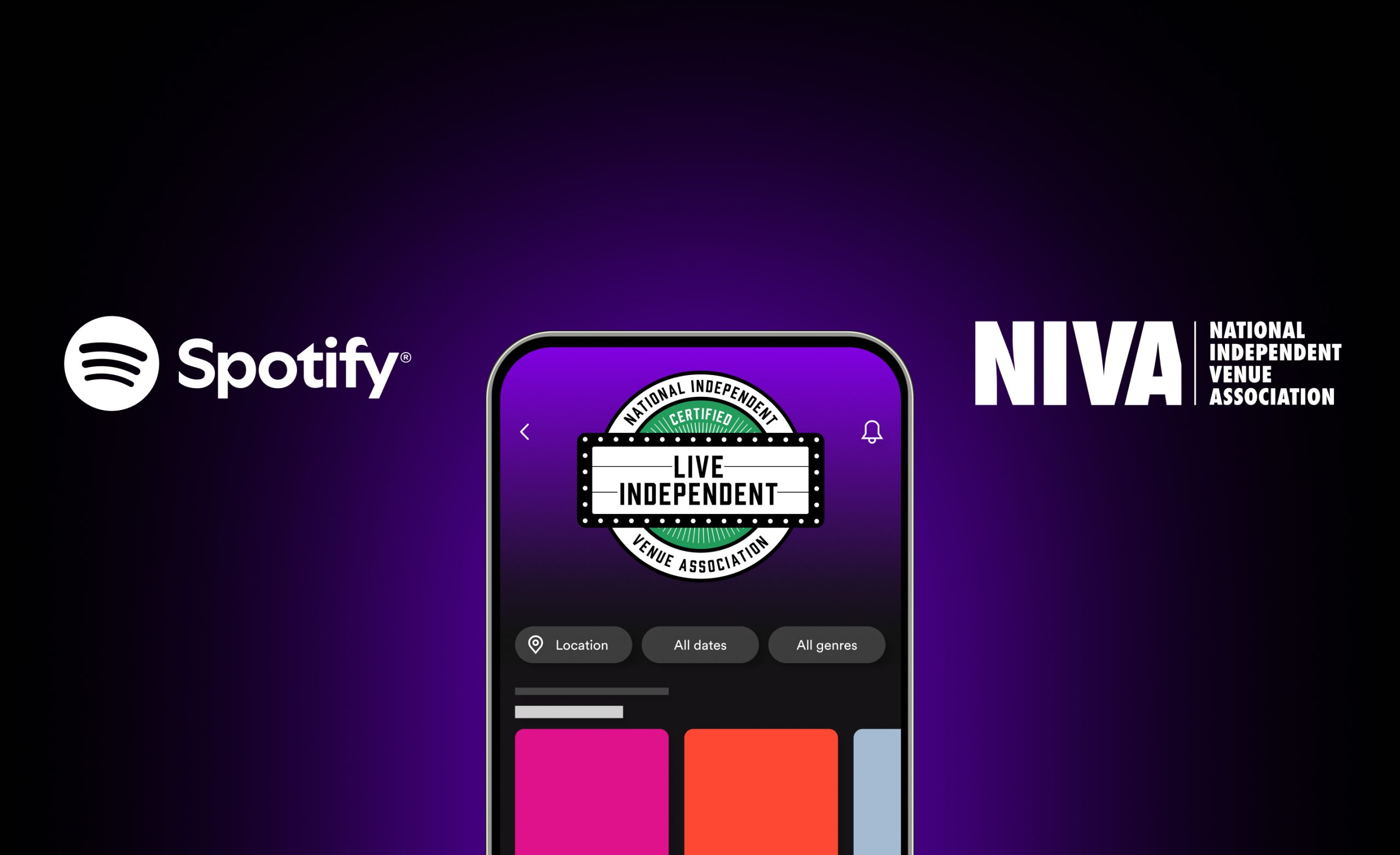
UK directors call for streaming platforms to pay royalties. Directors UK, the film and TV directors member organisation in the United Kingdom, has published an open letter to the video-on-demand (VOD) streaming platforms encouraging them to pay into the copyright royalties scheme for directors for repeat showings and sales of their programmes. Currently the UK's public service broadcasters and Sky contribute to the royalty scheme but not streaming services. The call comes because streaming services have been commissioning film and TV productions in the UK for over 10 years but have not opted into the director royalty scheme. Here in Australia, in some cases directors are eligible for a share of Australian retransmission royalties. ASDACS (the Australian Screen Directors Authorship Collecting Society) has been similarly campaigning for directors to receive royalties for online streaming.
Lily Ford
Self-publishing is behind sci-fi success. An article on ABC News about the number of genre and science-fiction authors represented at Clunes Booktown Festival last month hints at an interesting trend I have heard about in trade publishing. Even though Nielson Bookdata shows science fiction and fantasy sales are over $50 million annually – more than doubling between 2019 and 2023 – limited budgets and a bestseller mentality in many mainstream publishers has seen the mid-list authors pushed out. These authors have been turning to self-publishing to get their stories out.
Gavin McGrath
Colophon
Reuse
Conflict of interest
I am the Co-lead of Creative Commons Australia (CC AU), I am an individual member of the Creative Commons Global Network (CC GN) and I have been involved with the TAROCH (Towards a Recommendation on Open Cultural Heritage) project which is led by CC and which drafted the Open Heritage Statement. The views expressed in this blog post are my own and do not express the views of CC AU or the Creative Commons Corporation.
I am the President of Wikimedia Australia (WMAU). The views expressed in this blog post are my own and do not express the views of WMAU.
AI use
The TL;DR summaries are based on AI generated summaries. The main text of this blog post was generated using AI. The original text was not modified or improved using AI.
The banner graphic (i.e. the first image at the top of the blog post) was adapted from vector graphics generated in Adobe Illustrator using Firefly 4 with 'Subject' content type selected and the lowest level of detail set. { Text to Vector Graphic prompt: Seamless pattern, very large simple shapes, 80s retro style, fluid organic elements, morphing, overlapping, blurred gradients, visible layers. }
Provenance
This blog post was first published on Wednesday 22 April 2026. It has not been updated. This is version 1.0.