


There is so much in this issue of WTF now?! Google announced global changes to the Play Store in the wake of the US Epic v Google antitrust case. Also on app and game stores: the UK music collecting society is pursuing Steam for music in downloaded and streamed games and PlayStation is maybe experimenting with dynamic pricing.
Also related to an antitrust case, the Live Nation–Ticketmaster antitrust case that the US Department of Justice (DOJ) and a number of US states initiated has seen a surprise settlement between Live Nation and the DOJ. The deal may avoid a breakup of Live Nation and Ticketmaster but it looks like at least 28 states are going to continue pursuing the companies.
There were five significant AI acquisitions this week or last week, including purchases by Meta, OpenAI, Netflix, Accenture and MyFitnessPal. They add to the numerous other acquisitions that have taken place since the start of the year.
The ethical concerns about AI and military uses continues with Crikey‘s reporting on one of Palantir’s contracts with the Australian Department of Defence. Their breakdown of the (not redacted) terms offers a rare glimpse into the arrangement between the controversial data analytics company.
Also: Katy Perry lost a trade mark dispute with an Australian fashion designer, La Trobe University has appointed a "Pro Vice-Chancellor (Artificial Intelligence) and Chief Artificial Intelligence Officer" and the Oversight Board says Meta can do more to address deceptive AI content, especially during crisis or conflict.
Don't just read the introduction. Free members can read the entire weekly WTF now?! round-up. Sign up and keep reading.
What’s been going on?
Here's WTF happened this week:
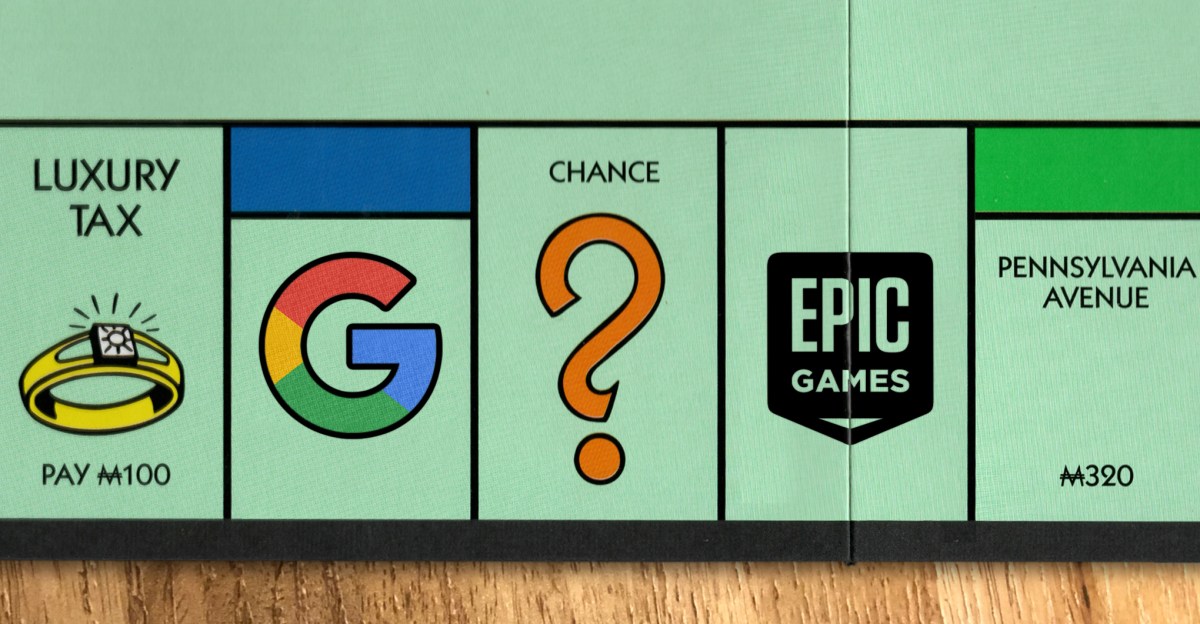
Epic v Google prompts global Play Store changes
Epic Games and Google have settled their app store disputes, prompting a worldwide raft of changes to the Google Play Store, including lowering fees, better supporting other payment options, reducing friction for third-party app stores and incentivising cross-form factor app experiences.
It seems Epic Games and Google have buried the app store monopoly hatchet with Google announcing 'a new era for choice and openness' on the Google Play Store and Epic issued a news article saying it has settled its disputes with Google worldwide, including here in Australia. Although a final settlement in the US Epic v Google case has not been approved yet, Google has decided to start implmementing changes to the Google Play Store anyway.
There are a lot of changes coming and it is pretty complex, but here’s the gist of what Google has announced:
- Google is lowering its fees. By mid-year it will lower most app store fees in the USA, the UK and the European Economic Area (EEA) from 30 per cent to 20 per cent or lower. Australia can expect the fee changes by the end of September and Korean and Japan can expect them by the end of 2026. The rest of the world will happen by the end of September next year.
- App developers will be able to offer other payment options “alongside Google Play’s billing” for in-app purchases, including the developer’s website.
- A Registered Apps Stores program will launch outside of America by the end of this year to allow users to easily install third-party app stores. Although, Google will determine if an app store qualifies. Any transactions taking place in those third-party stores will incur no fees from Google. In the US Google must include rival stores in Google Play and give them access to the full catalogue of Android apps (unless it can convince the court that the proposed Registered Apps Stores is a better approach). If the store-within-a-store approach proceeds, it will only occur in the United States (unless it is court-mandated elsewhere).
- Third-party app stores do not have to register with Registered Apps Stores, but those that are registered will enjoy a more streamlined installation flow.
Google will also introduce two new Google Play programs: Google Play Media Experience and Google Play Games Level Up. Play Media Experiences encourages app developers of apps "primarily offering video, audio, or books in which users pay to consume content" to optimise their offering across Android devices, while Games Level Up incentivises game developers to make their games available on additional form factor beyond phones, such as XR headsets, an Android television or PC, or Android Auto. Developers in both programs will get lower fees for non-recurring in-app purchases. These programs will roll out in America, the UK, the EEA and Australia by the end of September, in Korea and Japan by the end of this year and the rest of the world by the end of September 2027.
 Sean Hollister
 Sean Hollister



- Google’s Changes Will Open Android Devices to Competition Benefiting Developers and Consumers, Epic Games, Thursday 5 March 2026
A break down of a Palantir contract with Defence
The Australian Department of Defence has signed numerous contracts with controversial US data analytics company Palantir since 2013. Crikey saw the terms of one from 2024, breaking down its purpose, Palantir’s access to Defence premises and digital infrastructure, who was doing the work for Palantir and from where, what of the data collected Palantir could access and the winding back of audit and cybersecurity requirements. The contract is favourable to Palantir and runs counter to the principle of sovereign technology.
Crikey Associate editor Cam Wilson reports on the terms of a 2024 contact between controversial data analytics company Palantir and the Australian Department of Defence. The contract in question was awarded via a specific arrangement that allows Defence to contract a pre-approved IT service provider without a public tender. There is also scope for the contract to expand in the future to include Defence’s own data. The contract’s duration is for one year, with two optional 12-month extensions available to Defence.
Although many of the terms of the agreement were redacted, here’s what was reported as being in it:
- The purpose of the agreement was to create an “Industrial Intelligence Capability” to help Defence “understand Defence industry capability and capacity to a deep level and enable data-driven decision-making across the life of a Defence Project” through analyse of public and commercial data about the defence industry, players in it and its supply chains.
- The agreement saw Australian Palantir staff with security clearance embedded in Defence offices in Canberra and Sydney where they had access to Defence premises and digital infrastructure and worked collaborative with Defence staff to train them to use Palantir products.
- Palantir’s services delivered under the contract were delivered from Australia and data was hosted locally “on Amazon Web Services infrastructure in Australian data centres.” That said, the contract does allow for services to be delivered from a “Palantir or subcontractor premises in Australia or the US” so that could change in the future.
- While collection of “personal or Commonwealth data” by Palantir is excluded under the contract, it does seem to leave open the possibility that Palantir could look at the public data collected about the defence industry and the ways in which Defence uses it.
- Some standard requirements have been wound back. To illustrate many audit and access provisions have been narrowed to only apply to the Auditor-General and staff of the Australian National Audit Office. Also, cybersecurity requirements have been minimised with the contract only requiring Palantir to notify Defence of any confirmed cybersecurity incidents. Suspected incidents were taken out of the agreement. Also, if Defence wants to engage in the common practice of penetration testing – which are authorised cyberattacks carried out for the purposes of testing cybersecurity – it needs Palantir’s authorisation.
While the most recent and largest Defence contract awarded to Palantir took place last month, the terms of that deal are not yet public. Since 2013, Defence has signed multiple contracts with Palantir worth a total of $26 million.
The decision to throw in with an American company for sovereign defence work goes against the rhetoric of sovereign technology which holds that control over digital infrastructure such as the technology stack and data should remain with a country, company or individual. As one commentator in the Crikey article said, “We haven’t enabled any development of sovereign capability at all. We’ve just decided to go with a US capability.”
Also worth noting is that Palantir has come under fire in the US and elsewhere for its role in the Trump administration’s mass deportations being executed by Immigration and Customs Enforcement (ICE), as well as other allegations of human rights violations.
 Cam Wilson
Live Nation–DOJ settlement will avoid breakup
A surprise settlement between Live Nation and the US Department of Justice has disrupted the Live Nation–Ticketmaster antitrust case. Some of the Attorneys General who were also parties to the lawsuit intend to keep pursuing the companies for monopolistic behaviour.
Last week I included the start of the Live Nation–Ticketmaster antitrust case. Now this week I have to report that the companies have avoided a court-enforced breakup by settling the matter with the US Department of Justice (DOJ). In a statement, Live Nation said "This settlement will resolve all remaining matters with the DOJ, without any admission of wrongdoing, and the settlement will be reflected in a final proposed judgement that will be submitted to the court for approval."
There is no financial component to the settlement with the DOJ and that arrangement does not necessarily settle all the claims of the states that had joined the lawsuit. Live Nation has set up a $280 million settlement fund to address the plaintiff states' damages claims. The original matter involved 39 state Attorneys General alongside the DOJ. So far 28 states – Arizona, California, Colorado, Connecticut, Illinois, Kansas, Maryland, Massachusetts, Michigan, Minnesota, Nevada, New Hampshire, New Jersey, New Mexico, New York, North Carolina, Ohio, Oregon, Pennsylvania, Rhode Island, Tennessee, Utah, Vermont, Virginia, Washington, Wisconsin, Wyoming and the District of Columbia – will continue pursuing the companies. Eight states have indicated they intend to join the offered settlement and the intentions of four others is not yet known.
Under the settlement agreement, Live Nation will make its venues available to all promoters and allow them to use other ticketing providers to sell up to half of event tickets with a capped service fee of 15 per cent. The company will also end its 13 exclusive booking agreements with other venues nationwide. On the ticketing side, Tickemaster will offer exclusive and nonexclusive ticketing options to venues. Those who opt for a nonexclusive arrangement "may distribute some portion of their tickets through other primary ticketing marketplaces."
Those states intending to continue claims against Live Nation and Ticketmaster have said they will "keep fighting this case without the federal government so that we can secure justice for all those harmed by Live Nation’s monopoly" but they have also filed for a mistrial, claiming the mid-trial settlement "has materially and irreparably prejudiced the Plaintiff States before the currently empaneled jury, and materially altered the character of these proceedings, including by jeopardizing Plaintiff States' access to experts, witnesses, trial exhibits, demonstratives and necessary support staff (including graphic designers, trial technicians, related personnel)." It is unclear if US District Judge Arun Subramanian will allow it. He expressed concern that the states should have known a settlement was possible which would settle the DOJ portion of the matter and been ready to take over as lead counsel if a settlement offer eventuated.
Judge Subramanian dismissed the jury until next Monday to consider the merits of the motion for a mistrial and to give the continuing states time to determine if they are willing and able to continue at trial. The settlement blindsided Judge Subramanian who called it “outrageous” a possible settlement wasn’t mentioned by either party until after jury selection, even noting that the DOJ counsel David Dahlquist didn’t know there was a signed term sheet for the settlement until the same time the judge found out.
 Lauren Feiner





AI buying AI: Big Tech on AI spending spree
OpenAI and Netflix announced acquisitions of other AI companies this week. Accenture and MyFitnessPal also announced AI acquisition last week. There have been a lot of AI acquisitions of late.
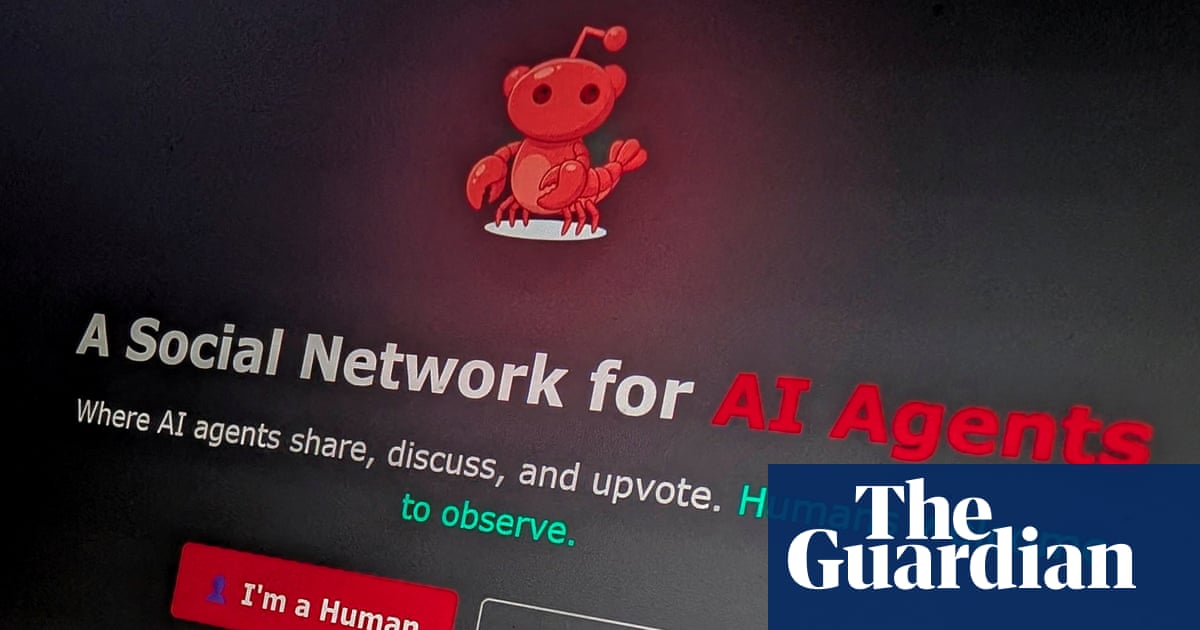
This week, Meta has bought Moltbook, the AI Reddit. It's co-founders Matt Schlicht and Ben Parr will join Meta Superintelligence Labs.
OpenAI announced it is acquiring Promptfoo, an AI security platform for identifying vulnerabilities during development. OpenAI intends to integrate the technology into its agentic 'coworker' enterprise platform OpenAI Frontier.
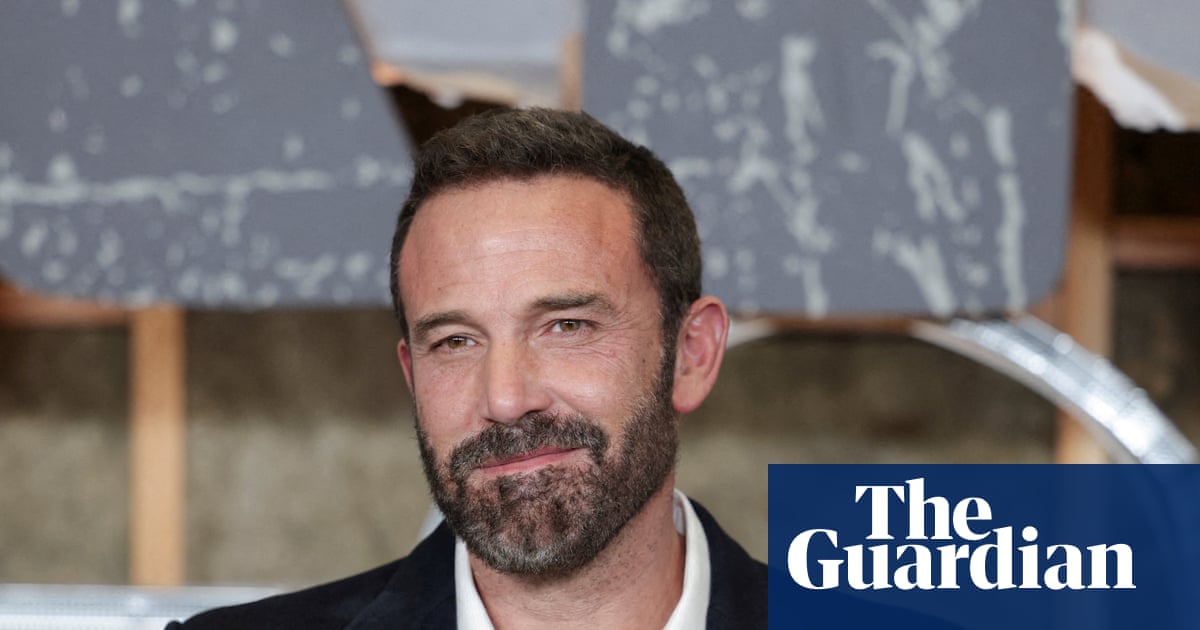
Also this week Netflix released a statement about its acquisition of InterPositive, an AI filmmaking postproduction company founded by Ben Affleck. The streaming giant says the arrangement is “investing in creator-led innovation that keeps filmmakers at the center of the process,” including having Affleck join Netflix as a Senior Advisor.
Last week, similar announcements were made, including that professional services company Accenture was buying Ookla and MyFitnessPal has purchased Cal AI, an app that uses photos of food to estimate calorie intake.
These join a number of other AI acquisitions in January and February, including by Anthropic, Canva and Mistral AI. Google will also take over intelligent robotics company Intrinsic from Alphabet. And there was speculation that one or more of SpaceX, xAI and Tesla may merge into a Musk super company. You can read more about these and other acquisitions in another blog post.
 Reuters
- OpenAI to acquire Promptfoo, OpenAI, Monday 9 March 2026

 Dan Milmo
 Emma Roth



 Julie Bort



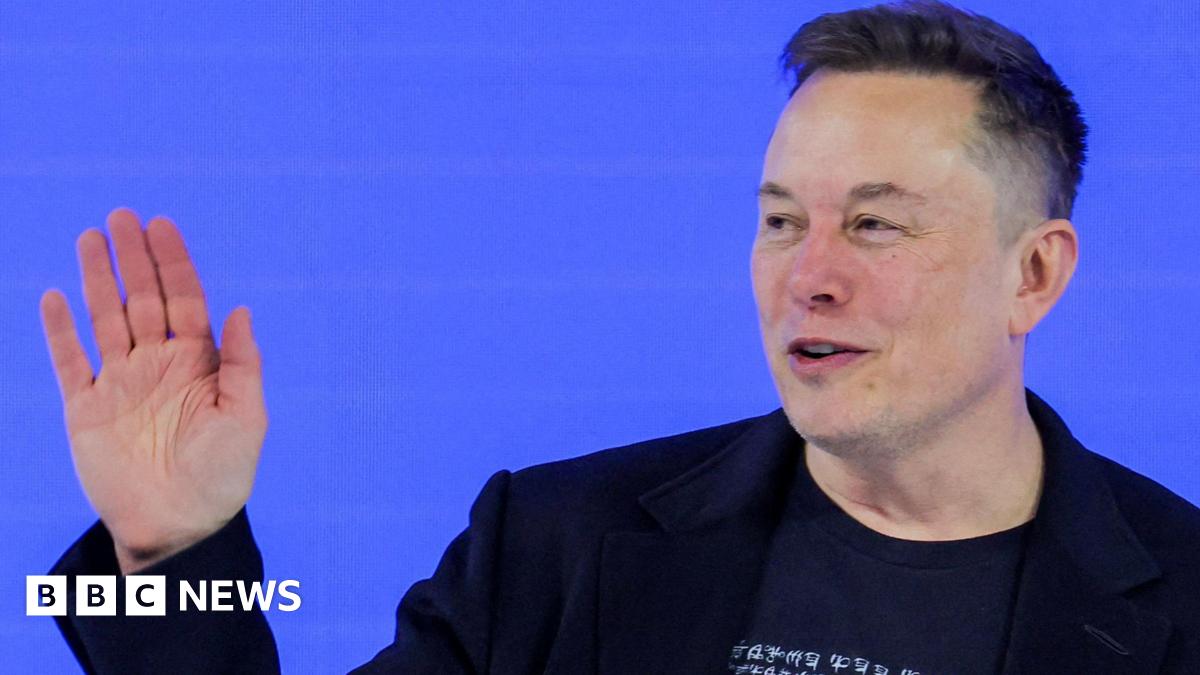
 Amanda Silberling, Kirsten Korosec

 Elliott Bledsoe

A bit on the side
WTF else happened this week:
UK music collecting society sues Steam. The Performing Right Society (PRS), the UK music collecting society, has initiated legal action against Valve who run the PC gaming store Steam. The short version is that PRS are alleging that, while games such as Grand Theft Auto are typically used under a licence with the relevant music publishers, the subsequent distribution of those games by download or via streaming infringes constitutes a communication under copyright law. Because some of the copyright owners of those songs are PRS members, the collecting society administers the communication right on their behalf and therefore Valve requires a licence from them. They have said the litigation will continue unless Valve agrees to a licence future and past use of PRS members' music.
 James Hanley

Is PlayStation testing dynamic pricing? While we’re on online game stores, apparently Sony has been caught offering different prices for video games to different users, backed up by identifiers in PlayStation API designed to track if an offer is taken up. While surge or dynamic pricing is common for concert tickets, flights and rideshare trips, it isn’t in online game stores. Apparently Sony is giving it a go on more than 190 games in 70 markets, including the USA, offering some users up to 27.8 per cent discounts, including on their own titles.
 Terrence O’Brien

 Patricia Hernandez

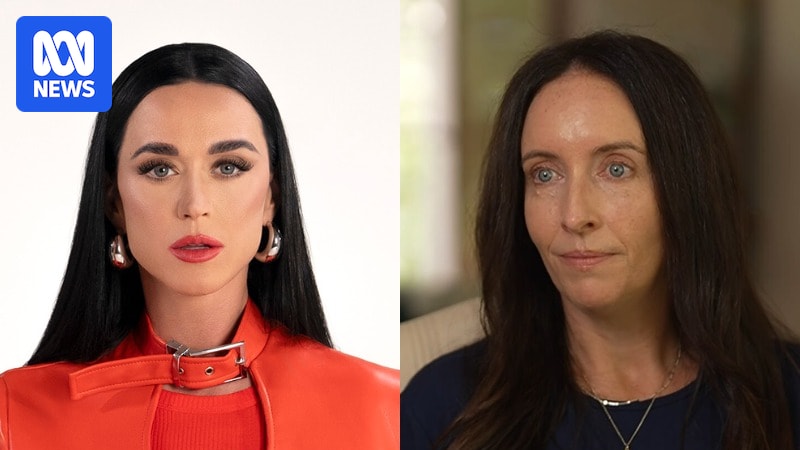
Katy Perry loses Australian trade mark fight. Today Australian fashion designer Katie Perry won a long-running trade mark matter with pop star Katy Perry over the use of Katie/Katy Perry in Australia. In September 2008, Katie Perry to register 'Katie Perry' as a word mark in respect of goods in class 25 for clothing (trade mark number 1264761). Katy Perry the musician opposed the registration in 2009, which was during the Hello Katy Australian tour.
The tussle flared up in 2019 when the pop start launched Katy Perry-branded clothes, shoes and headwear. Adding to the complexity was the fact that Katie Perry had not heard of the pop star when she applied for the trade mark in 2008 but had heard "I Kissed a Girl" by the time the trade mark was granted. The initial case in the Federal Court found in Katie Perry’s favour but that was overturned on appeal by the Full Court of the Federal Court. The matter was appealed to the High Court. A majorty decision of the High Court held that the use of the brand name 'Katie Perry' by the fashion designer was not likely to likely to deceive customers or cause them confusion.

La Trobe appoints AI provost. In a push to become an "AI-first university", La Trobe University has appointed Phil Laufenberg as "its inaugural Pro Vice-Chancellor (Artificial Intelligence) and Chief Artificial Intelligence Officer". The new AI provost will "provide whole‑of‑University leadership, coordination and assurance for AI strategy and investment." Spouting it as the "first role of its kind in the Australian university sector", the university sees it as "signal[ing] La Trobe's decisive shift from experimentation to full institutional deployment [of AI]".
 Robyn Grace

Meta can do more to stop AI content during war. The Oversight Board has ruled in relation to a piece of deceptive AI-generated content purporting to be news reporting of the 2025 Israel-Iran war, finding that, while the content did not meet the threshold for removal, there was a "material risk of misleading the public on an important matter at a critical time, so Meta should have applied a "High Risk AI" label."
Beyond the specific post, the Board responded more broadly to the size and scale of AI-generated content, especially in the context of conflict or crisis. They expressed concern that Meta’s processes for affixing even the standard AI label are "neither robust nor comprehensive enough to contend with the scale and velocity of AI-generated content, particularly during a crisis or conflict where there is heightened engagement on the platform." They also noted there have been “reports that Meta is inconsistently implementing Coalition for Content Provenance and Authenticity (C2PA) standards even on content generated by its own AI tools, and that only a portion of such output receives proper labeling.” They offered seven recommendations to improve how the social media giant helps users identify AI-generated content.
 Jess Weatherbed



Colophon
Reuse
AI use
No part of the text of this blog post was generated using AI. The original text was not modified or improved using AI.
The banner graphic (i.e. the first image at the top of the blog post) was adapted from vector graphics generated in Adobe Illustrator using Firefly 4 with 'Subject' content type selected and the lowest level of detail set. { Text to Vector Graphic prompt: Seamless pattern, very large simple shapes, 80s retro style, fluid organic elements, morphing, overlapping, blurred gradients, visible layers. }
Provenance
This blog post was first published on Wednesday 11 March 2026. It was updated on Wednesday 11 March 2026. This is version 1.1.
Changelog
v 1.1: Added Meta's acquisition of Moltbook – Wednesday 11 March 2026.