


It was a bit of a squeeze getting the newsletter finished this week as I have been in Kamberri Canberra for Wikimedia Australia’s WikiCon 2026 where Dr Terri Janke spoke about the draft Wikimedia Australia Indigenous Cultural and Intellectual Property (ICIP) and Indigenous Data Guide. I can’t share that with my newsletter subscribers just yet, but you can read a recent update about the project on the WMAU website. During WikiCon I also gave an impromptu talk about the new orphan works scheme in Australian copyright law amongst a raft of fascinating and thoughtful presentations from the Australian Wikimedia community.
Despite being busy, some big things happened. An Australian musician has used privacy law to gain access to data about use of their music which left them asking important questions about the international music royalties system. Also concerning is the number of news organisations that are blocking the Wayback Machine as part of their attempts to stop AI bots scraping their news. Regardless of the rationale, there are real ramifications for the historical record.
Also: Concerns are mounting about the Paramount–Warner Bros. merger and the introduction of facial recognition into Meta’s smartglasses. And Meta is tipped to surpass Google in ad revenue this year.
Don't just read the introduction. Free members can read the entire weekly WTF now?! round-up. Sign up and keep reading.
Rapid-fire
A short list of other things:
- Australian Dr Melissa Chiu will be the new Director of the Solomon R. Guggenheim Museum in New York. Shoot through
- Ruth Atkinson has been appointed as Acting Director of Touring and Engagement at QTouring and Nigel Lavender joins as Producer/Touring and Engagement Advisor. Shoot through
- In a fortnight the inaugural ceremony for The Luminas will take place at the Sydney Opera House celebrating culturally diverse and First Nations leaders shaping Australia’s media, arts, and cultural sectors. Sadly, I can’t be there to join the celebrations but congratulations to all the nominees. Shoot through
- In early April, Zotero maker Digital Scholar took on community leadership of RightsStatements.org. Shoot through
What’s been going on?
Here's WTF happened this week:
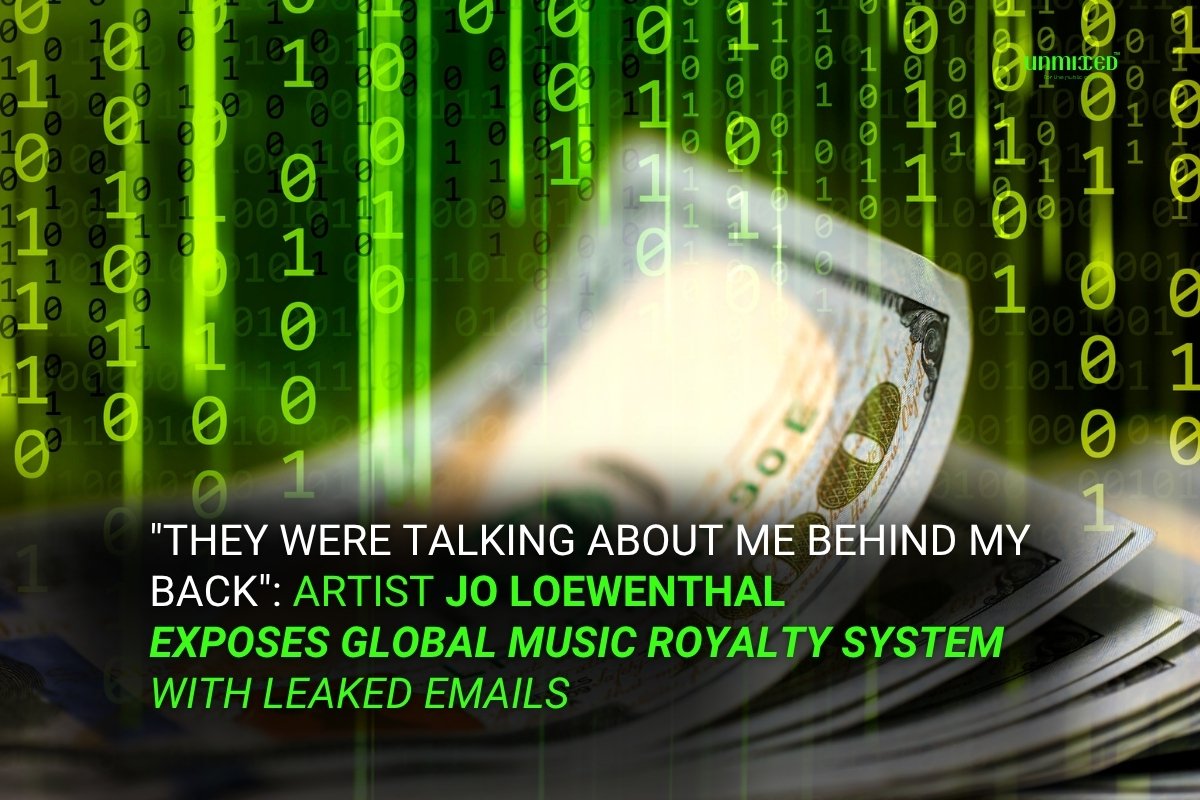
Music royalty data disclosed to an Australian musician reveals how opaque the system is
Australian musician Jo Loewenthal is on a mission to expose the lack of transparency and apparent collusion within the international music royalty collection system. His use of privacy laws revealed patchy data and an email exchange suggesting collecting societies around the world discussed how to limit the data the musician could access.
An Australian musician – Johan "Jo" Loewenthal, frontman of the indie band Tora – has taken to Instagram calling into question the international music royalty collections system and how difficult it is for artists to verify the information they are provided by music collecting societies. Independent electronic music website Unmixed reports that Lowenthal has been trying for many years to ‘obtain clear, accurate, and verifiable data about his own music from the very organisations created to protect and pay him: Performing Rights Organisations (PROs).’
The musician took the clever but unexpected move to rely on privacy law in a number of countries to try to access the data. That process revealed more than the patchy data that is available, it also disclosed an email exchange between APRA (the Australasian Performing Right Association) and SOCAN (Society of Composers, Authors and Music Publishers of Canada) seemingly colluding to limit the data Loewenthal could get access to.
Loewenthal rightly is concerned that the data that was supplied included significant duplicate rows (111,977 of them!) claiming identical play counts for the same song on multiple streaming platforms and other unexplained anomalies, and that APRA AMCOS uses the opaqueness of their data collection and their international reciprocal arrangements as a reason to not be able to ‘verify all individual usage’. Exactly as Loewenthal is saying, currently an individual member of APRA cannot easily have their royalty statements independently audited.
This is something I have been saying for a long time. While there have been improvements in APRA’s operations over the years, I have long argued that Australian collecting societies need to be more transparent and accountable, and that they are under-regulated. I have also called for greater transparency in how APRA calculates and distributes royalties. In a joint-submission in relation to APRA’s application for a new authorisation arrangement to the Australian Competition and Consumer Commission (ACCC) I drafted for the Australian Digital Alliance (ADA) and the Australian Libraries and Archives Copyright Coalition (ALACC) when I worked for those organisations, I wrote:
Measures undertaken by APRA to comply with the conditions the ACCC put in place in the 2020 Determination have added some much needed transparency about how the organisation sets its licence fees and how royalties are distributed to members. APRA’s annual Transparency Report, for example, publishes high level information that discloses a breakdown of revenue by type of use, operating costs, amounts paid to different types of rights holders, the amounts received from and paid out to other [Music Rights Management Organisations (MRMOs)], details of distribution arrangements and other financial information. While this is useful information, it does not address the complexity in how collecting societies calculate royalties and distribute them. A lack of transparency in this regard raises questions about whether artists are being compensated fairly for the use of work – and how underpayment could even be identified if it was occurring.
More needs to be done to address the ‘black box’ around the formulas and methodologies used to allocate royalties. While transparent reporting of the types of distribution processing used by APRA is important, the ADA [and ALACC] wants to see a commitment by APRA to strive to use methods that ‘count’ each musical work used over less accurate data methods (although we do recognise the use of such methods will not be possible in every situation). This should be achievable given the improvements [APRA has] outlined [to the ACCC in their application]. Importantly, more disclosure to members should be made to help members have confidence in the royalty payments they receive.
Taking this further, just last week I asked the question: what, if any, of the dollars exchanging hands between Big Tech and Big Content for AI training data will end up in the pocket of creators? The opacity of music royalties is an important issue and I’ll be keeping an eye on Lowenthal’s push for greater transparency in the international collecting society system.
 Nina Katashvili
News organisations blame AI scraping for blocking the Wayback Machine
A number of news organisations are blocking the Internet Archive's Wayback Machine from archiving their content, fearing AI developers are using it to bypass scraping restrictions for AI training data. Regardless of rationale, the move is eroding the historical record of the web, especially for news.
I missed this back in February, but saw this come through my feeds a few times this week. For a while now a number of news organisations have been trying to block web scraping of their news articles for AI training. Reportedly some of those news publishers have turned their attention to the Internet Archive’s Wayback Machine because they are concerned that AI developers are using the website archiving platform as a back door to news content. Publishers that have been blocking Wayback Machine access to their content include The New York Times, USA Today and The Washington Post. In total, 241 news websites from nine different countries ‘explicitly disallow at least one of the four Internet Archive crawling bots’. 87 per cent of those were owned by USA Today Co., the largest newspaper conglomerate in the United States.
The Guardian has not blocked the Wayback Machine but has worked with the Internet Archive to limit access to some Guardian content through the Wayback Machine API. Snapshots of the homepage and topic pages are still available through the web archive, but news stories are not accessible by searching for their web address or through the Wayback Machine API. While The Guardian’s response is better than what the other mentioned mastheads have done, not including news stories drastically limits the value of the archive.
Wayback Machine Director Mark Graham says the Internet Archive has taken steps to prevent or limit automated systems from accessing or copying its data en masse through rate limiting and preventing bulk downloads, but news organisations are blocking the web archiving tool anyway. Echoing Graham’s concerns – as well as those of Electronic Frontier Foundation Senior Policy Analyst Joe Mullin – the move by news publishers to limit what content is archived by the Wayback Machine further threatens the free and open web and the historical record the Internet Archvie makes available. It erodes the internet’s long-term memory, an issue especially acute for news content which may be updated or completely removed. Without the Wayback Machine there may be no authoritative copy of an article as it was at a particular point in time which undermines the role of the media itself, as well as independent scrutiny by researchers and the public at large.
Troy Wolverton | Examiner staff writer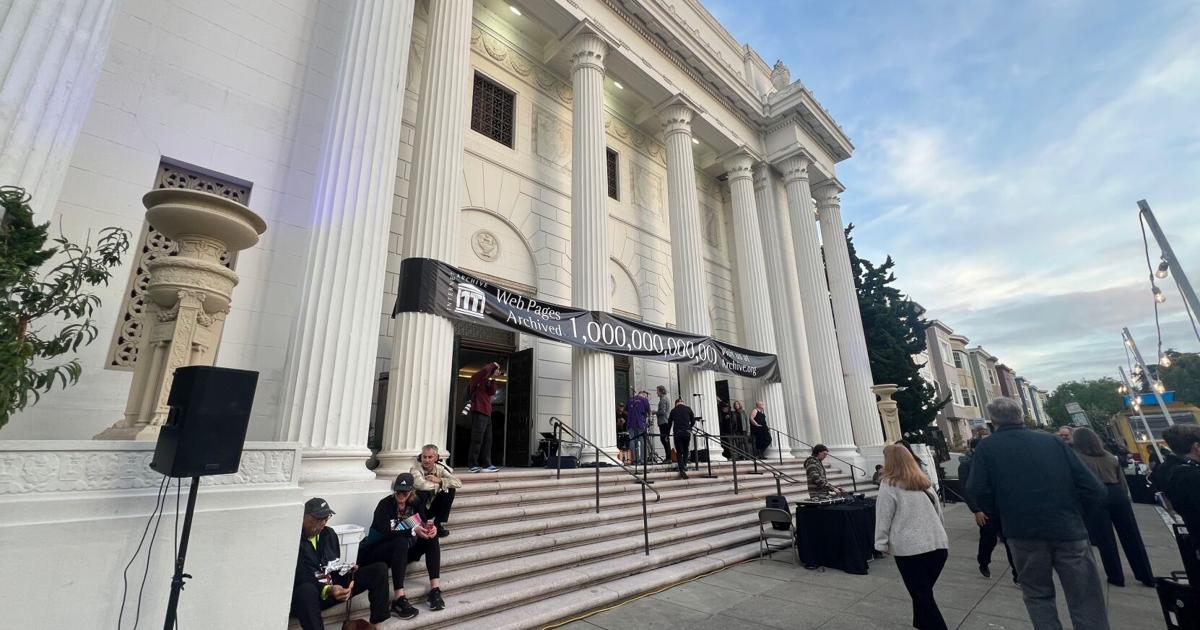 Joe Mullin
 Andrew Deck
A bit on the side
WTF else happened this week:
Concerns are mounting about the Paramount–Warner Bros. merger. More than 1,400 film and TV professionals – including Emma Thompson, Rose Byrne, Glenn Close, Ben Stiller, JJ Abrams, Jane Fonda, Jason Bateman and Joaquin Phoenix, among many others – have signed an open letter against the proposed Paramount–Warner Bros. merger. Chief among their concerns is further concentration of media ownership. Paramount has responded by saying the merger will mean more opportunities for creators, not less. We know the US Department of Justice (DOJ) says political favours won’t fast track the merger, but the Californian Attorney-General Rob Bont, other US state Attorneys-General and the UK Competition and Markets Authority (CMA) are all investigating the proposed deal.
Meta outpaces Google in ad revenue. It looks like Meta’s ad income will pass Google’s for the first time this year, eMarketer predicts. The strong performance is attributed to short-form video and AI ad tools for creative generation and campaign optimisation. We’re talking approximately AU$375 billion to Meta in net worldwide ad revenue compared with Google’s AU$369 billion. That’s a lot of ad placements!
Apple eyes smartglasses as Meta cops facial recognition pushback. More than 70 civil rights organisations have written to Meta CEO Mark Zuckerberg expressing concerns about adding facial recognition to Meta’s smartglasses. Because bystanders cannot easily know when they are being photographed or recorded by smartglasses and the significant number of people worldwide with an account on one or more of Meta’s platforms, the move means millions of people could be identified by wearers of Ray-Ban Meta or Oakley Meta glasses. This creates the potential for ‘stalkers, scammers, abusers, federal agents and activists across the political spectrum [to] silently and invisibly verify[] their identities and potentially match[] their names to a wealth of readily available data about their habits, hobbies, relationships, health and behavio[u]rs’. Even while concerns against Meta’s smartglasses increase, Apple is apparently testing four designs for smartglasses products it will reveal late this year for a 2027 launch, according to Bloomberg’s Mark Gurman.
Colophon
Reuse
Conflict of interest
In the past I was the Copyright Officer (part-time) at the Australian Digital Alliance (ADA) and at the Australian Libraries and Archives Copyright Coalition (ALACC). During that time I wrote a number of submissions related to collecting societies. The views expressed in this blog post are my own and do not express the views of the ADA or the ALACC.
I am the Co-lead of Creative Commons Australia (CC AU) and I am an individual member of the Creative Commons Global Network (CC GN). Through CC AU I have also written a number of submissions related to collecting societies. The views expressed in this blog post are my own and do not express the views of CC AU or the Creative Commons Corporation.
AI use
No part of the text of this blog post was generated using AI. The original text was not modified or improved using AI.
AI was used to generate ideas and interogate the subject matter of this blog post, but no AI-generated content was used verbatim.
The banner graphic (i.e. the first image at the top of the blog post) was adapted from vector graphics generated in Adobe Illustrator using Firefly 4 with 'Subject' content type selected and the lowest level of detail set. { Text to Vector Graphic prompt: Seamless pattern, very large simple shapes, 80s retro style, fluid organic elements, morphing, overlapping, blurred gradients, visible layers. }
Provenance
This blog post was first published on Wednesday 15 April 2026. It was last updated on Thursday 16 April 2026. This is version 1.1.
Changelog
v 1.1: Typos fixes – Thursday 16 April 2026