


Bonjour from Paris, France! I am the city of light to participate in How Can Equitable Access to Heritage Help Solve Global Challenges? An Exploratory Dialogue happening today at UNESCO House. Behind the event is the shared idea that the public domain needs to be protected and that everyone should have equitable access to public domain heritage in the digital environment. To achieve this, we need to be reducing legal, technical and financial barriers that inhibit access to the public domain and supporting the digitisation and sharing of public domain material.
In this week’s round-up University of Queensland Press has withdrawn an Indigenous children’s book over allegations its illustrator engaged in antisemitism for speaking out about Gaza. Also, First Nations researchers Professor Bronwyn Carlson and Tamika Worrell have released a report about Indigenous experiences of AI and why a lack of accountability, respect for Indigenous Data Sovereignty and connection to Country and community is behind many interviewees’ scepticism towards AI.
A New Approach’s fifth Big Picture report looks at cross-government arts funding trends, a long-running copyright and music sampling case involving electronic music pioneers Kraftwerk has come to an end and Australia pushes ahead with the News Media Bargaining Code 2.0.
Subscribers seem to be liking the short and sharp Rapid fire section so it will continue. This week there has also been more innovations and interactions to the WTF Now format: I’ve added Keeping tabs, a new section designed to give brief updates on things included in earlier newsletters. This week includes updates on the Wikimedia ban in Indonesia and musician Jo Loewenthal’s campaign for transparency in the global music royalty system. Let me know if you like the addition.
Also: Daz Chandler writes in defence of 2SER as an ‘incubator of democratic culture’ and Instagram has released yet another app trying to cut Snapchat’s grass.
Don't just read the introduction. Free members can read the entire weekly WTF now?! round-up. Sign up and keep reading.
Rapid-fire
A short list of other things:
- Queensland University of Technology (QUT) has appointed Dr Ashley Hay as Establishing Editor of Meanjin who will transition the journal to its new home, oversee publishing, establish the journal’s operations and support recruitment of a permanent editor by the end of the year. Shoot through
- Congratulations to the winners and nominees of the 2026 Queensland Music Awards. Shoot through
- The Matilda Awards are looking for regional Queensland judges to help them expand the assessment and recognition of performing arts produced in regional Queensland. Shoot through
What’s been going on?
Here's WTF happened this week:
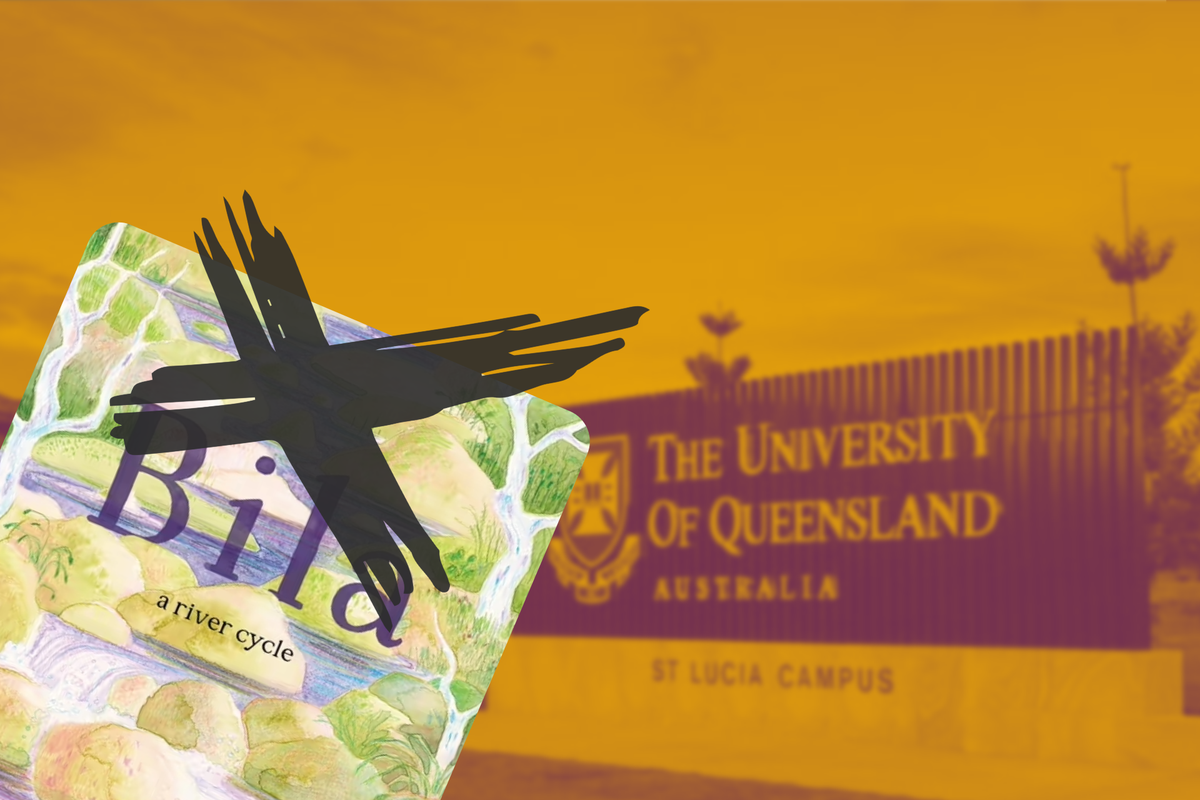
UQP pulls an Indigenous children’s book over Gaza comments by the illustrator
University of Queensland Press (UQP) has withdrawn the children's book Bila, a river cycle by Jazz Money which was illustrated by Matt Chun because it deemed political writing by Chun violated The University of Queensland’s (UQ) antisemitism policy. In response, a number of authors, including Money, have declared they will no longer work with the publisher in protest.
The latest in a long list of muzzling of artists and commentators over the Israel–Palestine conflict, University of Queensland Press (UQP) decided to pull Bila, a river cycle by Wiradjuri poet Jazz Money and illustrated by Matt Chun from publication and pulp the entire first run. The decision was prompted not by anything Money had done, but rather because of an opinion piece Chun wrote against the genocide in Palestine. Reportedly, it was found to be in contravention of The University of Queensland’s (UQ) antisemitism policy.
The decision has been met with criticism in the writing and publishing world. Money herself is one of a number of authors that have come out saying they will no longer publish with UQP.
Goorie and Koori poet, editor and educator Dr Evelyn Araluen also quickly announced she was terminating any further projects and contracts with UQP.
It was soon followed by a similar announcement by debut author Natalia Figueroa Barroso, whose novel Hailstones Fell Without Rain was put out by UQP last year. Also declaring their current UQP publication would be their first and last was Palestinian-Australian Muslim author, academic, lawyer and human rights advocate Dr Randa Abdel-Fattah. Discipline by Abdel-Fattah was released last year. Abdel-Fattah was also at the centre of the Adelaide Writers’ Week cancellation earlier this year. Other authors have also said they will no longer publish with UQP, including Melissa Lucashenko, Sara M Saleh, Omar Sakr, Sara Haddad and Dženana Vucic.
There are many things about the scenario that trouble me: the fact that Bila, a river cycle is not itself controversial, the ‘guilty by association’ punishment of Money in the name of reprisal against a collaborator, the disregard by UQP for the trust and generosity that allowed that Indigenous story to be told, how flimsy artistic independence and artistic freedom have become either self-censorship or external interference undermining publishing decisions and the narrowing of democracy-friendly discourse. What I said about the events leading up to the cancellation of Adelaide Writers’ Week apply equally here:
Risk management should focus on safety and respect for all. It seems lots of risk management at the moment is prioritising organisational self-preservation or the ideological comfort of some.
 Osman Faruqi
 Hannah Story
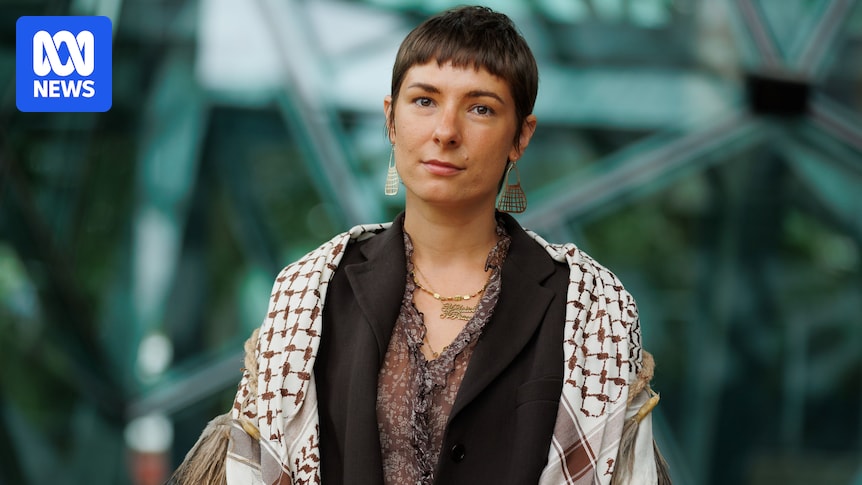
Research on Indigenous experiences of AI highlights a lack of safety and accountability
A recent report by Professor Bronwyn Carlson and Tamika Worrell based on interviews with Aboriginal and Torres Strait Islander people reveals deep skepticism toward AI because it lacks accountability, respect for Indigenous Data Sovereignty and connection to Country and community. The research suggests that future AI governance must involve Indigenous people, be relational and focus on safety and accountability.
First Nations researchers Professor Bronwyn Carlson and Tamika Worrell have released a report sharing findings from a series of interviews with Aboriginal and Torres Strait Islander people about their experiences with artificial intelligence. ⟨ I haven’t read the full report yet, but the accompanying piece on The Conversation gives you an overview of the report. ⟩ What they found is enlightening albeit not unexpected.
Indigenous Australians have a deep skepticism of AI that is not Ludditism or technophobia. It comes from First Nations’ awareness that these systems are not neutral, nor are the organisations they are integrated into, and both often lack accountability, checks and balances and responsibility. Their deployment further obscures the already opaque decision-making frameworks in these organisations.
Indigenous Data Sovereignty (IDSov) has also largely been ignored in the training and development of AI systems. This denies communities agency and authority over how their data is collected and used. Similarly, AI does not recognise or respect Indigenous Cultural and Intellectual Property and flattens the diversity and richness of First Nations culture.
Also of concern for interview participants was AI’s lack of relationality. In contrast, the position of Elders comes about through recognition, respect and direct accountability to the community and Country. AI cannot have a relationship with Country or be held accountable by the community.
Carlson and Worrell suggest that a governance model that is relational is the way forward. This needs Indigenous leadership and power-sharing in how systems are designed and deployed. Done right, AI systems that are made safer and more accountable for Indigenous peoples would inherently be safer and more accountable for everyone.
Bronwyn Carlson
 Carlson, Bronwyn

A New Approach’s Big Picture report shows worrying trends hidden by arts funding uptick
Arts and culture spending across governments in Australia reached a 17-year high of $8.6 billion in 2023–24, with state and territory governments now contributing the largest share. However, arts expenditure growth has not kept pace with population increase, leading to a drop in federal per capita spending. And Australia continues to rank low among OECD countries for arts investment.
Arts think tank A New Approach (ANA) have released the fifth installment in their longitudinal analysis series The Big Picture: Australian government cultural funding that digs into the Cultural funding by government data produced by the Australian Bureau of Statistics (ABS) and released by the Office for the Arts. The Cultural funding by government is the most comprehensive dataset about arts and cultural funding at all three levels of government in Australia.
The upshot is that government spending on arts and culture is up, peaking at $8.6 billion in 2023–24, an increase on the $8.3 billion spend made in 2021–22 (when adjusted for inflation) and the highest level of investment recorded in 17 years of data. For the first time the states and territories surpassed the federal government’s arts investment. They stump up the lion’s share of that (38.8 per cent), with the Commonwealth picking up 36.2 per cent and local governments covering the remaining 25.1 per cent. ⟨ Yes, that does total 100.1 per cent. I don’t know why. ⟩
This translated into a decline in per capita arts spending federally, which dropped to its lowest per person level at just $114. Conversely, state and territory expenditure hit its highest level at $123 per person. Local governments also remain an important local funder of arts and culture.
While total spend has risen, it has not kept up with population growth. Our population grew 27 per cent between 2007–08 and 2023–24 but expenditure on arts and culture only increased by 19 per cent. Similarly, Australia still lags behind most other OECD countries. We spend about one-quarter less than OECD peer countries, ranking us 25 out of 31 in terms of spending on ‘recreation, culture and religion’ as a share of total gross domestic product (GDP).
ANA suggests strategic and structural change to maximise government investment in Australia’s arts and culture system, while also seeking enduring cooperation between governments through a 10-year National Arts and Culture Strategy. They also call for improved data collection and analysis and more granular data on arts spending.
⟨ I also want to flag that I really like the interactive report format! ⟩
Long-running Kraftwerk sampling copyright case comes to an end
One of the longest-running copyright cases concerning a two-second sample from Kraftwerk’s ‘Metall Auf Metall’ concluded with a ruling by the European Court of Justice that the sample was a pastiche and therefore not a copyright infringement. The case is significant because it has outlined the elements needed for reuse to qualify as pastiche.
One of the longest-running copyright court cases involving a sample from electronic music pioneers Kraftwerk’s ‘Metall Auf Metall’ has come to an end with a ruling that the use of a looped two second sample from the song used in the 1997 track ‘Nur Mir’ by German rapper Sabrina Setlur was not a copyright infringement. Kraftwerk first took the song’s producer Moses Pelham to court over the use in the 90s and the matter has bounced around between German and European courts, centering on whether such a small snippet required a licence or not.
In this matter, the European Court of Justice was looking at whether the European exception for pastiche should be interpreted broadly thereby taking in artistic reuse such as sampling, without necessitating elements such as humour, stylistic imitation or homage and whether pastiche is dependent on the subjective intention of the user. For those who are superkeen, the Kluwer Copyright Blog has a detailed legal overview of the case and its contribution to pastiche as an autonomous concept in EU copyright law. Relevant here is the authors’ explanation of pastiche:
A swift, but no less essential, look into the common meaning of pastiche, as well as its understandings in the humanities, reveals a notion that far exceeds the mere imitation of a work’s style, or that of its author. Spanning from imitation to recombination in form, pastiche has been variously regarded as a medium for homage, satire and/or didactic expression. However, one would be hard pressed to find one single, comprehensive and functional operating definition of pastiche on which the CJEU could rely.
Indeed, this was explicitly mentioned by the court which acknowledged that the ordinary meaning of pastiche is not clear. That said, the Court did say a central feature of it is ‘a creation in a style which imitates that of another work, artist, or artistic movement.’ To that end, the court held that pastiche doesn’t cover any artistic engagement with copyright material. Rather, to constitute pastiche the new content must evoke the existing copyright material while being noticeably different from it and use characteristic elements of the copyright material to engage in a recognisable artistic or creative dialogue. That dialogue could take different forms, such as an overt stylistic imitation of the original material, a tribute to it or a humorous or critical engagement with it.
Long time cyberlaw commentator Dr Andres Guadamuz sees the court’s determination as a pathway to more certainty that AI-generated outputs ‘in the style’ of someone – for example, a prompt to produce visuals in the style of Wes Anderson – because these kinds of AI outputs are intentionally trying to evoke the specific visual aesthetics of something else and for pastiche to be legal it should imitate the original. Of course, it also has to be noticeably different from the original too. Whether this precedent on pastiche ends up supporting ‘in the style’ AI outputs or not remains to be seen.
Max Pilley Sabine Jacques
 Léo Pascault

 Andres Guadamuz
News Media Bargaining Code 2.0 will introduce a tax on digital platforms who don’t negotiate
The Australian Government plans to introduce the News Bargaining Incentive, a new legislative framework requiring major digital platforms to pay news organisations for news content distributed on their platforms or face a 2.25 per cent tax on Australian revenue. This scheme is projected to generate up to $250 million annually for Australian journalism.
The Australian Government has announced the News Bargaining Incentive, a new legislative framework designed to encourage Big Tech platforms operating significant social media or search services in Australia to enter into agreements with news organisations to pay for the distribution of their news content on those platforms. If a platform decides not to do commercial deals with news publishers it will be charged 2.25 per cent of its Australian revenue.
The scheme will apply to social media services that have more than five million average active monthly users in Australia and search services that have more than 10 million Australian users. It also applies whether news content is distributed on the platform or not.
Those that negotiate deals with at least four different media groups can reduce their tax liability by 150 per cent of the value of those agreements or 170 per cent where the deals are with smaller news outlets.
Meta has slammed the scheme as ‘government-mandated transfer of wealth’ while Google – which has continued contracts for news content where Meta has not – has questioned why players like Microsoft, which operates LinkedIn, is not included. Unsurprisingly, the major news organisations have jointly come out in support of the scheme, saying it is a ‘critical step toward securing the future of Australian news.’
The proposed News Bargaining Incentive is designed to improve and replace the News Media Bargaining Code. The government expects it will generate between $200 million and $250 million in revenue for journalism. Consultation on the proposed new scheme is open now.
Clare Armstrong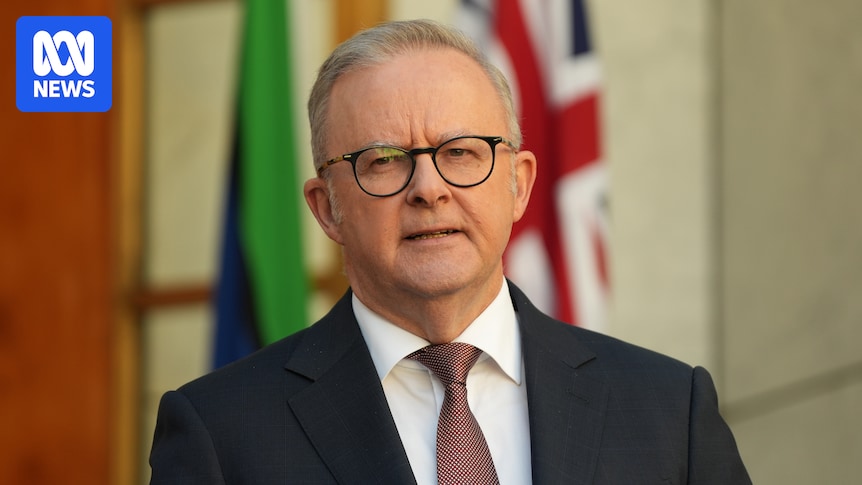
Keeping tabs
This section provides updates about WTF else has happened with things I have recently covered:
Wikimedia ban in Indonesia
Following up: The Wikimedia Foundation has reportedly had a ‘very constructive’ meeting with the Indonesian Kemkomdigi this week and ‘With assurances that there would be no unlawful content takedown orders or data disclosure requirements that could put the Wikimedia community-led model at risk, the Foundation is working constructively towards the administrative next steps.’
Jo Loewenthal’s push for transparency in the global music royalty system
Following up: Australian musician is continuing his campaign to expose the opacity of the international music royalties system, including filing a case in the Supreme Court of New South Wales against an Australian subsidiary of Universal Music and challenging Sony digital music distribution subsidiary The Orchard over royalty collection Loewenthal claims they shouldn't be collecting and providing a supplementary submission to the Australian Competition and Consumer Commission (ACCC) about his interactions with a range of collecting societies.
A bit on the side
WTF else happened this week:
2SER’s closure risks democracy not (just) broadcast journalistic education. As we continue to wait and see what fate awaits 2SER, I have seen a number of my friends and colleagues give rousing voice to the importance of the station on my social media feeds. In addition, Daz Chandler has written a timely call to arms cautioning that a loss of 2SER is a loss of an important ‘incubator of democratic culture’ that exists on a spectrum of democratic infrastructure. 2SER is more than an educational facility for media training, it is a genuine exemplar of social cohesion and social justice in action and an engine for collective social and political action. Its fate needs to be uncoupled from the corporate logic driving its university backers and the defeatism that seems to have already accepted closure as an inevitability. Chandler’s Overland piece is worth a read.
 Daz Chandler
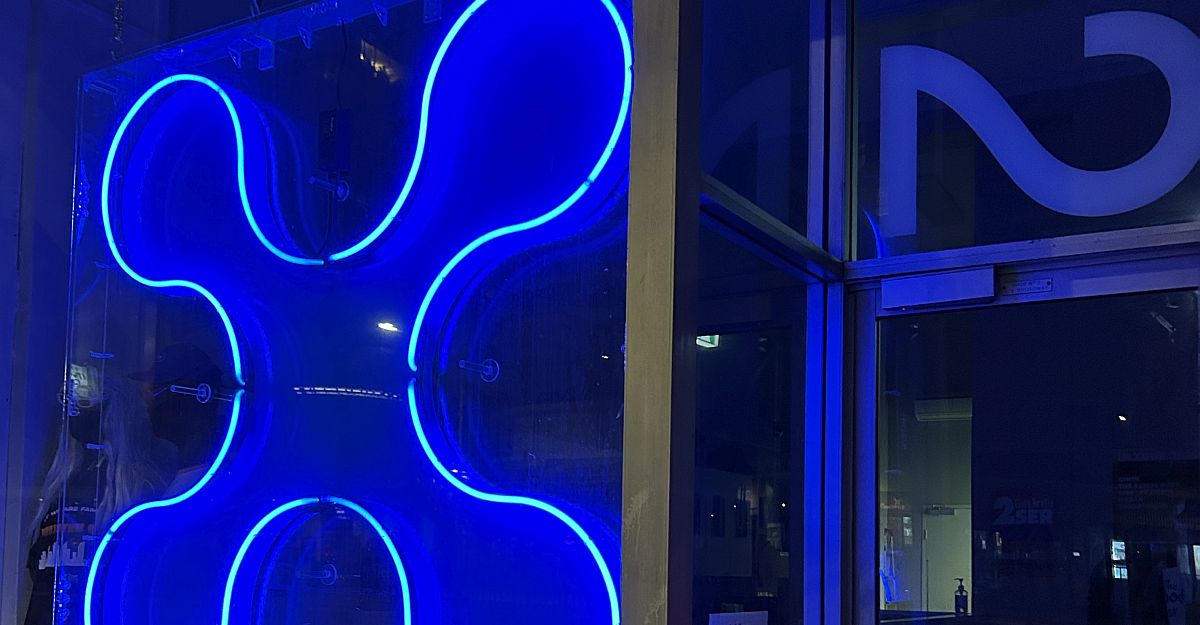
Instagram goes after Snapchat (again!) Instagram seems convinced ephemeral media sharing (i.e. social media posts that disappear after a period of time) is the way to go because they have launched another Snapchat-like standalone app called Instants. It seems to be a spin out of the features of Instants in Instagram Direct Messenger (which was originally called Shots but renamed). It is the latest in a list of similar attempts Meta has made in 2014, 2016 and again in 2022. Currently the standalone Instants app is available in Italy and Spain on iOS and Android. Meta has not announced if it will become available in other territories.
Jess Weatherbed
Colophon
Reuse
Conflict of interest
I am the Co-lead of Creative Commons Australia (CC AU), I am an individual member of the Creative Commons Global Network (CC GN) and I have been involved with the TAROCH (Towards a Recommendation on Open Cultural Heritage) project which is led by CC and which drafted the Open Heritage Statement. The views expressed in this blog post are my own and do not express the views of CC AU or the Creative Commons Corporation.
I am the President of Wikimedia Australia (WMAU). The views expressed in this blog post are my own and do not express the views of WMAU or the Wikimedia Foundation.
AI use
No part of the text of this blog post was generated using AI. The original text was not modified or improved using AI.
AI was used to generate summarise of listings, but no AI-generated content was used verbatim.
The banner graphic (i.e. the first image at the top of the blog post) was adapted from vector graphics generated in Adobe Illustrator using Firefly 4 with 'Subject' content type selected and the lowest level of detail set. { Text to Vector Graphic prompt: Seamless pattern, very large simple shapes, 80s retro style, fluid organic elements, morphing, overlapping, blurred gradients, visible layers. }
Provenance
This blog post was first published on Wednesday 29 April 2026. It has not been updated. This is version 1.0.