

Hello from Sydney! I am in the Harbour City to talk at the Australian Library and Information Assocation (ALIA) National Conference tomorrow about the new orphan works scheme.
This week there is a lot about government bodies’ regulatory interventions:
- DOGE’s cancellation of National Endowment for the Humanities (NEH) grants has been declared unconstitutional by a US court
- the US Government has formed agreement with major AI companies to evaluate pre-deployment AI models
- A different US court has struck down the Biden-era FCC's rules prohibiting discrimination in access to broadband services
- Meta has taken the UK communications regulator Ofcom to court over its online safety fines regime.
Also, ALIA and PressReader has putout a report looking at the role of Australian libraries in media literacy education and the barriers they fact in an increasingly complex information environment.
There’s no Bit on the side this week, but you will find an update on the social media addiction case in California that wrapped up in March.
Don't just read the introduction. Free members can read the entire weekly WTF now?! round-up. Sign up and keep reading.
Rapid-fire
A short list of other things:
- Internet Archive Switzerland joins a growing network of mission-aligned organisations. Shoot through
- Googlebook is the successor to Chromebook. The upcoming laptop lineup will run the long talked about new operating system that brings together Android and ChromeOS. Shoot through
- Meta’s Threads is leaning into an italics logo refresh. Shoot through
What’s been going on?
Here's WTF happened this week:
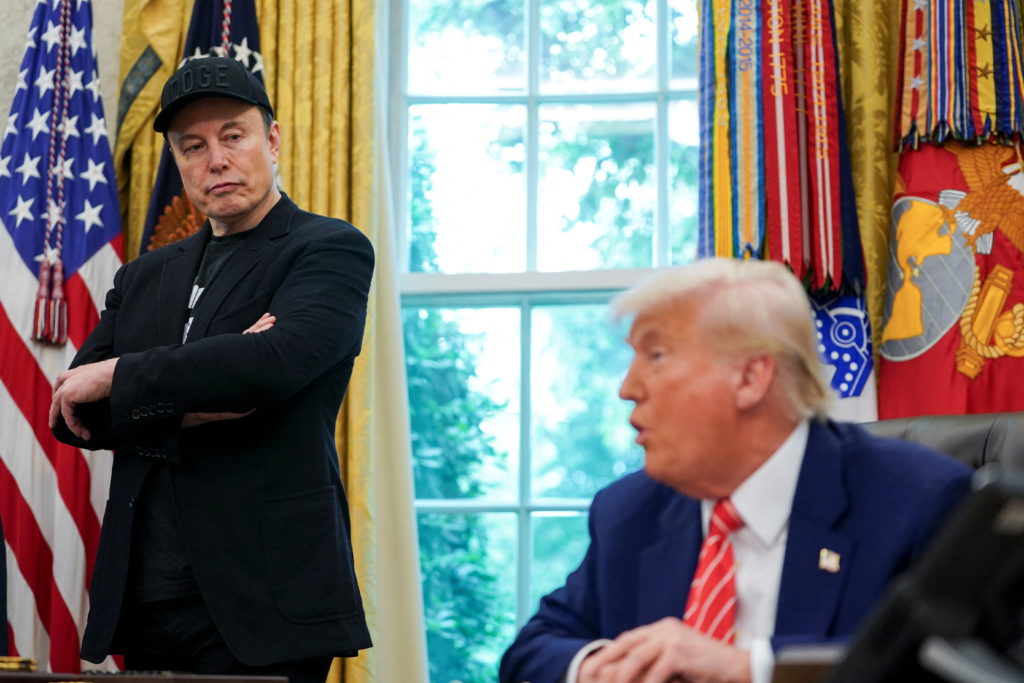
A US federal judge has ruled DOGE cuts to Humanities grants was unconstitutional
A US federal judge ruled that the cancellation of National Endowment for the Humanities (NEH) grants by DOGE was unconstitutional, violating the First and Fifth Amendments. The decision is based on testimony showing DOGE staffers used ChatGPT to identify and flag grants for cutting based on diversity, equity, and inclusion (DEI) related terms.
US District Judge Colleen McMahon has ruled that the cancellation of National Endowment for the Humanities (NEH) grants by DOGE last year was unconstitutional, violating the First Amendment and the equal-protection component of the Fifth Amendment. Back in March I included a listing in WTF now?! about a court challenge brought by the American Council of Learned Societies (ACLS), the American Historical Association (AHA) and the Modern Language Association (MLA) against the 1,400 NEH grants DOGE cancelled.
Testimony in the matter revealed that the two DOGE staffers tasked with the grant cuts did not consult academics or peers in the NEH’s peer review system to help inform the list of grants to cut, instead turning to ChatGPT to identify grants that included diversity, equity and inclusion (DEI) activities. While the DOGE staff did not define DEI for ChatGPT and could not speak to how the AI system interpreted DEI, it is known that it flagged grants that included terms such as ‘LGBTQ’, ‘homosexual’, ‘BIPOC’, ‘Tribal’, ‘ethnicity’, ‘gender’ and ‘equality’.
Judge McMahon held that Congress had not conferred authority on DOGE to cut funding it appropriated, that it was President Donald Trump’s ‘duty to execute the laws Congress has enacted’ and that the matter is ‘a textbook example of unconstitutional viewpoint discrimination.’ Of course, Trump is a wild card, but the case does reaffirm that Presidential overreach cannot dismantle Congressional acts.
 Dave Collins, Associated Press
Library delivered media literacy is important but its full potential is held back
Australian libraries face significant barriers that limit their full potential in delivering media literacy education despite being uniquely positioned to help vulnerable communities. A report by ALIA and PressReader calls for greater recognition of the crucial role libraries play in media literacy.
The Australian Library and Information Association (ALIA) and PressReader’s Ready to Act: Media Literacy and the Role of Australia’s Public Libraries report released last week highlights a significant ‘belief-to-capacity gap’ in library-led media literacy education. Based on a survey of 340 library professionals, the reports findings show that a range of structural, not motivational barriers exist to fully realising the potential of libraries in supporting a media literate community. Identified barriers include capacity, training, confidence, limited resources, time pressures and access to quality news sources. To illustrate, only 73 per cent of respondents felt somewhat equipped to support media literacy in their library and just 10 per cent saying they felt very well equipped to support it. These barriers are hampering library-led media literacy efforts.
The report identifies a number of groups in the community were most at risk of media literacy challenges. These include people with lower digital confidence or access, people with lower literacy levels, people from non-English-speaking or multilingual communities, people with low education, recently arrived migrants or refugee communities, people with physical and/or intellectual disability, children and young people (teens and young adults), low income earners, First Nations communities and people in rural and remote areas.
Despite the findings, libraries have long provided media literacy education and continue to do so. In the face of AI-driven complexity, the report finds that public libraries are well-positioned to deliver media literacy education with greater impact because interventions are often patron-driven and highly responsive and personalised. Respondents held that one-to-one assistance the most effective strategy for improving media literacy, especially where patrons could experience direct comparisons of how different news outlets reported on the same topic. Naturally, access to quality journalism and diverse perspectives is crucial to that learning, yet only 22 per cent of libraries provide patrons with access to 30 or more news sources. While most libraries provide access to local, regional and national news, only 66 per cent include international sources. As ALIA and PressReader said, broad access to different news coverage is ‘the difference between offering media literacy as a concept and offering patrons the tools to practise it meaningfully’.
ALIA and PressReader suggest practical, achievable ways libraries can strengthen their media literacy work based on responses to the survey, including creating repeatable one-to-one media literacy moments, using patron’s questions to inform media literacy programming, using existing access to quality news sources to activate media literacy work, engage in partnerships to compliment and extend in library media literacy education and advocacy for the support libraries need to deliver crucial media literacy education to the community. To bolster the work of libraries already being done, ALIA calls for national recognition of libraries as an important player in media literacy education and for digital platforms to support this public interest work.
For those who are interested, I have written a longer blog post looking at the report’s findings and I have published a detailed briefing on the report (which Been briefed or Gimme it all members can read).


A news article published by ALIA about the report.


Access the report from the ALIA Repository.
 Elliott Bledsoe

A longer blog post about the report.
 Elliott Bledsoe

My briefing on the report.
AI companies agree to pre-release government checks of frontier AI models
Major AI companies have reportedly agreed to pre-deployment security ‘evaluations’ and research of their frontier AI capabilities by the US Government’s Center for AI Standards and Innovation (CAISI) in a move to better align with President Trump’s AI Action Plan.
Reportedly, Google DeepMind, Microsoft and xAI have agreed to voluntarily allow the Center for AI Standards and Innovation (CAISI) at the Department of Commerce’s National Institute of Standards and Technology (NIST) to ‘conduct pre-deployment evaluations and targeted research to better assess frontier AI capabilities and advance the state of AI security’. It went on to say that ‘CAISI has been designated to serve as industry’s primary point of contact within the U.S. government to facilitate testing, collaborative research and best practice development related to commercial AI systems’.
The announcement also said these agreements built on earlier memorandums of understanding (MOUs) between its predecessor, the US Artificial Intelligence Safety Institute, and Anthropic and OpenAI. Those MOUs have reportedly seen 40 ‘evaluations’ of unreleased AI models take place. These new agreements and renegotiated arrangements with Anthropic and OpenAI are designed to ‘better align with priorities in President Donald Trump’s AI Action Plan’.
Weirdly, after the original announcement, the Commerce Department removed it from the website ⟨ but you can still read it on the Wayback Machine ⟩, later redirecting the URI to the CAISI webpage. The reason for pulling the announcement is unclear.
 Emma Roth
US Court of Appeals kills a Biden-era FCC rule protecting consumers against discrimination in access to broadband
A US court verdict has struck down the FCC's rules prohibiting discrimination in access to broadband services, saying the agency overreached its legal authority. This decision limits the FCC's ability to address unintentional discriminatory practices that result in different broadband access for some communities.
A US Court of Appeals for the 8th Circuit decision made last week has struck down the Federal Communications Commission’s (FCC) rules prohibiting discrimination in access to broadband services. The presiding judges unanimously held that Biden-era digital equity initiative was overreach by the FCC ⟨ although it is worth noting all three judges hearing the matter were appointed by Republican presidents ⟩ They found that the FCC was imposing liability for actions resulting in ‘disparate impact’ (i.e. unintentional policies that happen to disproportionately affect protected groups) when the agency only had the legal authority to regulate ‘disparate treatment’ (i.e. intentional discrimination). They also determined that the FCC was applying its rules to entities that do not provide internet services to subscribers.
The 2023 rule was the first attempt by the US Government to provide a formal complaints process for alleged digital discrimination to access to broadband services. It defined such discrimination as ‘policies or practices, not justified by genuine issues of technical or economic feasibility, that differentially impact consumers’ access to broadband Internet access service based on their income level, race, ethnicity, color, religion, or national origin or are intended to have such differential impact.’
While Trump-appointed FCC Chairman Brendan Carr supports the decision, critics say it opens to door for discriminatory practices. John Bergmayer, Legal Director at Public Knowledge, for example, said the decision removes a rule that addressed known service differentiation that saw ‘[l]ower-income neighborhoods and communities of color get slower service, older equipment, and higher prices for the same product their richer neighbors buy’ because the FCC can now ‘only [act] when it proves a smoking-gun case of conscious bias, which almost never exists in writing.’
Given the current FCC Chair celebrated the outcome it is unlikely the FCC will appeal the matter (for the time being at least), so it will likely take a less interventionist regulatory approach from here. The case also follows a recent trend where courts are limiting the power of federal agencies who have interpreted the legislation they oversee broadly.
 Jon Brodkin

Meta takes the UK communications regulator Ofcom to court over online safety fines
Meta is challenging the UK regulator Ofcom over its online safety fines regime, arguing the 10 per cent of global revenue penalty is disproportionate.
Meta is challenging the UK communications regulator Ofcom (Office of Communications) over the fees and fines regime in the UK online safety legislation introduced in regulations that commenced in September. They are seeking judicial review, arguing that Ofcom’s methodology for calculating fines is disproportionate. Their concern comes because current fines under the scheme can be 10 per cent of qualifying worldwide revenue (QWR) or £18 million, whichever is higher, for regulated entities that made more than £250 million a year.
For Meta, which reported $201 billion in global revenue last year that would leave them theoretically open to a single fine as high as $20 billion. The social media giant says fines should be based on revenue in the country where the company is being regulated, not its global revenue. They say, ‘[t]his would still allow Ofcom to impose the largest fines in UK corporate history’.
Meta is not alone is criticising the scheme. Controversial forum websites 4chan and Kiwi Farms have also challenged Ofcom and the scheme has been criticised by the Trump administration. The matter will be heard in October this year.
 Dan Milmo and Aisha Down

Keeping tabs
Updates about WTF else has happened with things I have recently covered:
US social media addiction cases
Following up: Three months on from the Californian verdict that Meta and Google deliberately designed their Instagram and YouTube platforms to be addictive and that their services posed a danger to minors Meta has appealed. The case focused on a 20-year-old woman who has been using YouTube since age six and Instagram since age nine and alleged those addictive features caused her harm. Meta’s filing argues it is generally protected from liability over user-generated content under section 230 of the Communications Decency Act and that because the evidence in the matter ‘repeatedly tied Kaley's mental health challenges to the content she viewed, rather than the design features like autoplay and infinite scroll’ that the verdict should be overturned or a new trial be ordered.
Colophon
Reuse
AI use
No part of the text of this blog post was generated using AI. The original text was not modified or improved using AI.
The banner graphic (i.e. the first image at the top of the blog post) was adapted from vector graphics generated in Adobe Illustrator using Firefly 4 with 'Subject' content type selected and the lowest level of detail set. { Text to Vector Graphic prompt: Seamless pattern, very large simple shapes, 80s retro style, fluid organic elements, morphing, overlapping, blurred gradients, visible layers. }
Provenance
This blog post was first published on Wednesday 13 May 2026. It has not been updated. This is version 1.0.