It’s April Fool’s Day! Copyright law reform doesn’t happen quickly so the passing of an amendment to the Copyright Act is no joke.
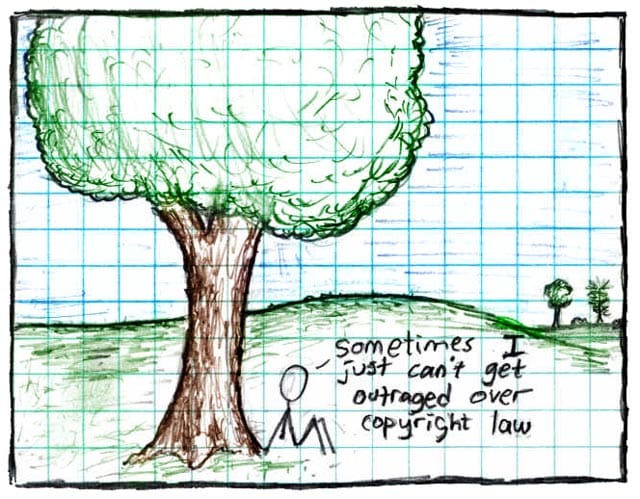
Yesterday, a law was passed that will introduce a scheme to facilitate the use of orphan works – copyright material where the owner cannot be identified or located.
The Queensland Literary Awards (QLAs) are leaving the State Library of Queensland (SLQ) for the Brisbane Writers Festival (BWF) and SLQ has handed black&write! back to Creative Australia. The changes come about because of independent reviews and reconciling the library’s role with the ‘expectations of the Crisafulli Government’.
The addictiveness of social media platforms and the extent to which their makers make them that way has been under fire in two significant US court cases whose recent verdicts didn't go Big Tech's way. Adding to their worries, Australia continues to amp up online safety for young people regulation.
And, there is just one bit on the side this week, but it's a good one: find out which iconic Aussie sounds have been added to Sounds of Australia.
Don't just read the beginning. Free members can read the entire blog post. Sign up and keep reading.
Rapid-fire
A short list of other things:
- First Nations publisher Magabala Books are opening a second bookstore in Naarm Melbourne. Shoot through
- Entries for the 2026 Queensland Literary Awards opened yesterday and will close on Thursday 30 April 2026. Shoot through
- The Office of the Australian Information Commissioner (OIAC) is consulting on an exposure draft of the Children’s Online Privacy Code. Submissions are due by Friday 5 June 2026. Shoot through
- The Copyright Agency’s Cultural Fund grants for organisations round 1 closes on Monday 13 April 2026. Shoot through
What’s been going on?
Here's WTF happened this week:
Orphan works amendment to the Copyright Act passed
A scheme for good faith uses of orphan works will soon be introduced into Australia copyright law, opening up huge amounts of material to productive and creative uses.
Yesterday the Copyright Amendment Bill 2026 passed both Houses of Parliament meaning a new orphan works scheme will be introduced into the Copyright Act 1968 (Cth). Typically, if you want to use material in a way that is protected by copyright without infringing that copyright either a copyright exception needs to cover your use or you need the permission of the copyright owner. The problem for orphan works though is that the copyright owner of the material cannot be identified or located, so you can’t get permission.
Currently, using orphan works is risky because users of them could find themselves pursued for copyright infringement if the copyright owner later comes forward. Often the potential for financial penalties for infringement are too great and the material is not used. Orphaned materials have long been left to languish in libraries and archives, caught behind a thicket of copyright complexity that leaves wasted their cultural, economic and historical value.
Once it commences, the new scheme under the Copyright Amendment Bill 2026 will limit remedies available to copyright owners that later come forward when an orphan work is used in good faith by a user. That is to say that the user undertook a reasonably diligent search to identify the copyright owner of the orphaned material before using it, they were unable to identify and locate the copyright owner at the time of the infringing use and they gave clear and prominent notice that the material was being used for the purposes of the scheme.
In such instances, a court cannot grant relief against the user of the orphaned material that consists of damages or an account of profits, additional damages or other monetary relief. Although a court can require the user of the orphan work to make reasonable payment to the copyright owner for the past use in situations that are not private and domestic uses.
While some concessions have been made, if the release of orphan works by cultural heritage organisations under s 200AB of the Copright Act are anything to go by, we can expect that instances of a copyright owner coming forward after the initial use of the orphaned material has taken place will be rare.
The new scheme will come into effect the day after the Act receives the Royal Assent, which will likely be in seven to 10 working days.
If you want to read more about the new orphan works scheme see the separate blog post and the briefing.

- Important reforms to Australia’s copyright framework pass the Parliament, Attorney-General Michelle Rowland, Attorney-General's Department, Australian Government, Wednesday 1 April 2026.
 Elliott Bledsoe
 Elliott Bledsoe
Queensland Literary Awards and black&write! transition out of SLQ
The Queensland Literary Awards (QLAs) will now take place as part of Brisbane Writers Festival (BWF) following a review of the rescinding of a black&write! fellowship last year over a pro-Palestinian social media post. That program was handed back to Creative Australia who are seeking a new delivery partner for it. Queensland’s Arts Minister John-Paul Langbroek linked the changes to new state laws against hate speech, asserting that publicly funded arts organisations must align with the ‘expectations of the Crisafulli Government’.
The Queensland Literary Awards (QLAs) will be presented as part of Brisbane Writers Festival (BWF) from this year, while Writing Australia seeks a new delivery partner for the black&write! fellowships for emerging First Nations writers, which had been delivered by the State Library of Queensland (SLQ) since 2011. Both moves come in response to a SLQ-initiated review conducted by Martin Daubney AM KC of the statutory body’s governance and decision-making processes and how these align with community expectations regarding the use of public funds.
How did we get here?
In May last year, Queensland’s Arts Minister John-Paul Langbroek met with and corresponded with SLQ leadership, ultimately directing the Library Board of Queensland under section 23 of the Libraries Act 1988 (Qld) not to award one of the 2025 black&write! fellowships to Adelaide-based Martu author K.A. Ren Wyld because of a social media post about the Israeli–Palestinian conflict which Langbroek deemed ‘were incompatible with the values of respect, unity and inclusion’. The direction resulted in rescinding Wyld’s fellowship, the cancellation of the black&write! ceremony and the announcement by SLQ of an ‘independent review of the suite of awards and fellowships we administer … [with a] specific focus on how we balance our strong commitment to freedom of expression and our role as a Queensland Government funded cultural institution.’ Twelve QLAs judges resigned as a result.
When the terms of reference were published things seemed to have shifted a little with the stated objective now being ‘to strike a balance between the priorities and expectations of the Minister, as the responsible Minister, and the proper role of State Library of Queensland, pursuant to its statutory objects and guiding principles, and having regard to the fact that it is a publicly funded entity.’ Daubney's report was given to the Library Board last October and submitted to Langbroek in November. Langroek released it publicly on Thursday 5 March 2026.
As Professor Bronwyn Lea wrote on The Conversation, Daubney ‘did not recommend removing the awards from the State Library’, rather he recommended clarifying whether SLQ should be running competitive literary prizes and tightening the governance, risk and venue frameworks’ at the library. Yet, SLQ’s statement about the report and recommendations says that:
The Library Board of Queensland has accepted the Review recommendations. State Library has developed a framework to address the recommendations and has commenced implementation. This includes ceasing management of the Queensland Literary Awards on behalf of the Queensland Government.
What’s next for the QLAs and black&write!?
In announcing the shift of the QLAs to BWF, Langbroek reportedly announced the awards would open the festival and the 2026 awards would have an increased prize pool. As noted in Rapid fire, entries for the 2026 awards opened yesterday and will close on Thursday 30 April 2026.
The Daubney review was part of SLQ’s decision to hand black&write! back to Creative Australia who are seeking an alternative delivery partner for the fellowships. The transition was also prompted in part by a recommendation to adopt a new operating model that facilitated greater connection to industry which was part of a 2023 evaluation of the program by Western Sydney University. Because of the change in delivery the 2026 Writing Fellowships and Editor training program will not take place.
Langbroek links the decision to controversial Crisafulli hate speech legislation
While Daubney was focused on statutory and mandate alignment, governance and reputational risk, Langbroek reframed the issue as one of safety and hate speech, saying:
Creative diversity and robust debate are important, and central to the value of the arts, however, we’ve taken decisive action to make Queensland safer.
…
After a decade of decline under Labor, the Crisafulli Government unashamedly holds the position that state-owned buildings will not be a platform for hate speech.
The suite of reforms that seek to combat antisemitism and address terrorist-motivated offending make it quite clear that no taxpayer-funded arts and cultural institutions, or programs will support hate speech.
Langbroek is pulling SLQ and other funded organisations into line. ⟨ And BWF is of course funded through Arts Queensland. ⟩ In his media release he said 'the Daubney Review has highlighted the need for government-funded arts and cultural organisations to consider their policies and risk management frameworks to ensure they are consistent with and meet the expectations of the Crisafulli Government.'
The media release also connects the situation to controversial Crisafulli government legislation banning the use of two pro-Palastinian phrases which has been criticised as having ‘all the hallmarks of an authoritarian police state’ and a threat to freedom of expression. Since it was passed, the legislation has been used to arrest two people. Reportedly, the Queensland Police have also contacted a Brisbane-based visual artist saying artworks they have produced relating to Palestine allegedly violate the new law.
 Matt Dennien
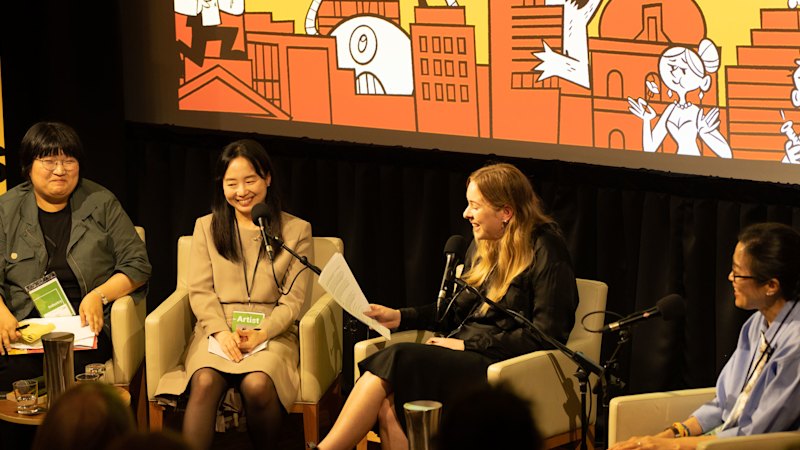
 Bronwyn Lea
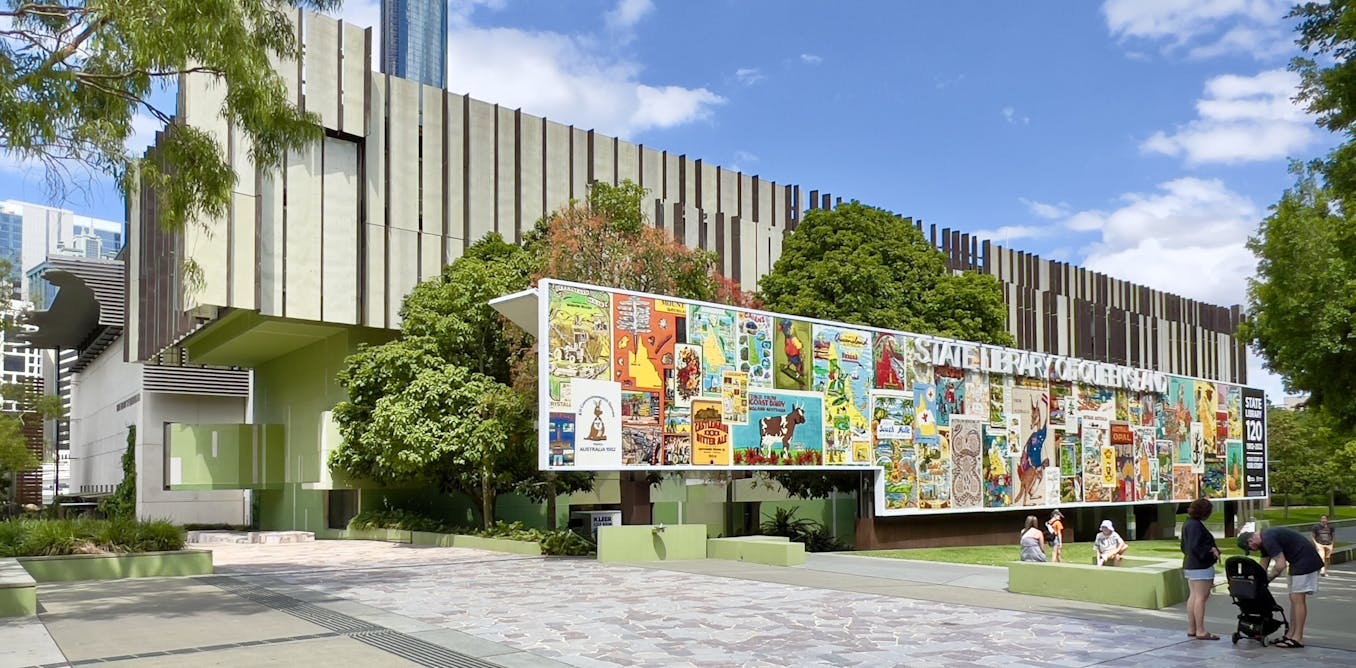
Professor Bronwyn Lea's piece on The Conversation about this and other controversies in the QLAs’ history.
SaCSA interactive data for arts and culture launched
Service and Creative Skills Australia have launched an interactive Data Dashboard providing flexible ways to dig into industry and occupational data about the arts and cultural industry.
⟨ Somehow I missed it, but ⟩ back in February Service and Creative Skills Australia (SaCSA) released a Data Dashboard with interactive charts for arts and cultural data, along with data for the other industries SaCSA looks at (personal services, retail and tourism, travel and hospitality). The dashboard provides industry, occupational and training data for each industry, although what is shown for each is different.
SaCSA’s YouTube video showing how to use the Data Dashboard.
Here’s a breakdown of what the Data Dashboard can tell you about the arts and cultural industry:
Have you ever wondered what the gender breakdown is for radio broadcasting? Or how many workers in museums work full-time, part-time or on a casual basis? These are exactly the kinds of questions the industry insights tab in the SaCSA Data Dashboard are meant to answer. You can display insights for the whole industry or by Australian and New Zealand Standard Industrial Classification (ANZSIC) group or subcategory. Whichever is selected, the left-hand column shows employment by gender, working arrangements, the number of workers with a disability, how many were born overseas, the median weekly hours worked, the median age of workers and income before and after tax.
The right-hand column shows the economic contribution of the arts and cultural industry. This can be filtered by activity such as digital games development or visual arts and crafts. This part of the industry insights also shows arts and cultural funding which can be filtered by artform, level of government or state or territory. You can combine these to show how much funding goes to dance in Queensland, for example.
You can also view data for individual arts and cultural jobs based on Australian and New Zealand Standard Classification of Occupations (ANZSCO). This lets you see employment numbers and a range of demographic data for a group of roles, such as actors, dancers and other entertainers. Alongside this, you can also see employment trends, workforce spread across the country, employment projections and other occupational data.
The dashboard also provides extensive data on vocational education and training (VET) across SaCSA sectors. It aggregates data from a range of sources, including the Australian Bureau of Statistics (ABS) data from the Census and other statistics, the Australian Taxation Office (ATO), the Bureau of Communications, Arts and Regional Research, the Office for the Arts and other sources. It will be updated quarterly.
Two significant US court cases shift the social media harm dial
Court cases in New Mexico and California have both found that social media platforms have knowingly created addictive platforms that have caused harm to young users.
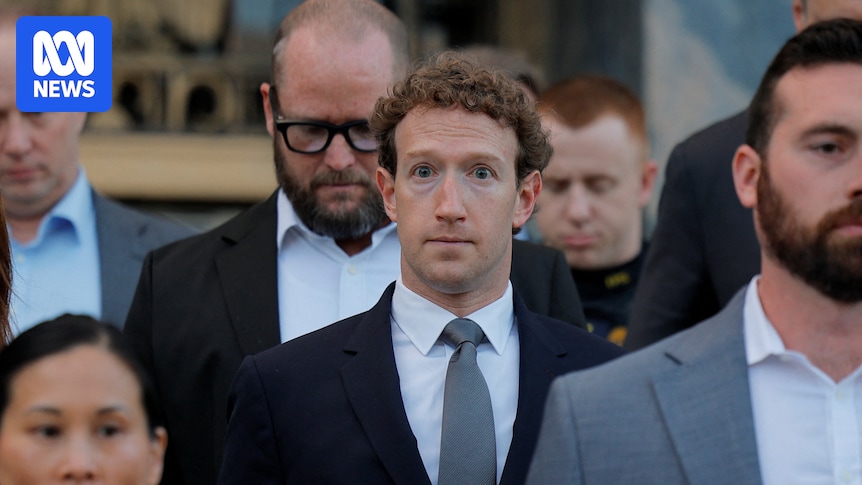
On Tuesday 24 March 2026 a jury in New Mexico determined that Meta had misled consumers about the safety of its platforms and knowingly harmed children's mental health in breach of the state’s Unfair Practices Act. The case taken by New Mexico Attorney General Raul Torrez is the first time a US state has successfully sued Meta over an online safety matter. Meta intends to appeal the matter.
The next day (Wednesday 25 March 2026) a second US jury, this time in California, found Google and Meta – the parent companies of YouTube and Instagram – were negligent in the design and operation of their platforms. The matter centred on a 20-year-old woman who has been using YouTube since age six and Instagram since age nine and accused the Big Tech players as causing harm by deliberately designing addictive platforms. In the case, it was held that both companies knew or should have known their services posed a danger to minors and failed to adequately warn users.
The jury found their negligence was a substantial factor in causing harm to the plaintiff and awarded $4.2 million in damages against Meta and $1.8 million against Google. Both companies intend to appeal the case, but it already stands as a historic win and will likely influence thousands of similar cases. Reportedly, Australia law firms are considering initiating similar cases locally.



Australia amps up online safety for young people
Despite early social media minimum age successes the eSafety Commission is investigating potential non--compliance by five platforms. The government also updated the SMMA rules targeting platforms using addictive features like algorithmic recommendations, infinite feeds and other features. It comes just weeks after Age-Restricted Material Codes came into effect.
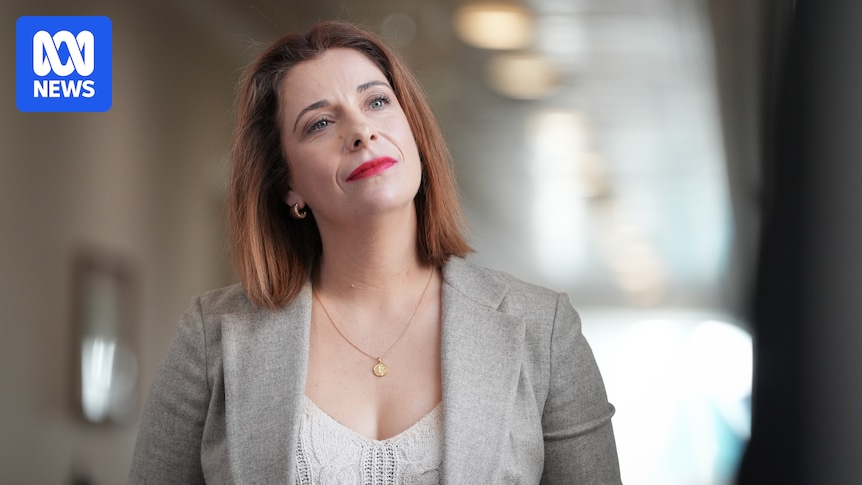
Here in Australia, the government continues its crusade against social media and other online harms. A compliance update on the social media minimum age (SMMA) informed by legally enforceable information-gathering notices and other sources put out by the eSafety Commissioner reports that 5 million accounts held by under-16 accounts on age-restricted social media platforms have been removed, deactivated or restricted as a consequence of the law. Despite the reported success in the overall reductions in account ownership, eSafety expressed concern in the compliance update that ‘a substantial proportion of children under 16 retained accounts on age-restricted platforms’.
As a result, eSafety has been investigating potential non-compliance by Facebook, Instagram, Snapchat, TikTok and YouTube and the eSafety Commissioner Julie Inman Grant released a statement that the regulator is ‘now moving into an enforcement stance’. Communications Minister Anika Wells also put out a media release in support of eSafety’s investigations, saying ‘If these social media companies want to do business in Australia, they must obey Australian laws.’
On Wednesday 25 March 2026 the Albanese Government also updated the legislative rules for the SMMA with Wells making a rule that further defines ‘age-restricted social media platforms’ as services that adopt harmful features. Now the definition includes platforms that adopt addictive algorithmic recommender systems or personalised content and either have one or more of an infinite feed, feedback features such as ‘likes’ or ‘upvotes’ or ephemeral content designed to create urgency.
In the media release about the new rule, Wells said ‘Targeted algorithms, doomscrolling, persistent notifications and toxic popularity metres are stealing [young Australians’] attention for hours every day’ and the update ‘ensures the law remains focused on features that drive addictive behaviour and pose the greatest risk of harm to young people.’ Wells also said each of the 10 key platforms in scope of the SMMA display at least one of the harmful practices in the new rule and the eSafety Commissioner ‘will assess these platforms against the new legislative rule and communicate their view to the providers of the platforms.’
Also, more Age-Restricted Material Codes designed to prevent children under 18 years of age from accessing potentially harmful age-inappropriate content came into force on Monday 9 March 2026. Under the codes, search engines, social media platforms, pornography websites, app stores, gaming providers, and generative AI systems – including companion chatbots – must take meaningful steps to prevent children from being exposed to age-inappropriate content, including high-impact violence, pornography, self-harm material and dangerous content such as suicide and disordered eating.
And, as mentioned in Rapid fire, the Office of the Australian Information Commissioner (OIAC) is consulting on an exposure draft of the Children’s Online Privacy Code. Submissions are due by Friday 5 June 2026.
 political reporters Maani Truu and Nicole Asher
- Five social media platforms flagged for compliance issues, eSafety Commissioner, Tuesday 31 March 2026.
- Tech giants warned – step up on social media laws or face significant fines, Ministers for the Department of Infrastructure, Transport, Regional Development, Communications, Sport and the Arts, Department of Infrastructure, Transport, Regional Development, Communications, Sport and the Arts, Australian Government.
- Social media minimum age update targets harmful tools, Ministers for the Department of Infrastructure, Transport, Regional Development, Communications, Sport and the Arts, Department of Infrastructure, Transport, Regional Development, Communications, Sport and the Arts, Australian Government.
A bit on the side
WTF else happened this week:
Nine new Sounds of Australia. The National Film and Sound Archive has released the 2026 Sounds of Australia, including Jack Karlson's 'Succulent Chinese Meal' quote, the pedestrian crossing button sound, the Reading Writing Hotline jingle and Joe Dolce’s ‘Shaddap You Face’. All jokes aside, there are also some important and serious sounds in the group too, including the ABC Kimberley broadcast of the Noonkanbah Station native title determination and Rosie Batty’s 2015 Australian of the Year acceptance speech about domestic and family violence as a national responsibility. Recorded music also picked up three additions: ‘Tabaran’ by Not Drowning, Waving and the musicians of Rabaul featuring Telek, ‘You’ by Marcia Hines and 'Scar' by Missy Higgins.
- Sounds of Australia 2026, National Film and Sound Archive of Australia, March 2026.
Colophon
Reuse
Conflict of interest
At points of time during the development and passage of the Copyright Amendment Bill 2025 I was the Copyright Officer (part-time) at the Australian Digital Alliance (ADA) and at the Australian Libraries and Archives Copyright Coalition (ALACC). In that capacity I wrote submissions and participated in other consultative processes related to the bill on behalf of one or both of those organisations. The views expressed in this blog post are my own and do not express the views of the ADA or the ALACC.
I am the President of Wikimedia Australia (WMAU). In that capacity I wrote a submissions related to the bill. The views expressed in this blog post are my own and do not express the views of WMAU.
Credit
AI use
No part of the text of this blog post was generated using AI. The original text was not modified or improved using AI.
The banner graphic (i.e. the first image at the top of the blog post) was adapted from vector graphics generated in Adobe Illustrator using Firefly 4 with 'Subject' content type selected and the lowest level of detail set. { Text to Vector Graphic prompt: Seamless pattern, very large simple shapes, 80s retro style, fluid organic elements, morphing, overlapping, blurred gradients, visible layers. }
Provenance
This blog post was first published on Wednesday 1 April 2026. It was last updated on Tuesday 7 April 2026. This is version 1.1.
Changelog
v 1.1: Added a link to Michelle Rowland's media release – Tuesday 7 April 2026