
This week the calamity that is Adelaide Writers’ Week continues with Dr Randa Abdel-Fattah being invited to speak at the 2027 event but South Australian Premier Peter Malinauskas doubling down on not supporting her attendance this year or next. Also funding cuts to the Victorian small-to-medium arts sector is threatening the peak bodies which has flow-on effects to advocacy and policy.
At the same time, in the tech world, debates about AI hype are taking some of the sheen off the AI bubble. Science fiction author Cory Doctorow has taken to The Guardian to challenge some of the myths around AI while a think tank has cautioned that by all buying into the same AI systems companies are risking their competitive advantage.
Also: online platforms have been tightening safeguards, asserting their principles and redefining their boundaries. OpenAI is adding age prediction on ChatGPT, more regulators are probing xAI over Grok image generation, Meta is pulling back from the metaverse, Bandcamp has banned AI music and TikTok has launched a microdrama app.
Don't just read the introduction. Free members can read the entire weekly WTF now?! round-up. Sign up and keep reading.
What’s been going on?
Here's WTF happened this week:
Premier didn't want Abdel-Fattah at Adelaide Writers’ Week 2026
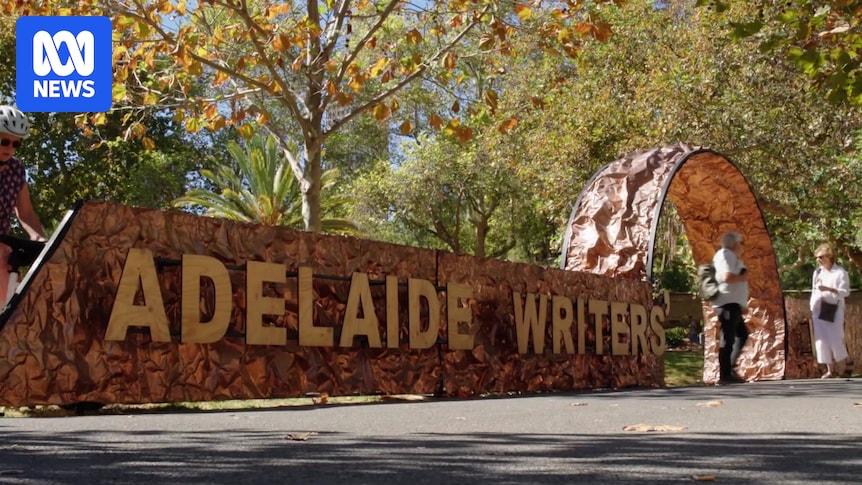
Dr Randa Abdel-Fattah has been invited to Adelaide Writers’ Week 2027 while it has been revealed that South Australian Premier Peter Malinauskas put pressure on the Adelaide Festival Board to remove Abdel-Fattah from the now cancelled 2026 event.
Adding to last week’s implosion of the Adelaide Writers’ Week,the new Adelaide Festival Board has done a complete 180, apologising to former Director Louise Adler AM and to ousted Dr Randa Abdel-Fattah and extending an invitation to Dr Abdel-Fattah to participate in the 2027 event. At the end of the statement apologising to Adler, the Board says, “We also appreciate the Premier's consistent position that the curatorial choices of Adelaide Festival, including Adelaide Writers’ Week, are at the discretion of the organisation.”
That’s a hard pill to swallow given South Australian Premier Peter Malinauskas has come out saying that he does not support inviting Dr Abdel-Fattah to speak at the 2027 event. The Permier’s comment comes alongside reporting on Sunday that back on Friday 2 January 2026 Malinauskas sent a letter to then Adelaide Festival Board Chair Tracey Whiting detailing his objections to the scheduled appearance of author Randa Abdel-Fattah. Much of the concerns raised by the former Board and the Premier were outlined in the letter, including concerns about prior comments made by Dr Adbel-Fattah, and that her inclusion was “contrary to current community expectations of unity, healing and inclusion” and would “not in the public interest” in light of the horrific Bondi attack. He went on to say:
"I am surprised at the decision by Adelaide Writers' Week to give a platform to this author and deeply concerned that the Board is not prepared to remove her appearance from the program, particularly in light of current circumstances, the national mood and need for social cohesion following the Bondi terror attack."
Later, he says:
“While the decision on whether to program Dr Abdel-Fattah remains one for the Board, I want to put it on the record that the South Australian Government fundamentally opposes the inclusion of Dr Randa Abdel-Fattah on the 2026 Adelaide Writers’ Week program and reserves the right to make public statements to this effect.”
Also in the letter, Malinauskas writes about the importance of freedom of speech, the role of literary festivals like Writer’s Week in respecting freedom of speech, provoking discussion and hosting a variety of opinions and ideas and the importance of the artistic freedom of statutory arts organisations like the Adelaide Festival.
Despite the Premier’s own statements, I agree with Dr Abdel-Fattah’s lawyer Michael Bradley, it is hard not to see the letter as coercive given that the Board is appointed by the government and a significant amount of the Adelaide Festival’s funding comes from government.
What is worth reading on the ongoing Adelaide Writers’ Week calamity:


Adelaide Festival’s apology to Dr Abdel-Fattah and its invitation to Dr Abdel-Fattah to participate in the 2027 Adealide Writers’ Week.


Adelaide Festival’s apology to Louise Adler AM.


Current Creative Enterprise Program funding round puts Victoria’s arts peak bodies at risk
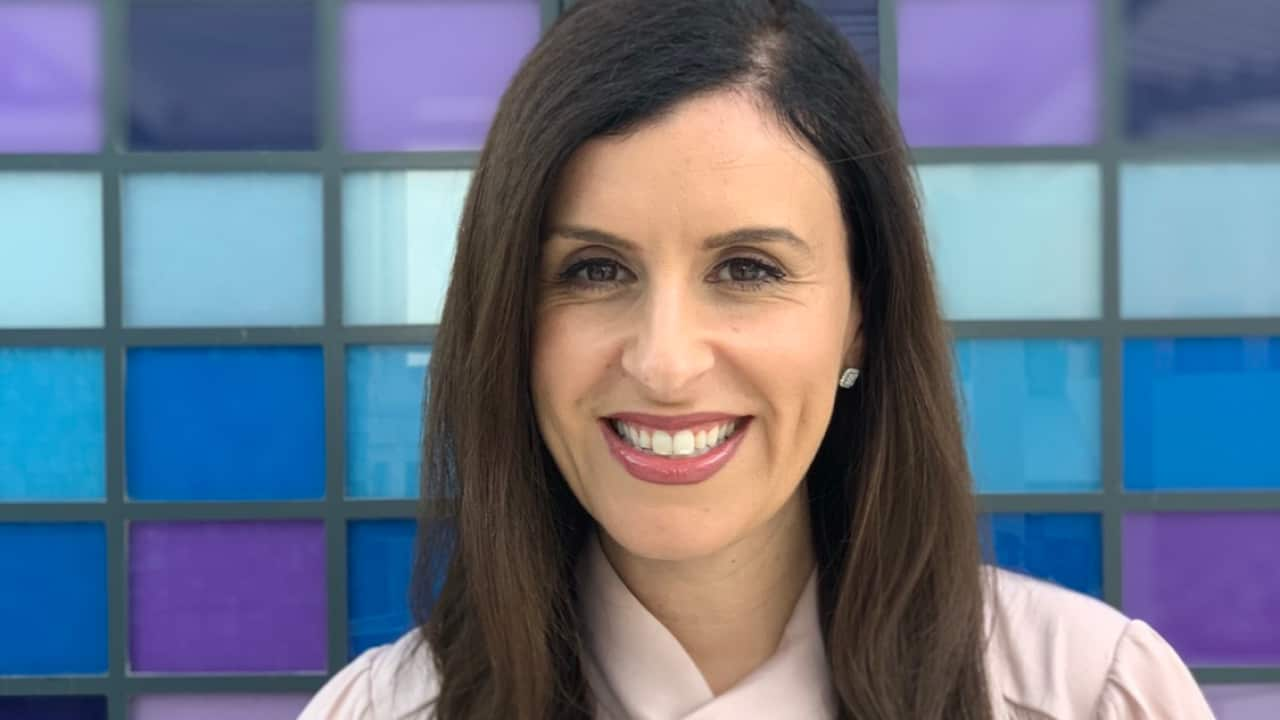
With fewer funded organisations and a smaller funding pool for the Creative Enterprise Program (CEP) the Victorian small-to-medium sector will be squeezed hard and the sector’s policy voice will be hollowed out former Co-CEO of Multicultural Arts Victoria Andy Miller warns.
Crunching the numbers from Creative Victoria’s latest Creative Enterprise Program (CEP) funding round presents a grim outlook. Both the number of funded organisations and the total funding pool are down, seeing a reduction in support for the small-to-medium sector and industry service organisations (also called peak bodies). Former Co-CEO of Multicultural Arts Victoria Andy Miller says the numbers show peak bodies are being hit hardest, threatening the vital advocacy and policy leadership they provide:
“Glaringly, since the last round in 2022, the number of organisations receiving CEP support has dropped dramatically from 93 to 81 in 2026 – and with the introduction of two-year allocations rather than four in previous years, this number is likely to decrease even further. The tapering off of funding is more like ‘‘backing away’’ from our creative organisations.
As well as the overall number of recipients, the CEP funding pool has been reduced from $21.2 million in the 2022-25 period to $17.9 million for 2026-29. This significant contraction raises the question of the future of Victoria’s vital small to medium cultural sector.
…
The impact of reduced CEP funds is even more pronounced across the industry service sector (arts peak bodies) – the critical infrastructure that supports artists and creative organisations statewide. Under CEP, 14 service organisations were funded in 2022, dropping to 10 in 2026 and likely only to be eight by 2028. This represents a 55% reduction since 2022.”
Writing in defence of peak bodies, Miller notes that their value is “often overlooked, as their work is structural rather than visible.” Even so, they play important roles in the arts and cultural industry, delivering “advocacy, capacity-building, policy leadership, collaboration and direct support…”
Despite the state’s creative industries strategy Creative State 2028 talking up public art galleries, performing arts centres, regional festivals and independent creative organisations and creative communities, Miller points out the paradox that “... we don’t have public sector support for our peak body for performing arts centres (of which there are 78+ in Victoria), while our peak body for galleries (representing 75+ galleries across Victoria) was defunded in this round of CEP along with our peak body for writers (which has 3,000+ members).”
Miller expresses concern that the role these and other peak bodies play in “translat[ing] lived experience into submissions, briefings, and arguments that governments can grasp” will be lost if “we push these important bodies to the margins and allow them to deteriorate”. “Without them, arts policy is shaped almost entirely by increasingly secluded bureaucrats and market forces,” Miller warns, and “advocacy becomes atomised, policy becomes reactive, and artists are left negotiating individually with systems designed to overwhelm them”.
What’s worth reading on CEP funding outcomes:
Creative Victoria: backing or backing away?
Andy Miller
Monday 19 January 2026
ArtsHub
Backing Our Creative Organisations, Jobs And Cultural Life
Collin Brooks, Minister for Creative Industries
Friday 19 December 2025
State Government of Victoria
Doctorow on the AI bubble and why we need to burst it
Cory Doctorow argues that tech giants have engineered an AI bubble to prop up their stock valuations and which sells the false promise to employers that AI can replace skilled workers. We must pop this hype cycle before it turns us all into reverse centaurs in the service of machines.
This is not a particular news or current affairs item – rather it is a long essay by Cory Doctorow published by The Guardian – but it is worth taking a look at. Doctorow argues that the AI hype we are experiencing is primarily another financial bubble in a string of such bubbles pushed by monopolistic tech companies desperate to maintain growth stock valuations. Because Google and Meta and Apple and their counterparts already dominate major markets they operate in they must construct hype cycles – NFTs, the metaverse, AI, etc – to convince investors they will keep growing, or risk being recategorised as ‘mature’ companies which would wipe out billions of dollars of corporate valuation which they leverage to acquire other companies and attract key talent.
The current bubble around AI is anchored to a false promise that AI can replace high-wage, highly skilled workers to save employers money. But, because AI often hallucinates and makes mistakes, human workers are still needed to review AI outputs. Doctorow’s example is a hospital that fires nine out of 10 radiologists and replaces diagnosis of tumors with AI. The sole radiologist left is there to check AI’s diagnoses. They are framed as a ‘human in the loop’ but, by Doctorow’s account, are actually there to be a scapegoat, taking the blame when AI errors are missed.
This requires a specific framing of the human–AI relationship. While a centaur is a person that is assisted by machines to do their jobs, the current AI sell from tech companies is actually aiming to create reverse centaurs – when people are “a squishy meat appendage” for an uncaring machine. Their role has no agency, rather they are a peripheral for automation, solely there to perform tasks that help the machine do its job. Doctorow says the sole radiologist is a reverse centaur, as is an Amazon delivery driver because an AI system "cannot drive [the delivery van] itself and cannot get a parcel from the curb to your porch." Another analogy offered is all the mid-level coders that haven’t already been fired who are made responsible for finding subtle problems in AI-generated code that, if not fixed, can create significant security gaps. Even so, Doctorow says, “Firing coders is an ad for AI.”
Another ‘ad for AI’ is AI art, although it serves a different purpose. The cost savings of replacing illustrators with AI image generators would not come close to the costs to train and operate those image generators. What the ‘AI replacing artists’ trope is actually meant to do is to create buzz and convince the broad public that “AI is amazing and will do amazing things.” Even so, Doctorow is not convinced that AI art will ever be anything more than “merely striking, interesting or an example of good draftsmanship” because “it is missing something. It has nothing to say, or whatever it has to say is so diluted that it is undetectable.”
As Doctorow notes, the arts and cultural industry are largely calling for stronger copyright laws to protect them from AI. Doctorow rejects this call because it would expand copyright to cover things that are currently out of its scope. The use of copyright material as training data is likely a fair use in the USA where most of the AI foundation models were created and the predictive capabilities of AI relies on analysis of facts about that copyright material, not reproduction of the copyright material itself.
Even if copyright is clarified or extended to restrict the use of copyright materials as AI training data, giving that new protection to artists is pointless, Doctorow says. It is like “giving your bullied kid more lunch money … It doesn’t matter how much lunch money you give the kid, the bullies will take it all.” As has happened in the past, creative workers’ will just have to hand that right over to publishers, record labels and other content companies through standard contracts. Those Big Content players will gain the benefit of AI training deals with Big Tech.
Doctorow discourages copyright impacting the input side of AI, and also doesn’t want to see AI outputs protected by copyright either. Copyright is exclusively for human authors – a point reiterated and litigated by the US Copyright Office. Doctorow supports that stance, noting that it is precisely the lack of copyright protection of AI outputs that forces companies to hire humans if they want to own the content their employees create. And, to overcome the ‘bullied kid lunch money’ problem, Doctorow advocates for sectoral bargaining like resulted from the writers strikes. Organised and solidaristic action made change happen, not copyright law.
Closing out the essay, Doctorow says that the AI bubble must be popped – even though it will be ugly because “Seven AI companies currently account for more than a third of the stock market…” – by dispelling the AI myths and pushing back on the factors pumping it up. In the post-bubble world, most AI companies will fail. Their foundation models will be too expensive to maintain. The datacentres that powered them will be shuttered or sold for parts. But there will be lots of coders and cheap GPUs around which can further open-source AI models founded on community not commercial principles.
If you are interested in a deeper dive into the points Doctorow makes, you can read my briefing on the article (if you are a subscriber).
 Elliott Bledsoe

Read Cory Doctorow's essay:
 Cory Doctorow
Think tank warns AI could kill off companies’ competitive advantage
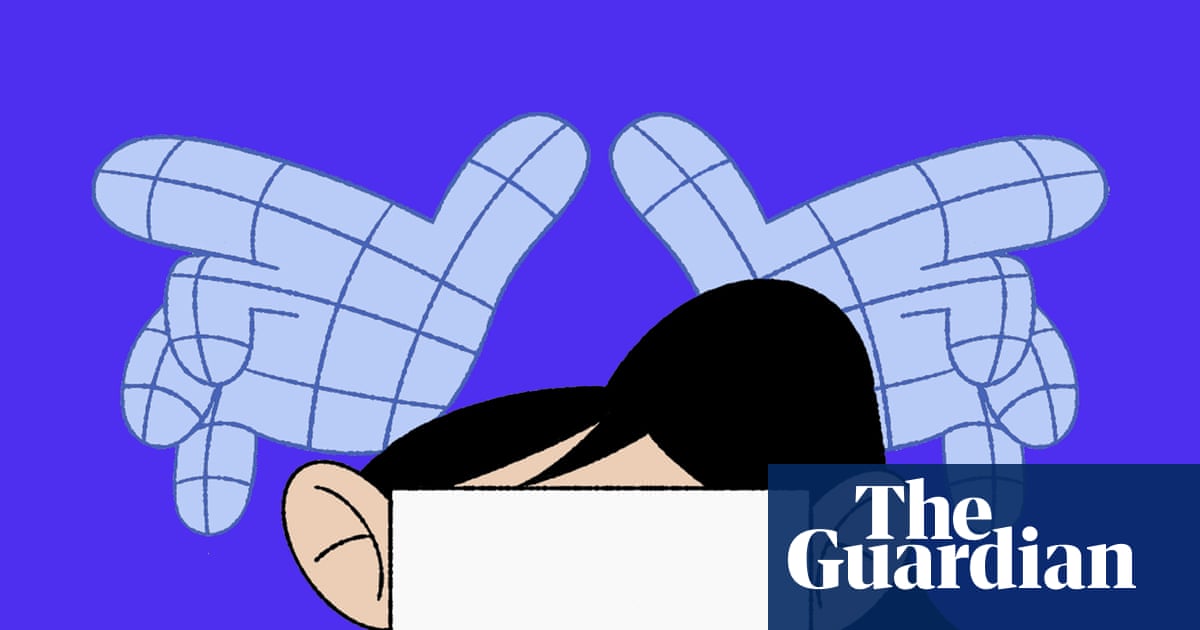
Think-tank CEO Mehdi Paryavi warns that widespread reliance on the same AI tools could undermine competitiveness by eroding unique strategic thinking and innovation across companies. Short-term efficiency boosts from AI cloud the long-term impacts of decision-making convergence and growing dependence on external models.
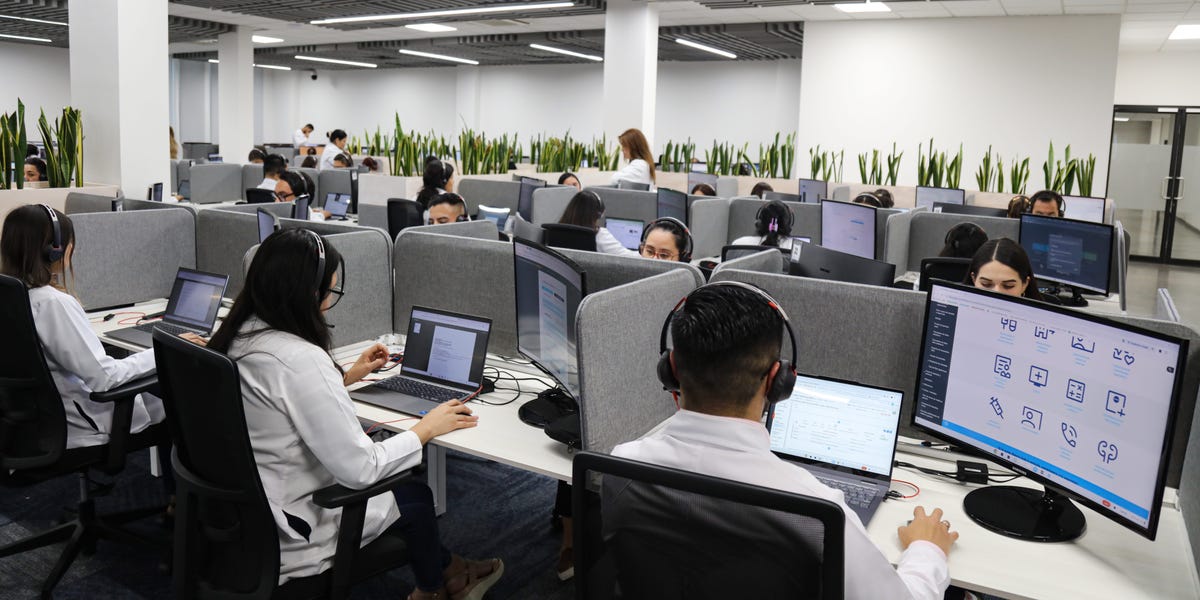
Adding to Cory Doctorow’s comments on AI, an article on Business Insider this week looks at how wide adoption of AI systems across companies and industries could be eroding what makes each company different. International Data Center Authority CEO Mehdi Paryavi says the adoption of the same AI tools by different companies “risks flattening competitive advantage across industries, because firms increasingly rely on identical systems to think, write, and decide for them.”
Paryavi warns that “the biggest risk isn't automation — it's uniformity”. Short-term efficiency hollows out the workforce and with that downsizing comes institutional knowledge loss and the ability to operate without automation. Unchecked, the adoption and integration of AI overtime homogenises how companies make decisions and decreases the ability for those companies to decouple themselves from the AI systems they have thrown in with.
Those companies that have been sucked by the AI sales pitch of efficiency and cost savings Doctorow talked about are not just buying in substandard output but they are likely unknowingly “erod[ing the] originality, strategic depth, and long-term advantage” that has set them apart in their industry. This dynamic can lead to industries in the future in which competitors “[compete] on cost and speed alone”.
 Thibault Spirlet
A bit on the side
WTF else happen this week:
Age prediction coming to ChatGPT In a preemptive move, OpenAI is rolling out age prediction using behavioral and account-level signals to estimate whether an account is likely being used by someone under 18 years of age “so the right experience and safeguards can be applied to teens.” Users that are categorised as under-18 will be able to verify their age at any time.
Our approach to age prediction
Monday 20 January 2026
Open AI
 Jake Peterson

California is also investigating xAI over Grok image editing Last Wednesday California Attorney General Rob Bonta announced an investigation into the use of Grok’s ‘Edit image’ feature to generate nonconsensual sexually explicit material. California joins numerous other countries – including Australia – that are investigating the matter or seeking an explanation from xAI.

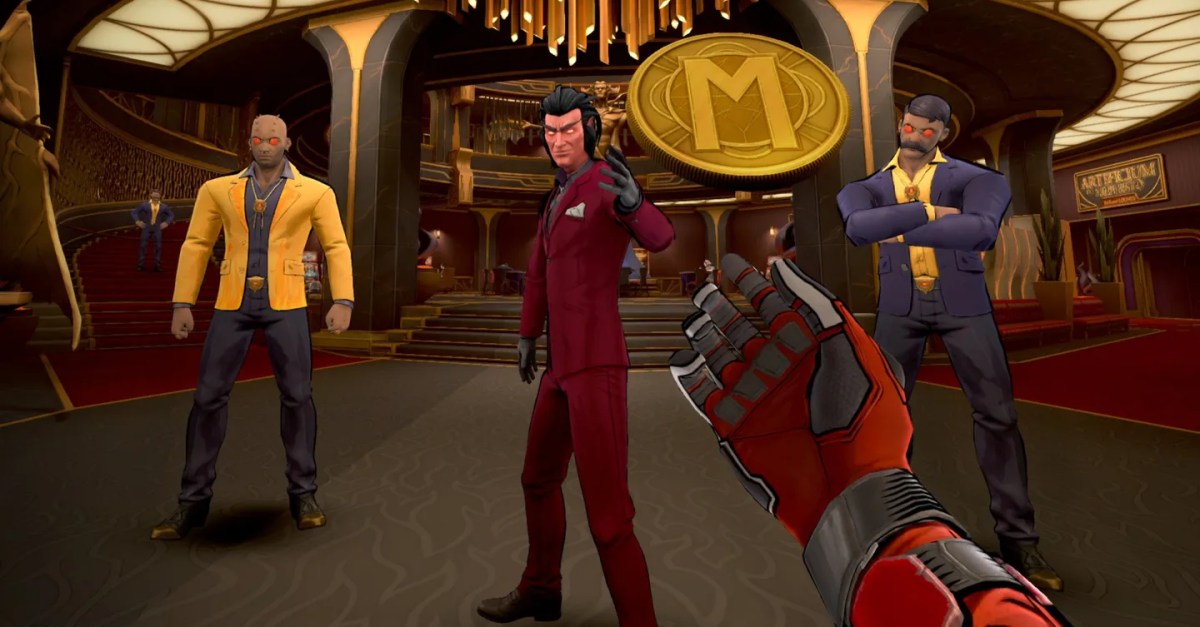
Meta moves away from the metaverse As part of a broader shift of focus from the metaverse to wearables, Meta is reportedly reducing its Reality Labs metaverse division by about 10 per cent, including scuttling Twisted Pixel Games, the studio behind Marvel’s Deadpool VR, Sanzaru Games, who made the Asgard’s Wrath franchise, and Armature Studio, which worked on the Resident Evil 4 VR port.
 Jay Peters
Bandcamp bans AI music "Today we are fortifying our mission by articulating our policy on generative AI, so that musicians can keep making music, and so that fans have confidence that the music they find on Bandcamp was created by humans." Bandcamp will not permit music or audio wholly or substantially generated by AI nor will it permit the use of AI to impersonate other artists or styles. While I understand the intention it will be interesting to see how they handle determining what is or isn't an impersonation.
 Bandcamp
TikTok launches a microdrama app TikTok launched PineDrama, a new stand-alone app for microdramas released as one-minute episodes. ⟨ It turns out there are other apps for vertical video drama content. I am facinated to know who the target segments are that want to watch serial drama in one-minute episodes? ⟩ At the moment it is ad-free, has an iOS and Android app and is only available in the USA and Brazil.
 Aisha Malik

Colophon
Reuse
AI use
No part of the text of this blog post was generated using AI. The original text was not modified or improved using AI.
The banner graphic (i.e. the first image at the top of the blog post) was adapted from vector graphics generated in Adobe Illustrator using Firefly 4 with 'Subject' content type selected and the lowest level of detail set. { Text to Vector Graphic prompt: Seamless pattern, very large simple shapes, 80s retro style, fluid organic elements, morphing, overlapping, blurred gradients, visible layers }
Provenance
This blog post was first published on Wednesday 21 January 2026. It has not been updated. This is version 1.0.